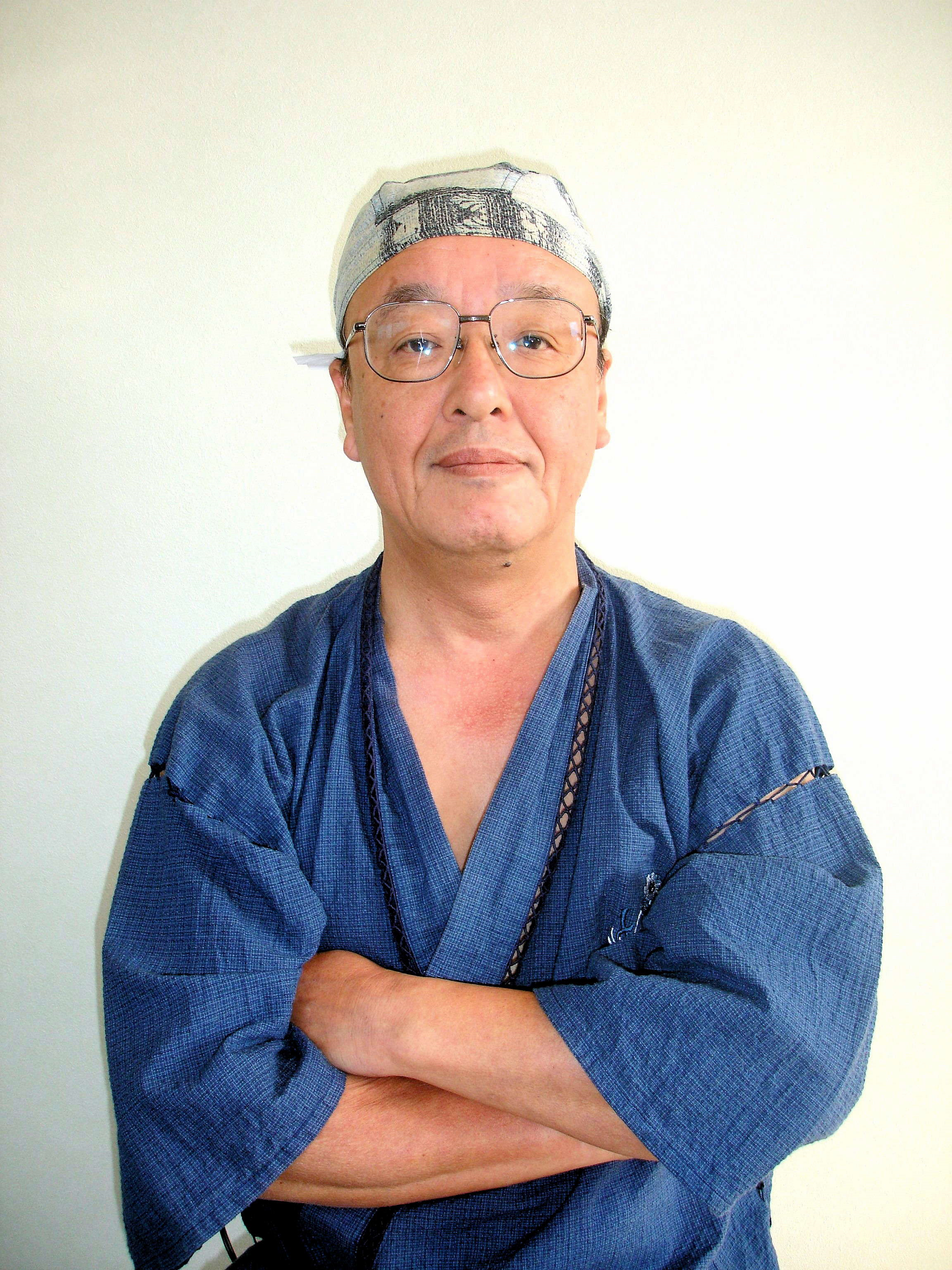
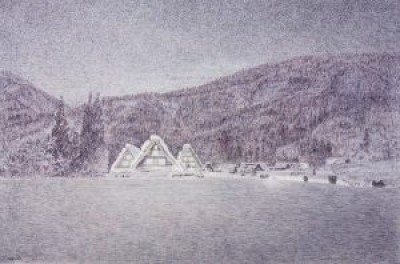
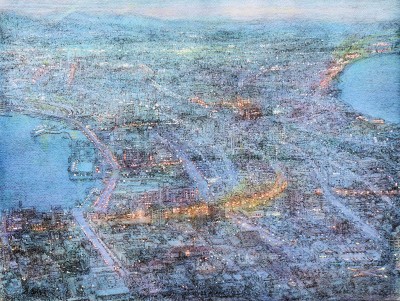
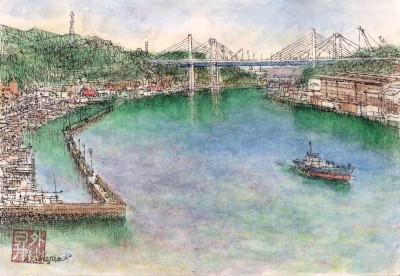
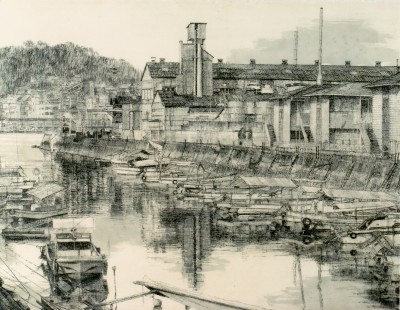
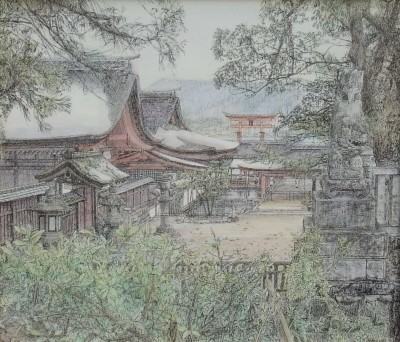
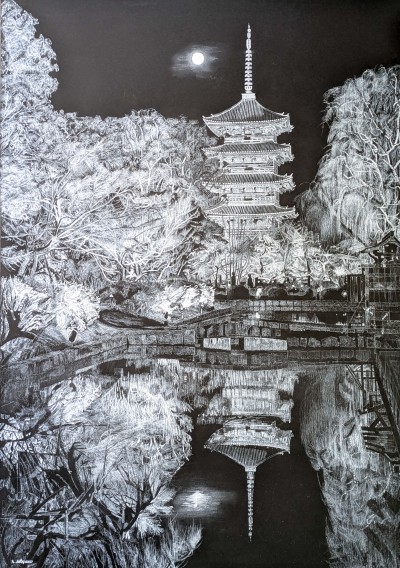
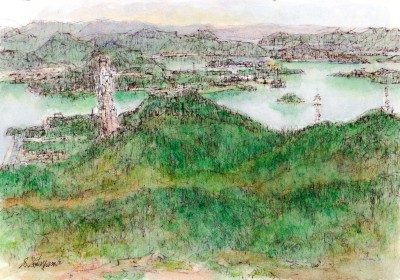
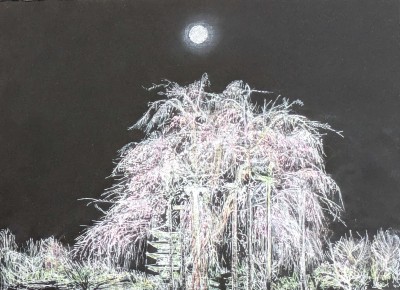
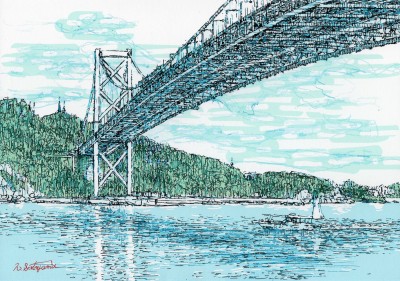
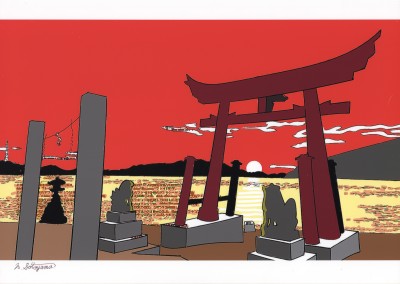
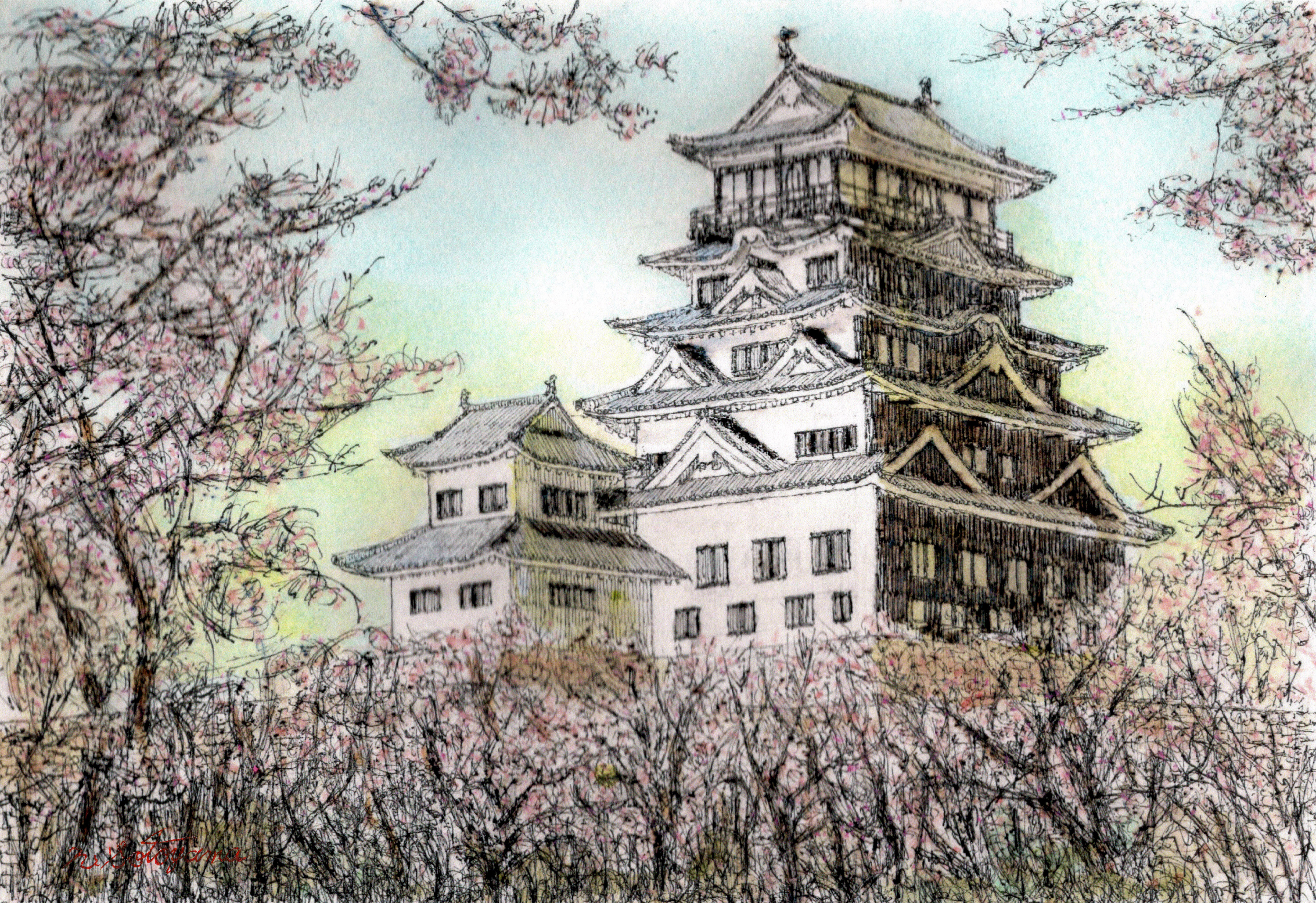
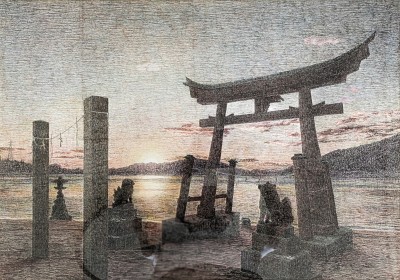
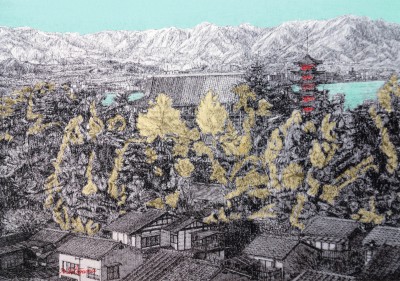
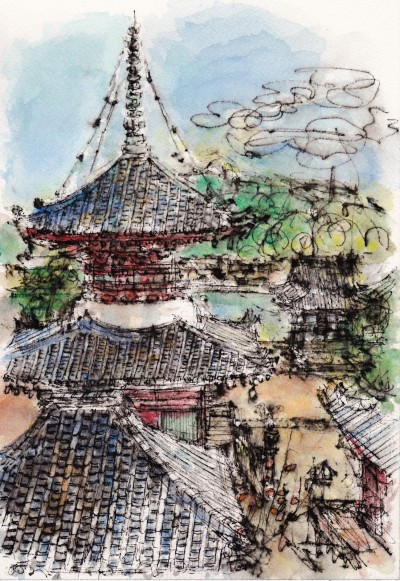
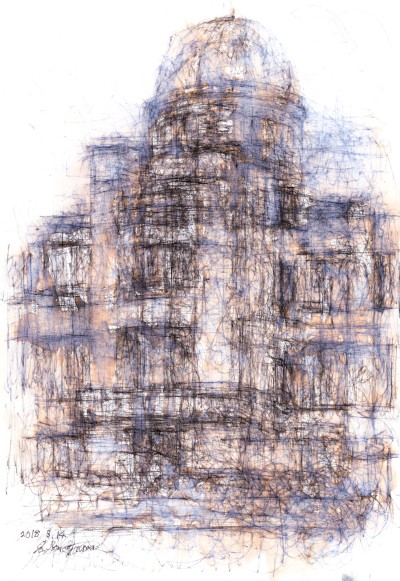
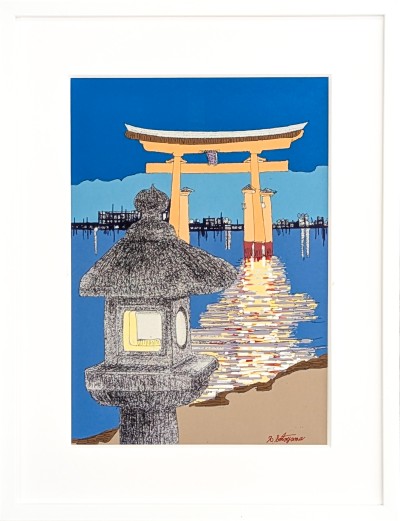
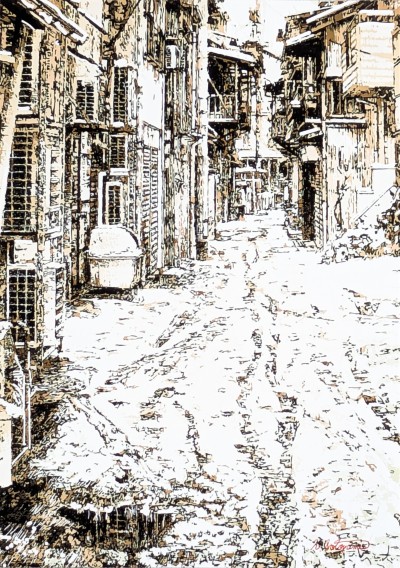
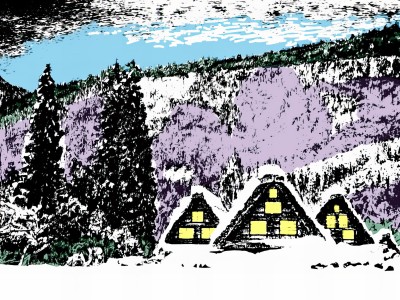
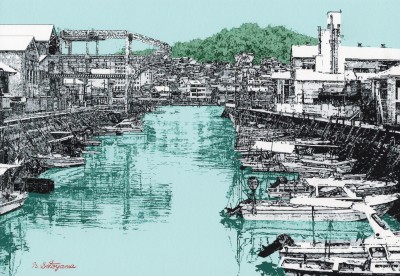
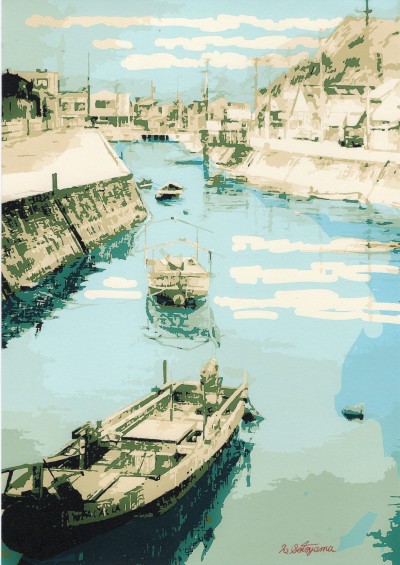
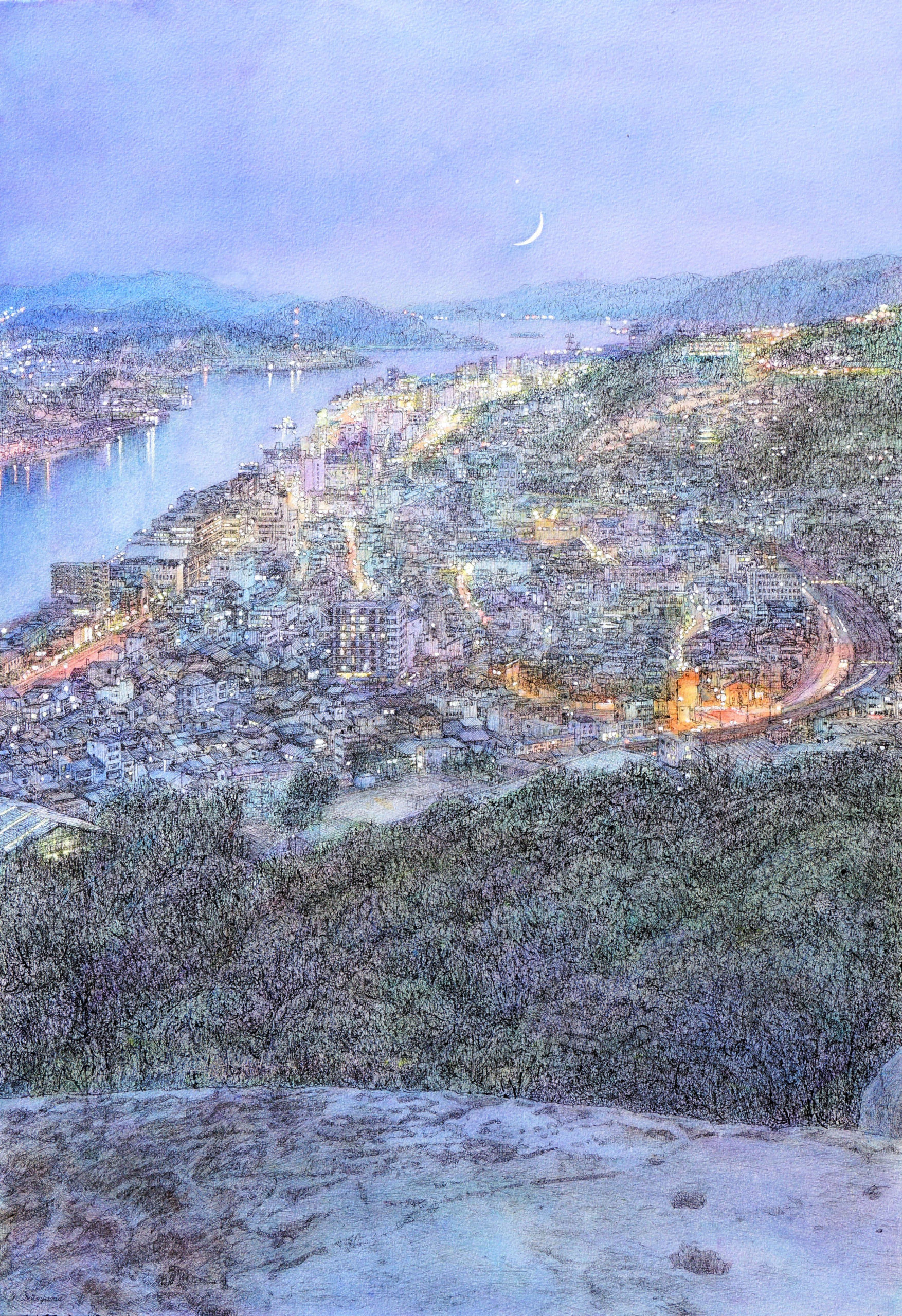
When he was in kindergarten, he won an award for a drawing call for "Kinoshita Circus", which led him to go to a "painting class". After graduating from high school, he worked at the Telegraph and Telegraph Corporation and attended the "Musashino Art Junior College 2nd Division". After that, he also attended the second division of the Japan Designer Academy, and his work was published in the academy's national newspaper in the summer. He devoted himself to a single "pen drawing" that he had started drawing since he was in junior high school. With his own "colored pen drawings", he has presented his works not only in Japan, but also in the United States and France. While pursuing cherry blossoms in spring, autumn leaves in autumn, and snow in winter, he depicts seascapes mainly in his hometown of Onomichi.
WORKS Works
INTERVIEWInterview
Noboru Toyama
What made you start pen drawing?
When I was in junior high school, I picked up a pen because of my admiration for a manga artist, which was the beginning of my pen drawing life. At that time, I was particularly attracted to the works of Chiba Tetsuya, and from there, I was naturally fascinated by manga artists with realistic styles, such as Masaru Kabashima, who is called the god of the pen, Takaka Saito, Hisashi Sakaguchi, Shigeru Mizuki, and Sanpei Shirato. As I was exposed to the charm of the lines of these artists, my interest in drawing deepened more and more.
Why did you start coloring your pen drawings?
After graduating from high school, he studied oil painting at the correspondence education department of Musashino Art Junior College while working at the Telegraph and Telegraph Corporation, and had more opportunities to present his works as a painter. At that time, oil paintings and watercolors were the mainstream, and pen paintings were rarely seen. In the midst of this, I wanted to express myself differently from other students, so I tried to present works that added color to pen drawings, which is the beginning of my current style.
Originally, pen drawings were basically drawn only in white and black, and there was no need to add color, but when I lined them up with oil paintings and watercolors, I sometimes felt that it was difficult to convey the power with lines alone. Then I decided to make a picture that I couldn't lose, so I started trying coloring.
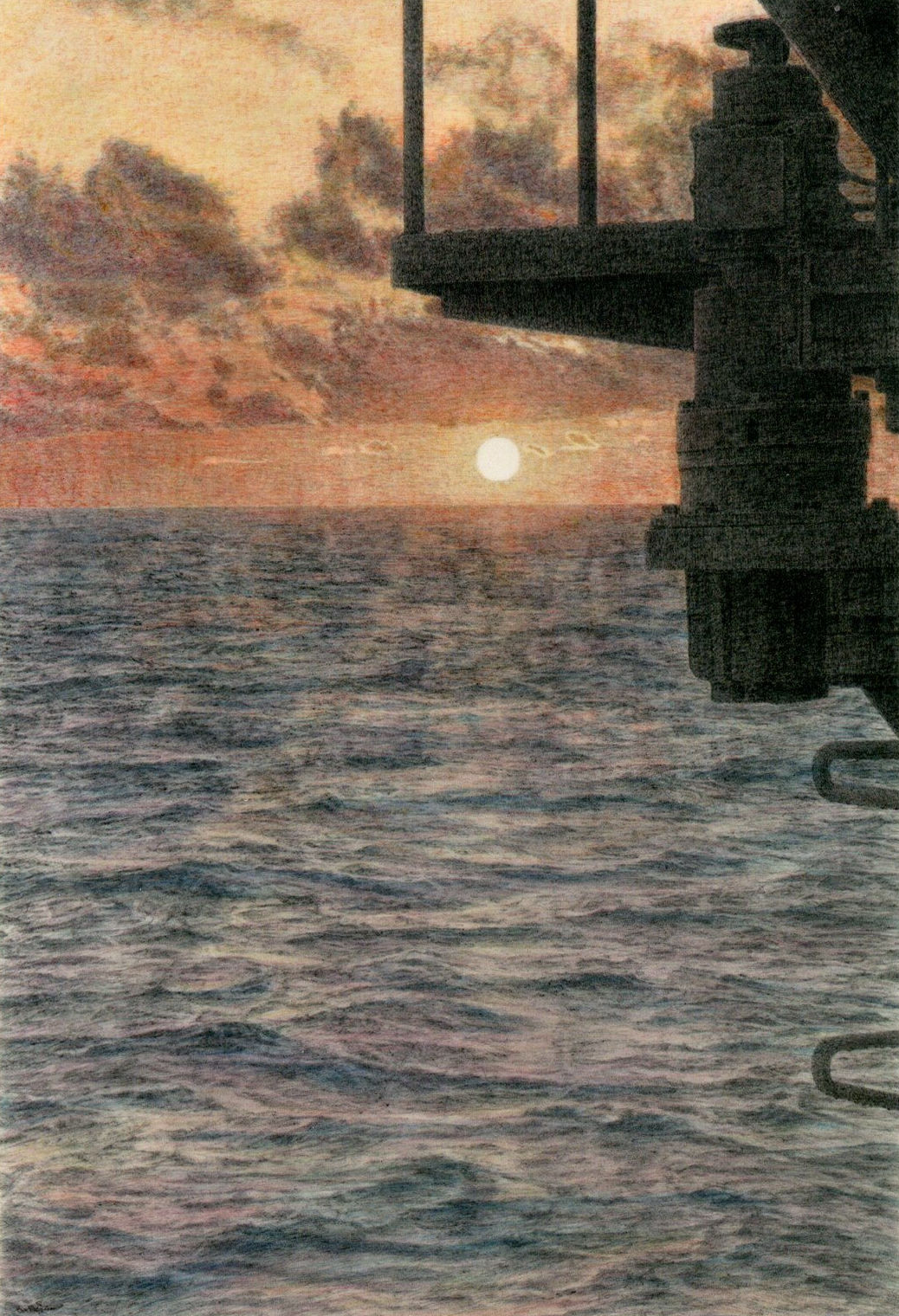
Now I decide whether to use color for each motif. Subjects such as locomotives and private houses where the strength of the lines come alive are black and white, and sunrises, sunsets, autumn leaves, cherry blossoms, and other things where light and seasonality are important are depicted in color. Many customers say that color is more beautiful in solo exhibitions, which has led to the current pen drawing style that makes use of both lines and colors.
Are there any particular preferences when it comes to coloring?
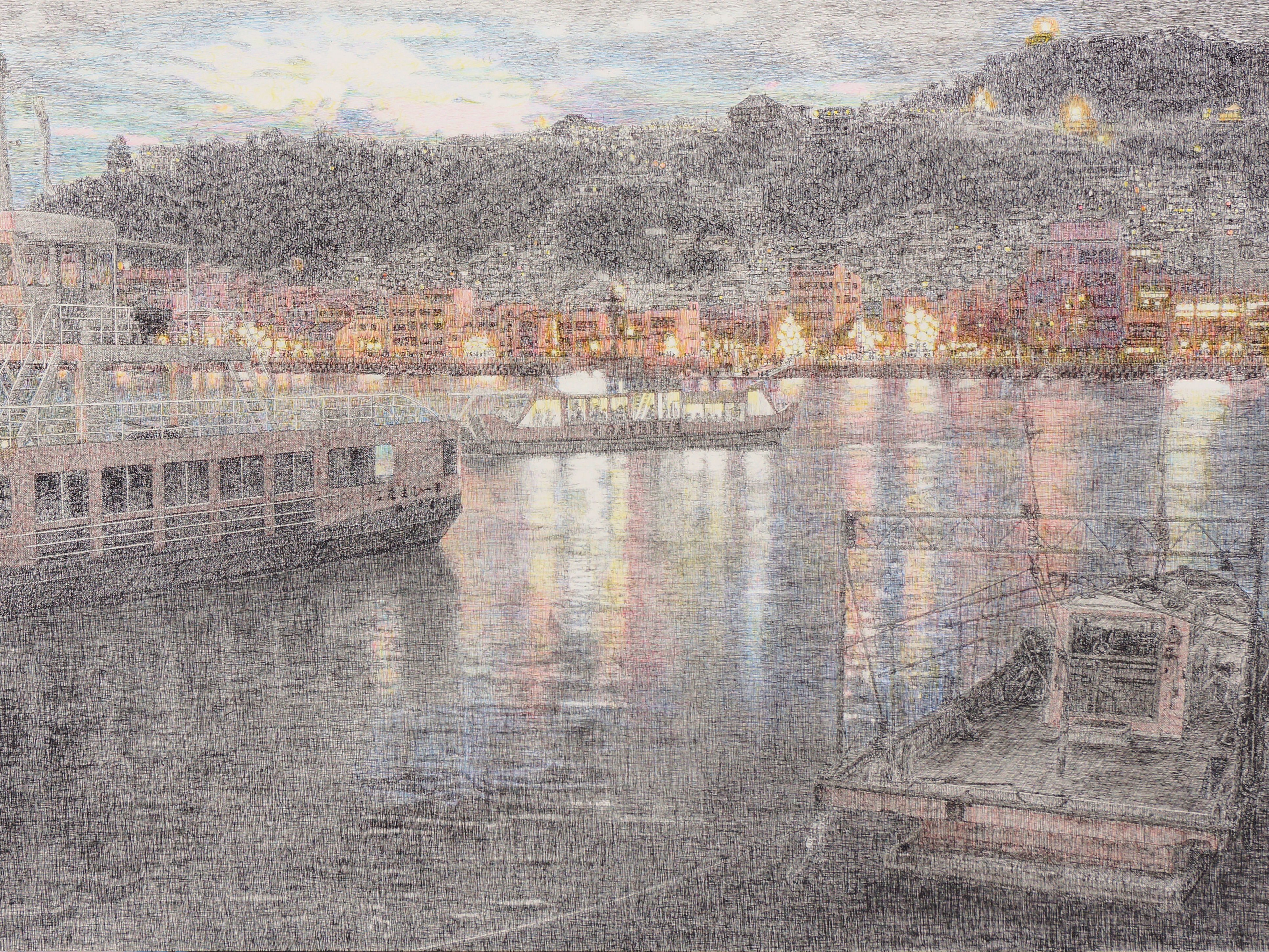
Even in a single picture, there are parts that can be colored and parts that cannot be added. For example, in the "Onomichi Waterway Night Festival", the sea is not colored, but only the part of the ship that is illuminated by the light.
Colors can be watercolors, or colored inks or pastels. In a single painting, black pen drawings are sometimes combined with colored ink, pastels, colored pencils, and watercolors, which is called "mixed media pen drawing".
When using watercolors, it is important to layer them thinly one color at a time without mixing colors. For example, if you paint yellow and layer a thin layer of red, it will look orange, and conversely, if you layer yellow on top of red, the intensity will change. By layering this two or three times, you can create a deep color. It feels like a glaze technique in oil painting, and I have never painted it after mixing colors. This is also a commitment to coloring.
"Onomichi Waterworks Night Festival (colored line painting)"
Written by: Noboru Toyama
What do you keep in mind when creating your work?
When I draw anything, the base is a pen drawing. First, draw with a pen and then express it by adding color or breaking it. I still remember that when I held my first solo exhibition at the age of 20, a customer wrote in his impression notebook that a single line can control a variety of things. In other words, a single line is enough to express a color that surpasses it. Even now, using color, expressing color only in black and white in pen drawings is an eternal theme.
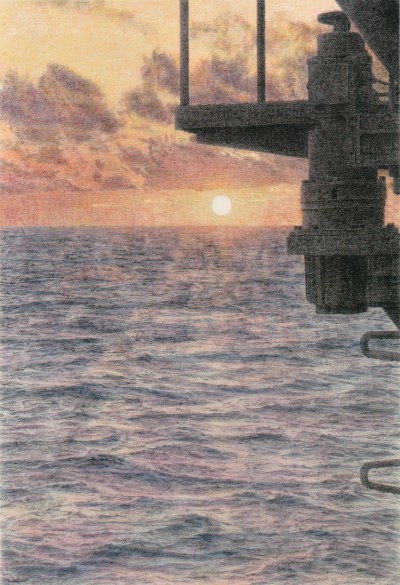
Recently, I have also been interested in castles, for example, there are cherry blossoms in front of the castle, the sunset behind them, and the sea can be seen. I would like to draw a place where I can capture such beautiful scenery of Japan in one picture.
"Sunset over the North Sea"
Written by: Noboru Toyama
Please tell us how you became independent as a painter.
After retiring from the Telegraph and Telegraph Corporation at the age of 50, he became independent as a painter. Even when I was working, I continued to draw every day, and I decided to quit after the age of 30. Let's quit after the age of 40. However, because I was recognized as an IT-related specialist, I felt comfortable in the workplace and couldn't make a decision. Balancing work and being a painter is a difficult world, so I was shaken in my heart for a long time, and finally made a decision when I was 50 years old.
Since becoming independent, I have been managing all the communication venues myself. If you are dealing with multiple websites and SNS, there may be more work and delays in updating, but I continue to disseminate because it is one of the important activities. You can participate in online salons for 1,000 yen per month, and many people want to learn in earnest. The participants are mainly women in their 20s and 30s, and many of the actual classrooms are in their 70s, and it is very encouraging that elementary and junior high school students come because they want to draw manga. The classroom is held on the first and third Saturdays of every month, and it is open for 1,000 yen for 2 hours per session instead of a monthly fee.
Written by: Noboru Toyama
What is pen drawing for you?
It is a tool and a companion to appeal to oneself in the world of art. I happened to encounter the expression of pen drawing like a best friend, and I continued to say to him, "Then let's challenge the art world together." It's like such a buddy.
The expression, which began with a longing for manga, continues to evolve into a one-of-a-kind pen drawing that fuses lines and colors. While valuing the philosophy of "one line", it is impressive that he continues to challenge new landscapes and expressions. Expectations are high for the expansion of his creations and activities in the future.
EXHIBITIONS Exhibition Information
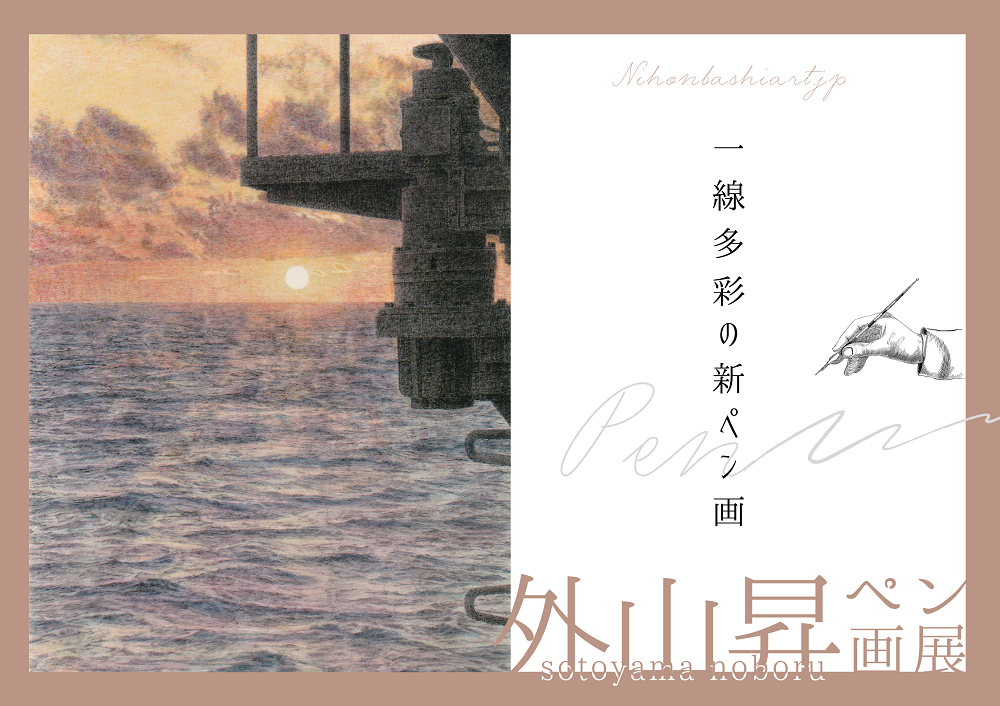
2024.04.16 - 2024.04.30
Noboru Toyama Web Solo Exhibition
New pen drawings with a variety of lines
Noboru Toyama
●外山昇|Sotoyama Noboru
[Biography] In 1952 ・Born in Onomichi City, Hiroshima Prefecture In 1976 ・First solo exhibition at Yokohama Yurindo Gallery In 1978 ・Enrolled in Japan Designer Academy (Yokohama Campus 2nd Division) In 1979 ・Graduated from the Japan Designer Academy In 1982 ・Solo exhibition at Ginza Futaba Gallery In 1987 ・Selected for the 13th Broadway Newcomer Award Exhibition (Ginza) In 1989 ・Kanagawa Prefectural Artists Association Award In 1990 ・14th Rotarian Prize Nominated Artists Exhibition (Yokohama) Honorable Mention In 1991 ・The 17th International Association of Contemporary and Contemporary Artists (Tokyo Metropolitan Museum of Art) Governor's Award In 1992 ・The 2nd Hiroshima Art (Hiroshima City Museum of Contemporary Art) Honorable Mention Award In 2000 ・Received the Minister of Education Encouragement Award at the 26th International Association of Contemporary Artists Exhibition In 2012 ・SNBA (Paris: Carrousel du Louvre) Bronze Award In 2017 ・Solo Exhibition (Ginza Art Hall) In 2018 ・SNBA (Paris: Carrousel du Louvre) Charles Cotté Prize *The award history is an excerpt. [Present] Full member of SNBA Paris, representative director of the International Association of Contemporary Artists, member of the selection committee of the Minister of Education, Culture, Sports, Science and Technology Award, general manager of the Hiroshima branch of the International Association of Contemporary Artists