Show more

Artist 川添裕子 Kawazoe Hiroko

川添裕子

INTERVIEWInterview

Yuko Kawazoe

What inspired you to start Japanese-style painting?

I have loved drawing since I was little, but I only began seriously learning to draw when I took entrance exams for a high school with an art department. At the end of my first year of high school, I decided on my major, but originally, I wanted to pursue printmaking, but there was no such major.
Around that time, I happened to see Kaii Higashiyama's path at the library and thought there was something like this. This is what Japanese-style painting is. Until then, I hadn't really paid much attention to Japanese painting, but I was drawn to its pastel tone-like soft atmosphere, and chose it without even knowing what it was.

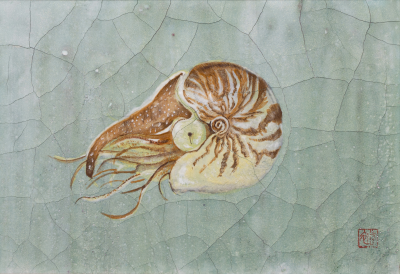
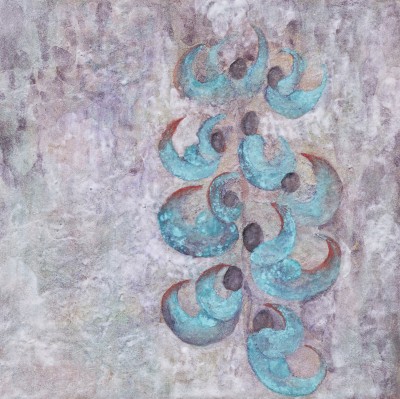
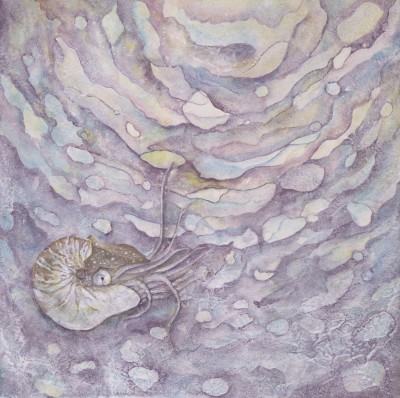
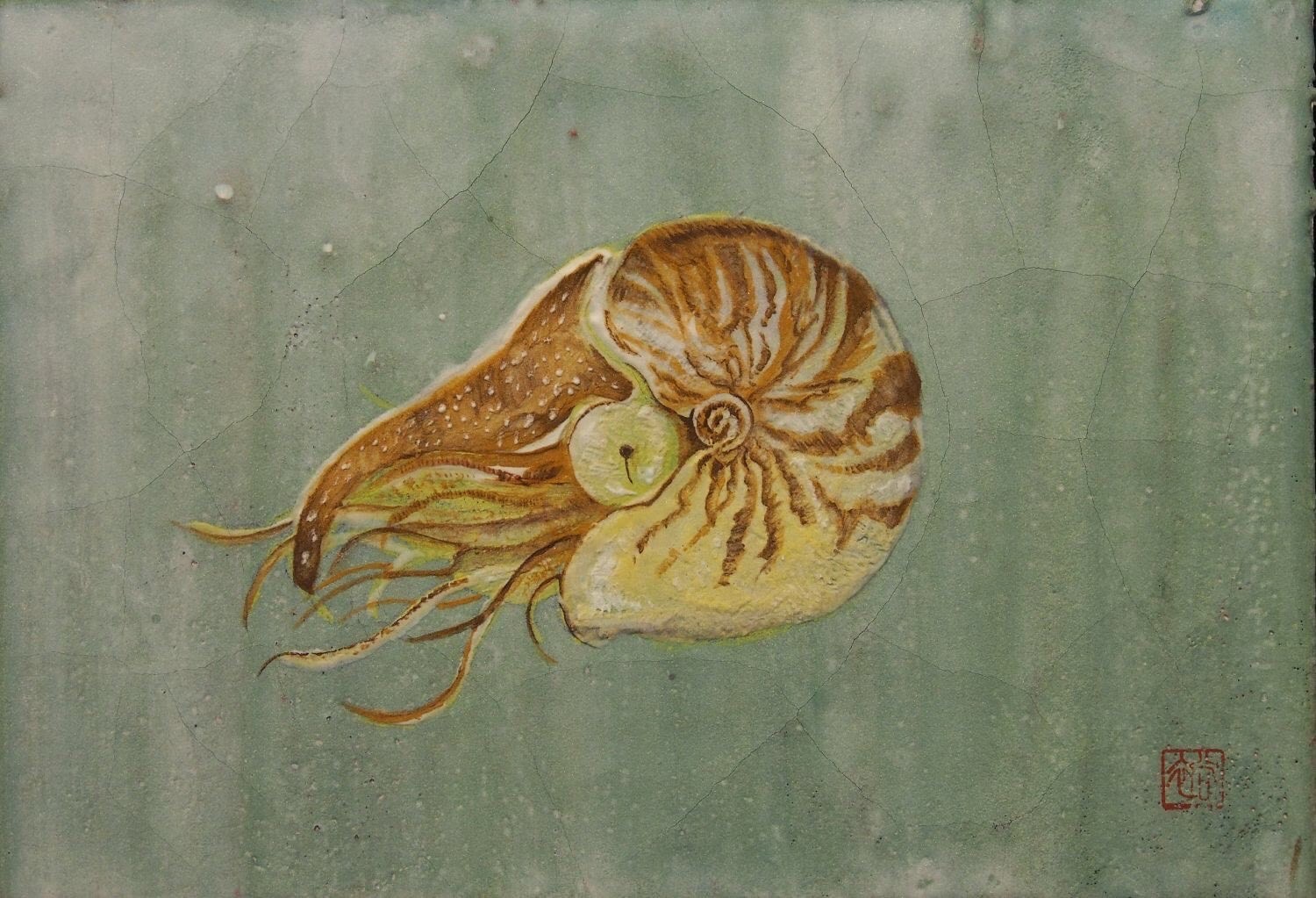
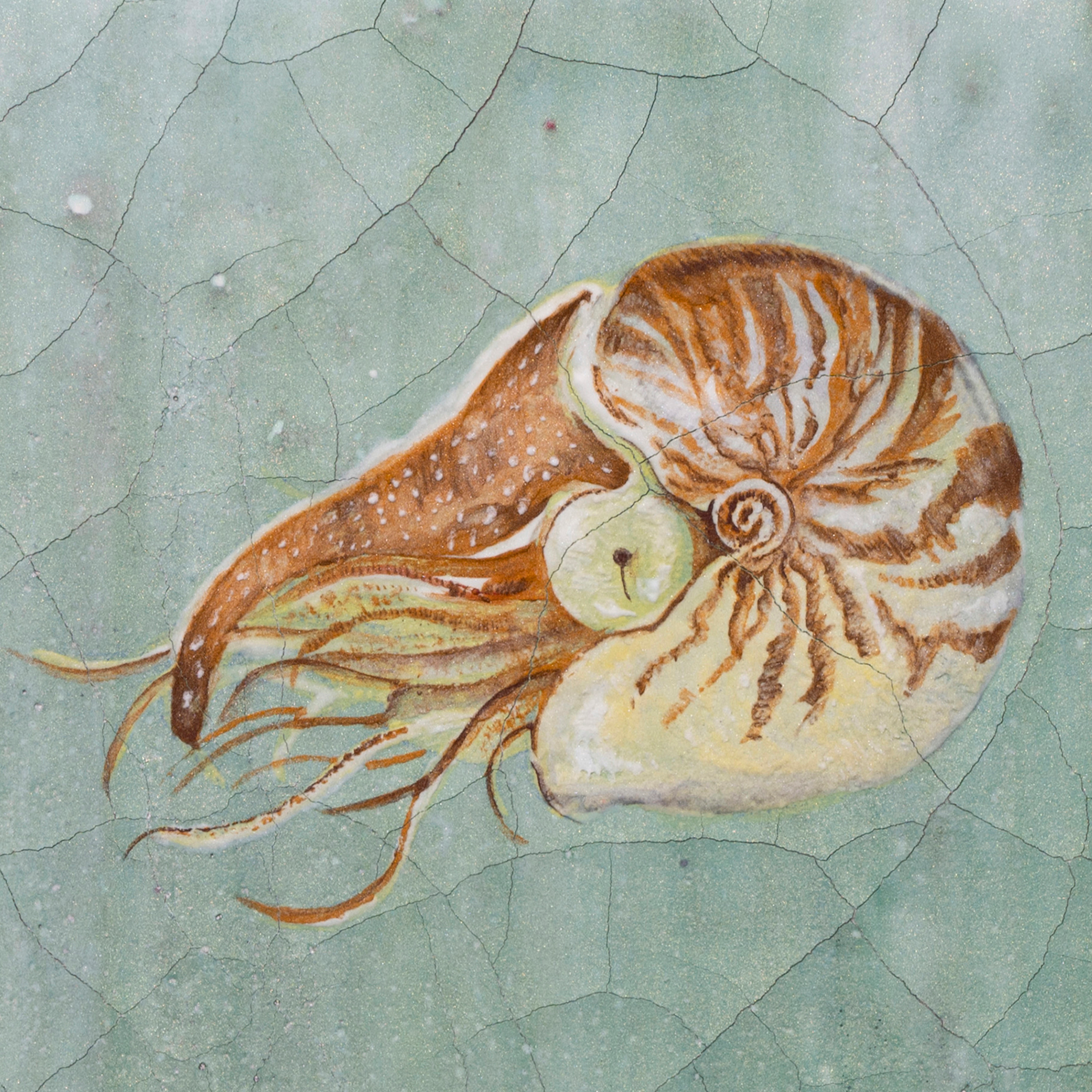
"Nautilus." Author: Yuko Kawazoe

Please tell us about your encounter with mineral pigments.

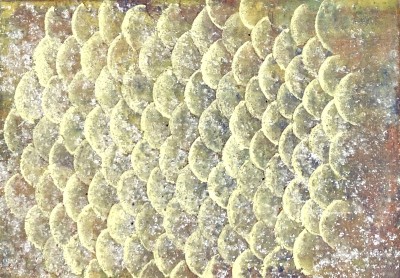
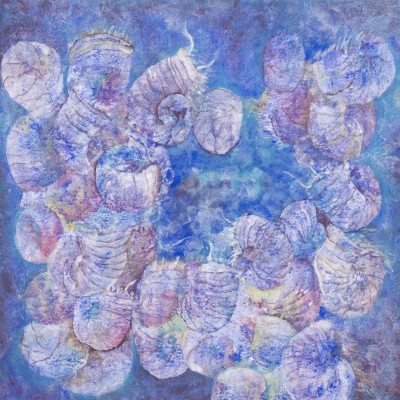
At first, I was only allowed to use Suigan pigments in class, but in my third year of high school, I learned about mineral pigments and wanted to use them. It has a unique texture that resembles coral fossils, pumice and pumice, and doesn't exist in ordinary tube paints. I was really drawn to the unique texture of mineral pigments. I still strive to create works that make the most of that sense of material.

I feel it's a shame that mineral pigments aren't very well known to the general public. I feel that Japanese painting has always been a bit intimidating. I myself didn't really know much about it. But I want more people to know that such atmospheric and captivating art materials exist.

Please tell us why you chose ancient fish and deep-sea fish as motifs.

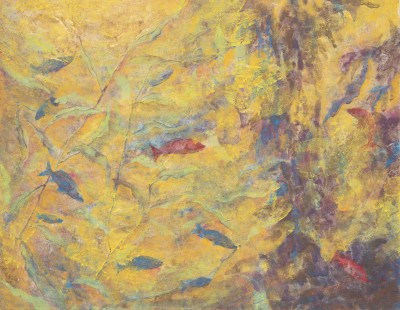
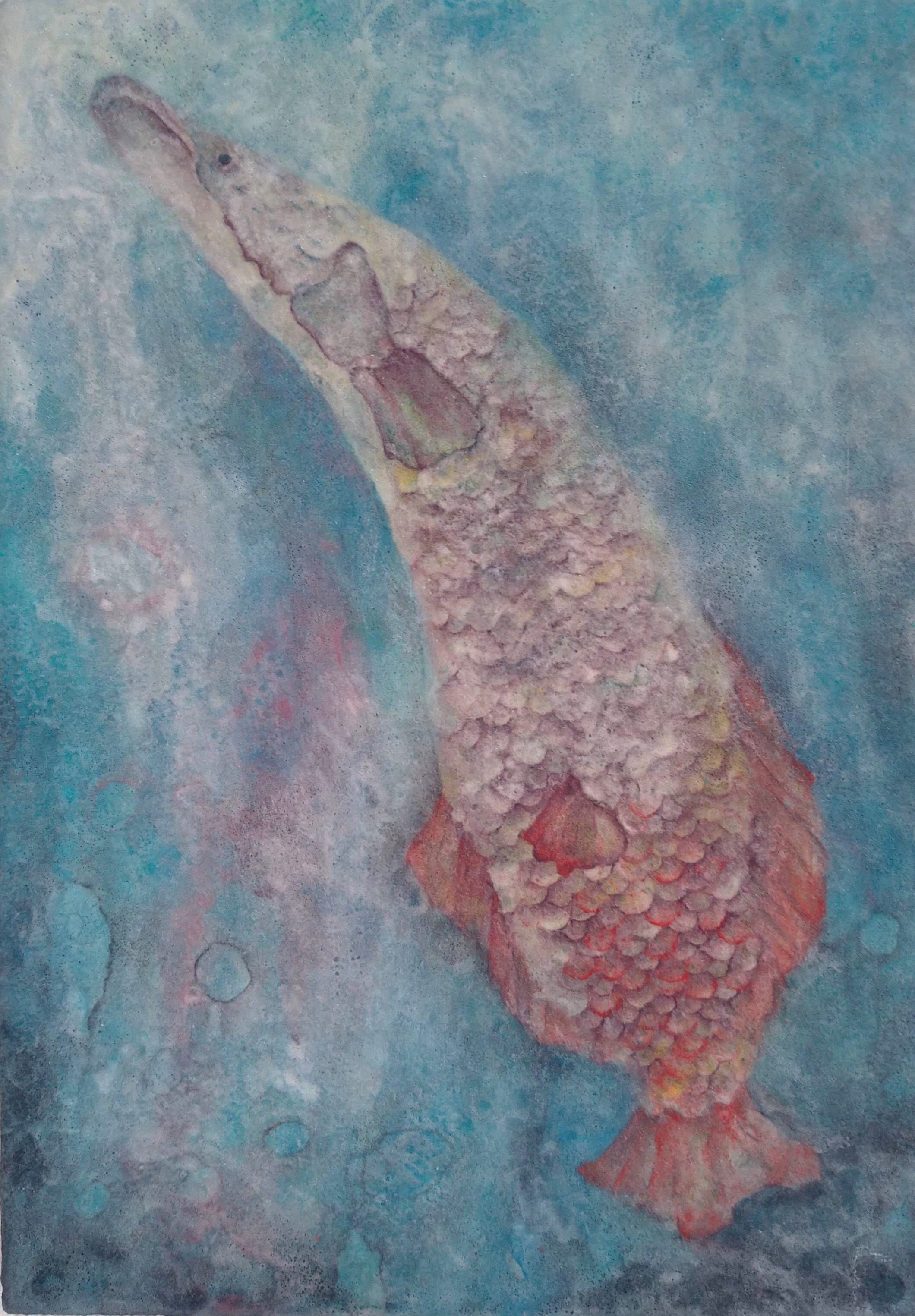
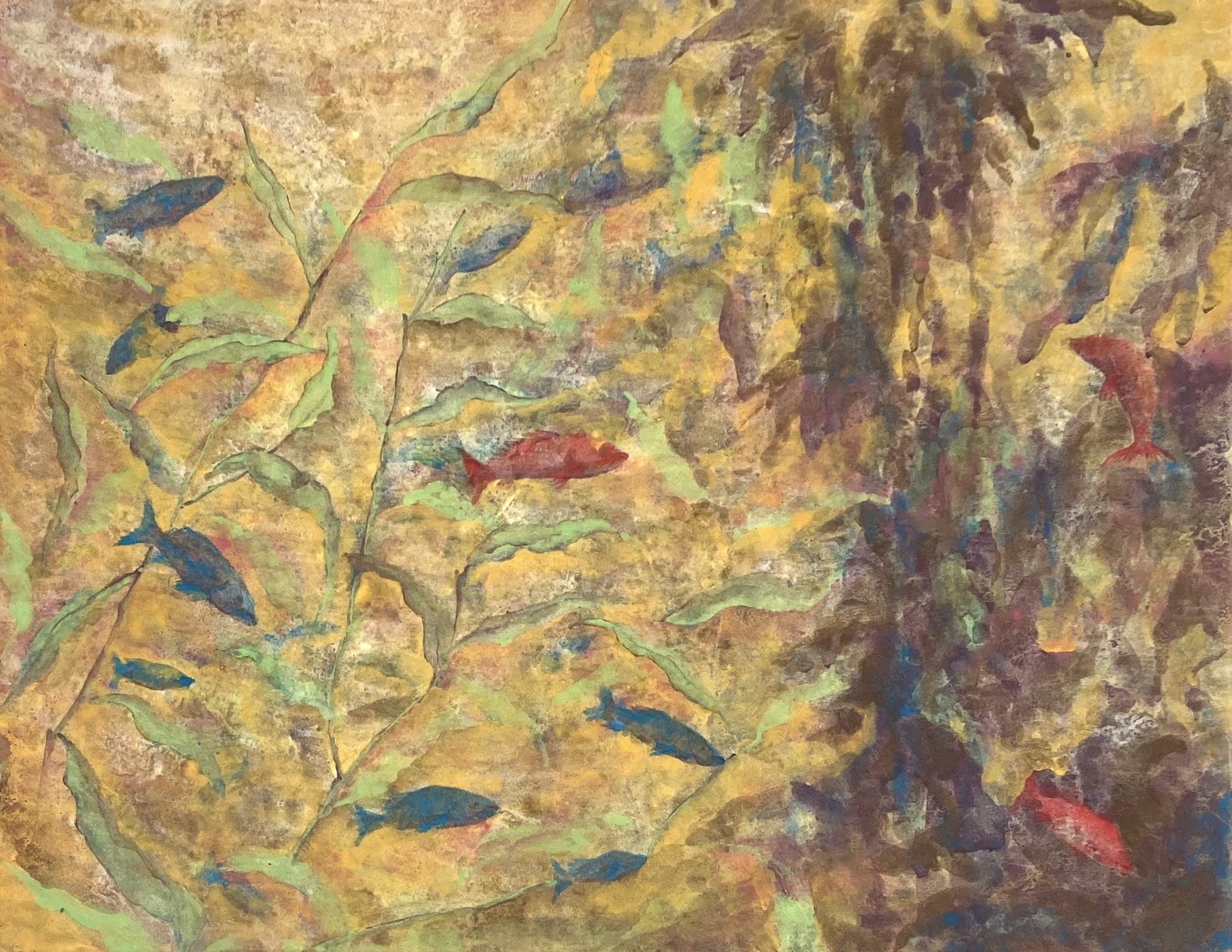
The first time I saw ancient fish in an aquarium was when I was in high school, and I became conscious of them as motifs after entering university. I went to the aquarium for sketching, searched for an empty spot so as not to disturb people, and found the Piraruque tank. It was so empty that I could sit there all day. I sketched while thinking that there were some mysterious creatures there.

A university professor who saw the sketch said this was Kon. The name 'Kun' comes from a Chinese Zhuangzi passage meaning 'carefree wandering,' where in the northern sea there is a giant fish called Kun, and the Kun eventually becomes a bird called the Peng and flies away.

Piraluc also rises to the surface to breathe, so that story made perfect sense to me, and from there, I started drawing Piraruku. No matter how many times I draw, I never get tired of it. I'm starting to see new strengths of Piraluk, and there are still parts I'm not fully satisfied with, so I've been continuing to draw them.

How does the unique use of color come about?

I probably haven't used the colors I see much. I try to make it feel unrealistic. It's not that I'm deliberately drawing, but rather than just what I see, my own consciousness is embedded in it.

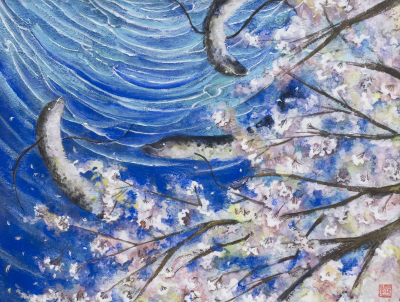
For example, when I'm looking at cherry blossoms to sketch, it's obviously a hallucination, but I feel like lungfish are squirming around, so I draw them together. Maybe it's just a bit too much imagination. I like the term 'eguji' (eguji), and while you could freely edit photos now, I think there are things that can only be expressed through drawings.

What kind of things do you want to express when you draw them?

Rather than drawing with a clear purpose, it might be more of an impulse. I think it's not intentional, but rather a way to express my inner self. I chose ancient fish as a motif not because I had a clear intention from the start; it just drifted along and I got hooked. Majoring in Japanese painting and being drawn to mineral pigments were not things I did on my own, but rather came to me naturally and naturally, as if by fate.

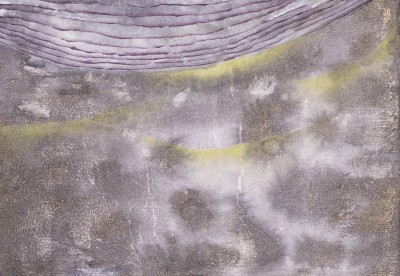
"Akira." Author: Yuko Kawazoe

Please tell us about what you want to work on going forward.

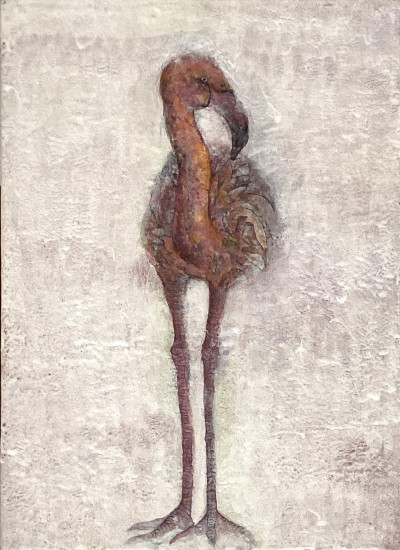
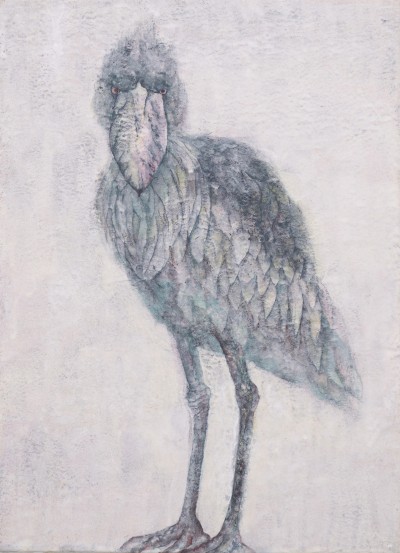
From now on, I want to draw motifs other than fish. I believe that drawing the shoebill was a turning point for that. For those who have seen past exhibitions, these are paintings that capture the gap between special days and special days, the everyday and the extraordinary. I have been told that before, and I want to keep working on that. I believe the real and fantasy gaps that cannot be expressed in photography are the true charm of being able to create art.

And someone quietly leaning close to someone—not making a statement, but still there. I'd be really happy if I put up pictures like that. There may be some aspects of Japanese painting that are hard to approach, but among them, there are people who do strange things. I hope you'll become interested in what Japanese painting is all about.

What does art mean to you, Mr. Kawazoe?

For me, painting is like water and air. It's something that's just natural, so I don't really think about it myself. But without it, you'd die. It's not about trying to convey or express something, but something more natural—like drinking water when you're thirsty, or taking a deep breath when you're suffocated. It's a feeling close to that. Rather than drawing on the whim, it feels like you're already drawing before you know it.

Yuko Kawazoe encountered Japanese painting by chance, was captivated by the texture of mineral pigments, and ultimately arrived at the unique motif of ancient fish. Drawing is like water and air, and we look forward to seeing what kind of world she will depict in the gap between reality and fantasy.

EXHIBITIONS Exhibition Information

2025.12.01 - 2025.12.15

Yuko Kawazoe Web Solo Exhibition Disturbed by a thousand things

"A thousand things are disturbed."
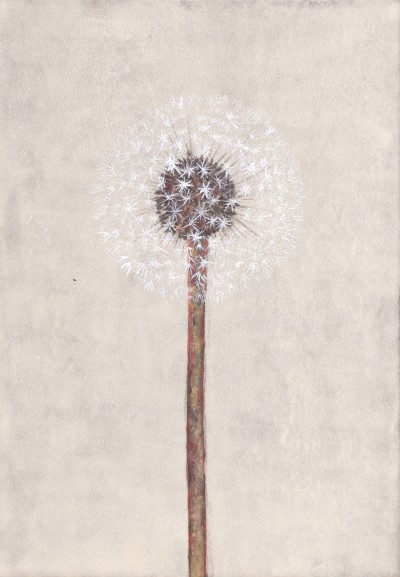
The pictures I draw are fragments of my thousand memories.
A life full of restrictions, constant disturbing news, someone's heartless words.
There are many things that make your mind buzz.
With such a buzzing heart, deep-sea creatures and ancient fish appear in front of me.
By drawing these illusions beautifully, your mind will naturally calm down.
 
"When your heart is restless, let's look at beautiful things."
These words from my doctor remain deep in my heart.
 
May the works I create be close to the buzz of your heart.