InterviewFeatured Artist

Mixed Media
k.naoya
K.naoya has had a strong interest in art since childhood, and by the time she was in kindergarten, she naturally felt that she would become an artist in the future. Although he majored in oil painting at university, he continues to take on challenges without being bound by materials or methods. K.naoya's works are characterized by their intuitiveness yet questioning everyday life and society. He said that he values bringing new awareness and perspectives to viewers by shaking up preconceived notions and reversing values and senses, and we asked him about his encounter with art and his future activities.
Written by: K.naoya
Please tell us about your encounter with art.

When I was in my third year of high school, I decided to take the art school entrance exam, but until then, I didn't draw much, even though I liked to draw. But after I decided to take the exam, it caught fire all at once, and I drew desperately every day. However, I had a desire to become an artist for a long time.
When I was in kindergarten, I already naturally thought that I would become an artist in the future, and that was the norm for me. It may sound like a boast, but I was good at drawing from that time on, and I had unfounded confidence that I was good at drawing.

What left an impression on me was that when I was given a task to draw a picture of my father and mother in kindergarten, everyone drew a similar picture with a large face and painted their skin color, but I dared to draw a stick figure. I thought that I should draw more freely, and that the same would be boring. To put it bluntly, I wanted to wake everyone up (laughs).
I don't really want to brag about it, but I had a sense of conviction that I could do something from that time. It's so-called unfounded confidence. But I think it's because of that feeling that I can continue to do art today.

"Untitled" Written by: k.naoya
What kind of work do you create? Please tell us if there is anything you feel is a representative work.

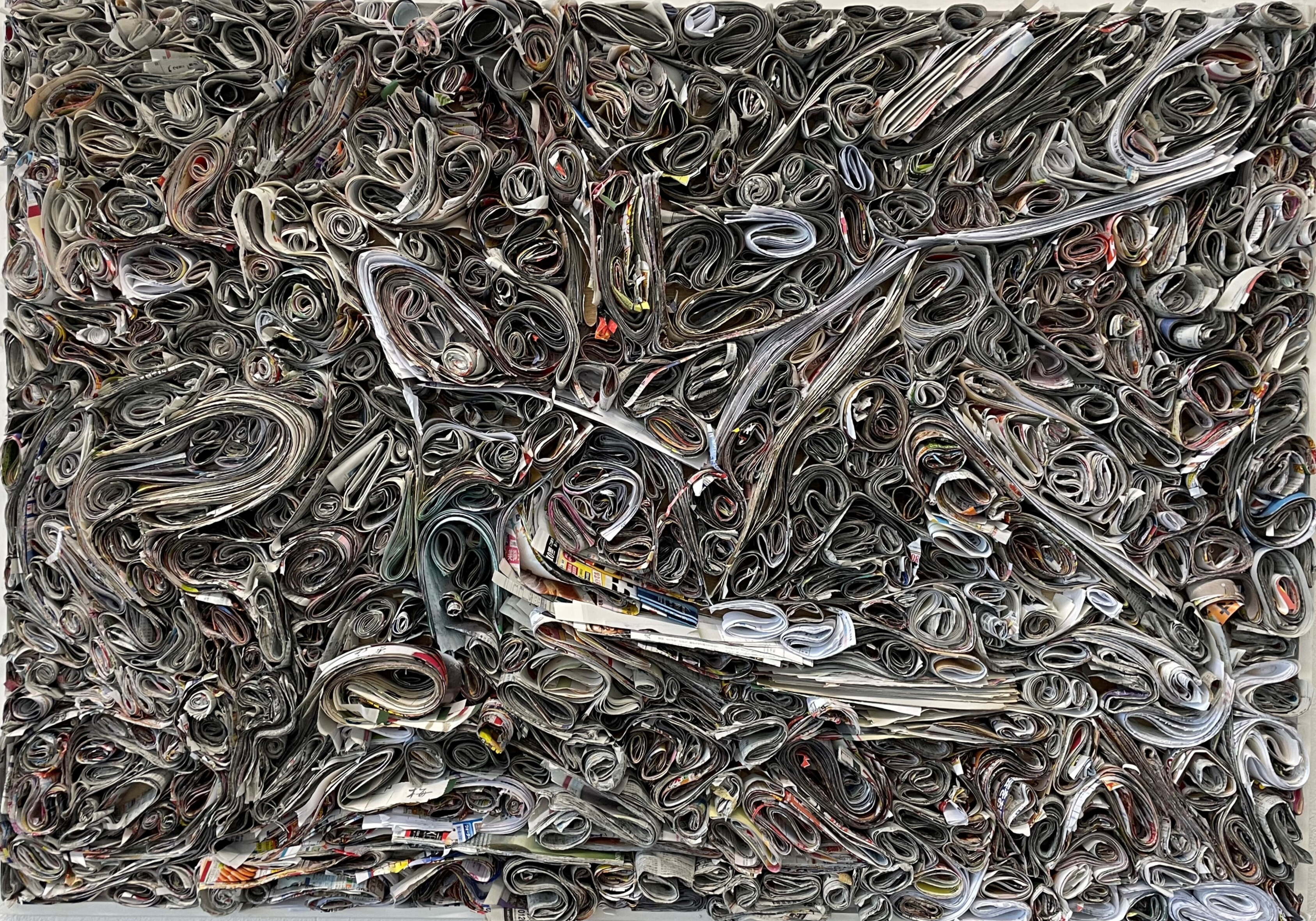
There are two works, but the first is a work using newspaper. The title is "Untitled". I created a variety of sizes, and all of them left a deep impression on me. The impetus for the creation was not a special concept, but an intuitive idea of "let's make it suddenly."

I stack several sheets of newspaper, fold them into strips, and stick them to the board, but in fact, only the outside is glued. That's why the inside is a little floating, and it's in a state where it's about to peel off. The slight shadows and air gaps created by the floating air make the viewer feel as if they are approaching us. I think that this balance, which seems to be stable and unstable, creates a unique sense of tension and drama throughout the work.

When I first made it, it was almost intuitive, and I left it to my senses. However, I always have a desire to create works that engage with society and ask questions. In particular, in this newspaper work, I am a little conscious of the idea of SDGs. It is the beauty and potential of things that are usually treated as "garbage" in our lives. I thought that by turning such things into works, I could create new value. The theme of the work is not just the recycling of materials, but the act of "changing value" itself.

The second representative work chosen by K.naoya Written by: k.naoya
Please tell us about your second representative work.

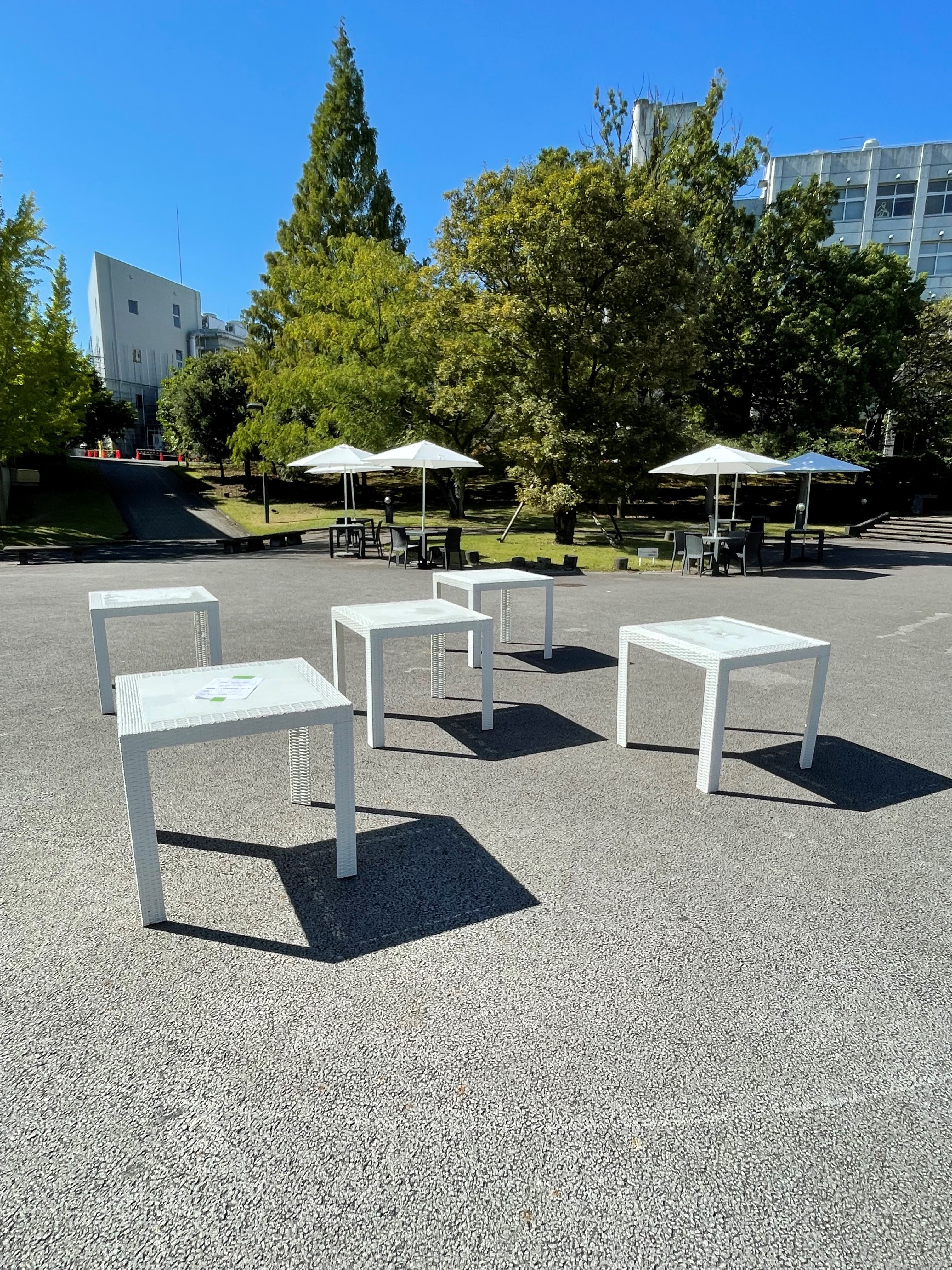
This is an installation created on a university campus and features an irrational arrangement of desks. I don't have a specific title, but I intend to ask the viewer the obviousness of everyday life. Normally, desks are arranged reasonably to make it easy to sit and easy to use in stores and classrooms. However, in this work, I dared to remove that common sense and put it in a position that I felt was beautiful.

The intention was to shake up the sense of "normal" and "normal" buried in everyday life. We usually touch our smartphones and spend time in an environment without nature without questioning anything. However, it is actually a biased and unnatural behavior, and once you get used to the flow of daily life, you will no longer feel uncomfortable. This also limits the way to solve the problem. That's why I created this work with the aim of breaking that stereotype.

By making the desk feel beautiful sensibly, it awakens a person's innate sense of beauty. I believe that this feeling will also lead to solving problems that cannot be reached by conventional rational thinking. Irrational solutions give rise to new ideas and ideas. I created it as if I were experimenting. By having a small experience of seeing everyday life from a different angle, your senses and thoughts become more flexible little by little. This accumulation eventually leads to new creations and ideas. So this work is meant to be not only fun to watch, but also to be a thought-provoking one.

What do you value most in your work?

The most important thing in my work is the theme of the work and how it affects people rather than the method. If you are bound by your own obsessions, new expressions will not be born. That's why I am always conscious of not being bound by fixed concepts and experimenting freely. I majored in oil painting at university, but I don't intend to limit my expression methods, and I don't decide that this is different from the beginning, and I try any material or method first. That is my current attitude. This work is also one of the examples of what I started with my senses and took shape within me. I believe that this reversal of materials and values is an opportunity to convey something to people and make them aware of it.


K.naoya was naturally attracted to art from an early age, and when she was in kindergarten, she naturally felt that she would become an artist in the future. While studying oil painting at university, he emphasizes creating intuitively, regardless of materials or methods. Through creative expressions such as newspaper and desk arrangements, he questions everyday common sense and values, and develops works that shake the senses and thoughts of viewers. His attitude of continuing to take on challenges with free ideas further raises expectations for the future world of expression.

Interview: 2022/06/13