InterviewFeatured Artist

The whole picture of the skeleton immortal
Why Buddhism now? What is the feeling for art that has disappeared and been revived?
The past in pursuit of "simple and beautiful things"
-There are many works related to Buddhism and Zen, but is this a style that has been around for a long time?


The style of the past is completely different. Buddhism was also a "〇〇 sect" in my family, but I was not particularly devout. I didn't touch the sumi paintings at all like now. I have loved creation since I was a child, but what I wanted to draw was completely different from what I am now, such as simply beautiful women.  
 
-Did you have any change of heart? 
 
When I was younger, I was also an illustrator and graphic designer, and I was doing logo design and illustration creation. When I painted, I often had a fashionable style like cosmetic design, which women would rather like. What many people simply think is beautiful. For example, a young and beautiful woman with sweet eros. I also painted many other realistic paintings like Western paintings. However, at some point, the urge to draw something completely disappeared. Not only did I feel uncomfortable, but I felt nauseous even when I held the brush. I can hardly enjoy other music, movies, and even works of art, and I think I am completely done as a creator.

The disappeared desire to create and the newly formed self
-Was there any major cause?


Yes. At the same time, I was studying depth psychology and philosophy, and the more I understood my own mind, the more my impulses and desires for creation suddenly stopped. Psychologically, in fact, the distortion of the mind (complex) in art becomes the energy and driving force for creation. Perhaps as a result of its correction, creativity was reduced to almost zero for a while.  
 
-Will Buddhism be involved in the revival from there? 
 
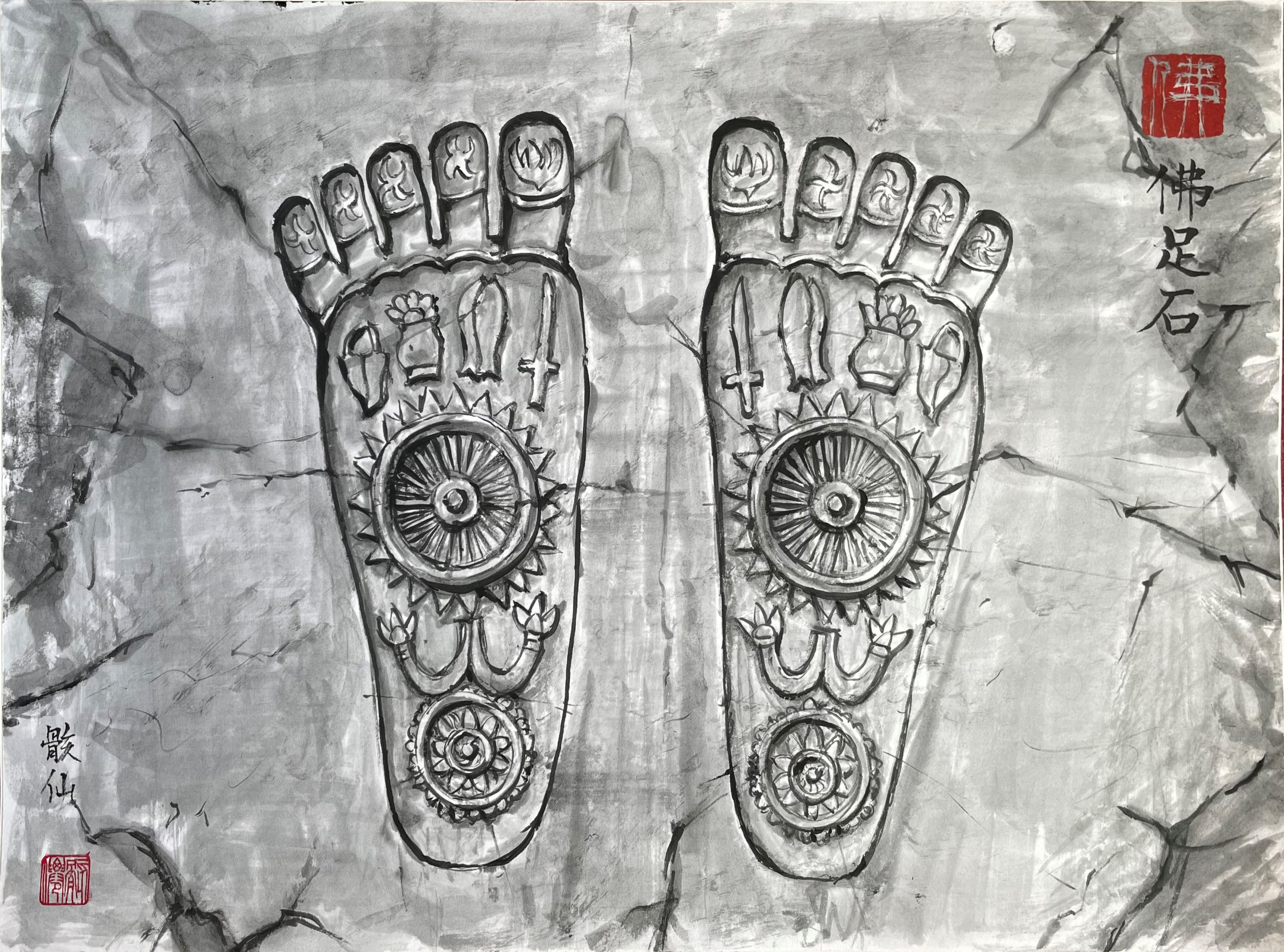
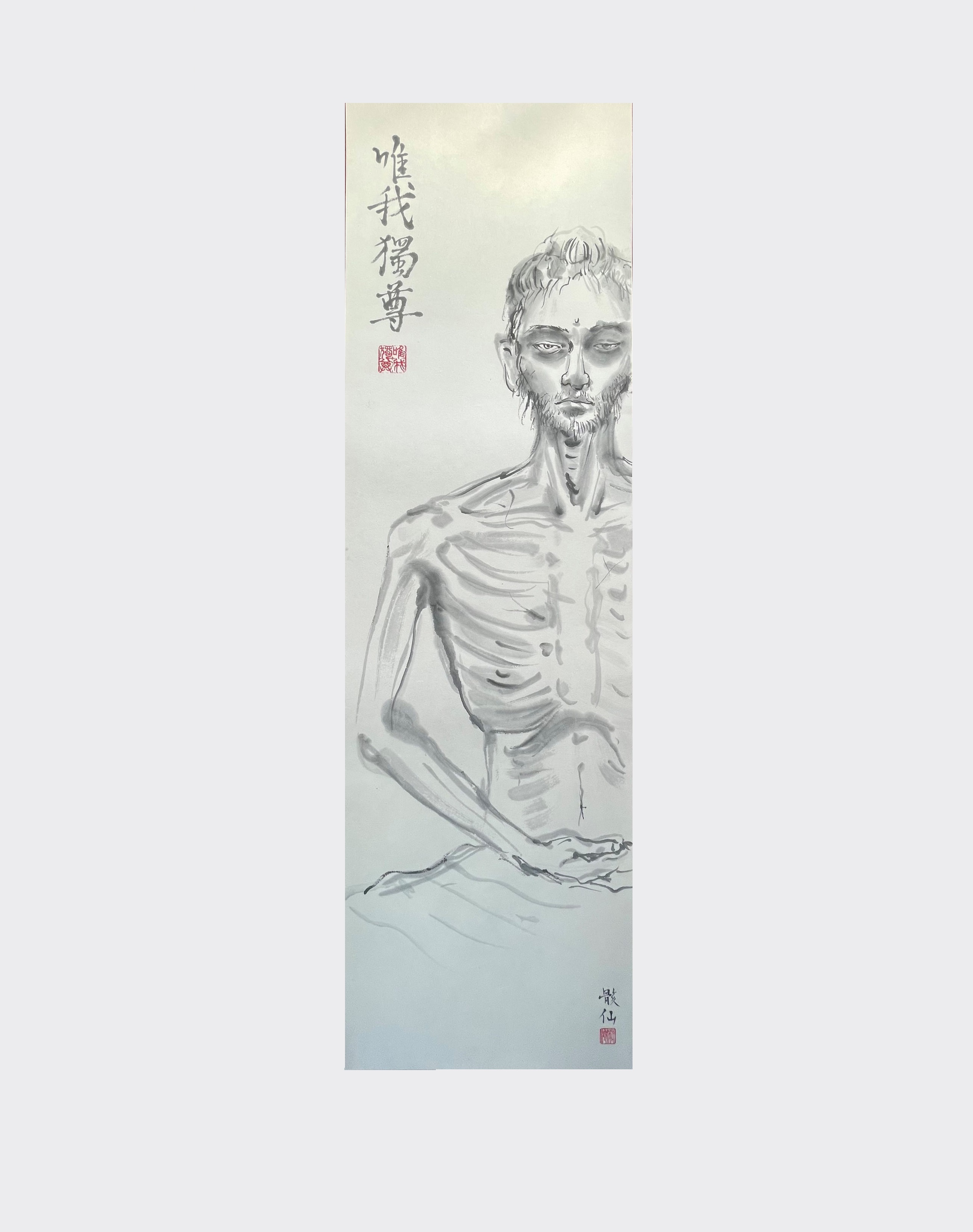
Yes. For example, Jungian psychology often refers to Buddha, Christ, and Zen. Nietzsche's philosophy also has many similarities with primitive Buddhism, and in this regard, I often studied the primordial Buddhism practiced by Buddha 2,600 years ago. Furthermore, it is the ancient Indian "Bhagavad Gita". I will omit it because it will be too long to talk about it in detail, but it took more than 10 years of rehabilitation like Jung did for himself, and his desire to create slowly recovered. But what I want to draw is the exact opposite of what I used to be. For example, even in Japan paintings, I rarely want to draw simple beautiful women, Mt. Fuji, cherry blossoms, etc. Because the object of interest has completely changed.  
 
-There are many motifs in your current work that are reminiscent of "death". 
 
Yes. Buddhism has the idea of "impermanence", and there is a teaching that everything changes, so let's accept the change instead of clinging to the past or the present. Death is an impermanence.  
"Death" is generally considered ominous, but it is not simply abhorred, but is considered an ideal and even a new life. Furthermore, there may even be a state of ultimate beauty called "annihilation".  
I don't think young people need to force themselves to understand, but this state of mind must have existed since ancient times.  
 
-The skeletons that appear in the work also feel rather humorous. 
 
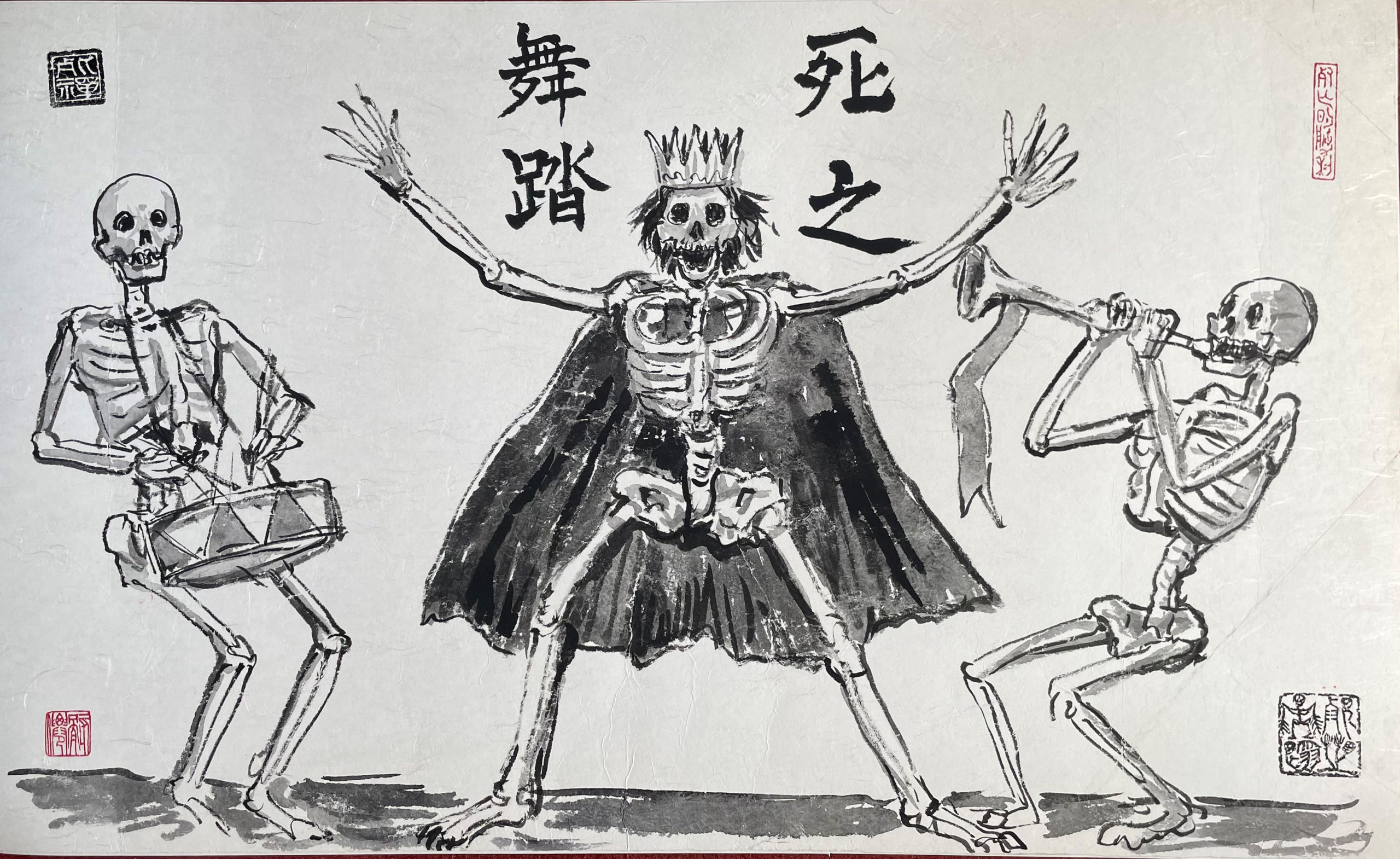
Let's see. The title of this solo exhibition was initially planned to be "Fun Hell". I was thinking of drawing bright and slightly scary works like "Hell Taifu and Ikyu" drawn by Kyosai Kawanabe and graffiti of a dog by Yoshifan Senya.  
"Dance of Death" is a homage to the painting of the same name that was popular in the West in the Middle Ages, but I even feel a penetrating brightness in the death and gods of death in this original European painting.  
Socrates said that "love and wisdom are the training of death", and Zen (meditation) was the training of Nirvana (annihilation). Surprisingly, the world of death called "annihilation" may be bright and very beautiful.

Because AI is in its heyday today
-Is there anything you would like to convey to the world in particular in the future?


Nowadays, AI has evolved a lot, and it is said that illustrators are going out of business. It is precisely because of this now that I want to continue to create analog and human-like works that are increasingly difficult for AI to express.  
I used to be a web person, so I understand it well. Digital is really useful. Even if you make a mistake, you can go back to the past in an instant. You can start over as many times as you want.  
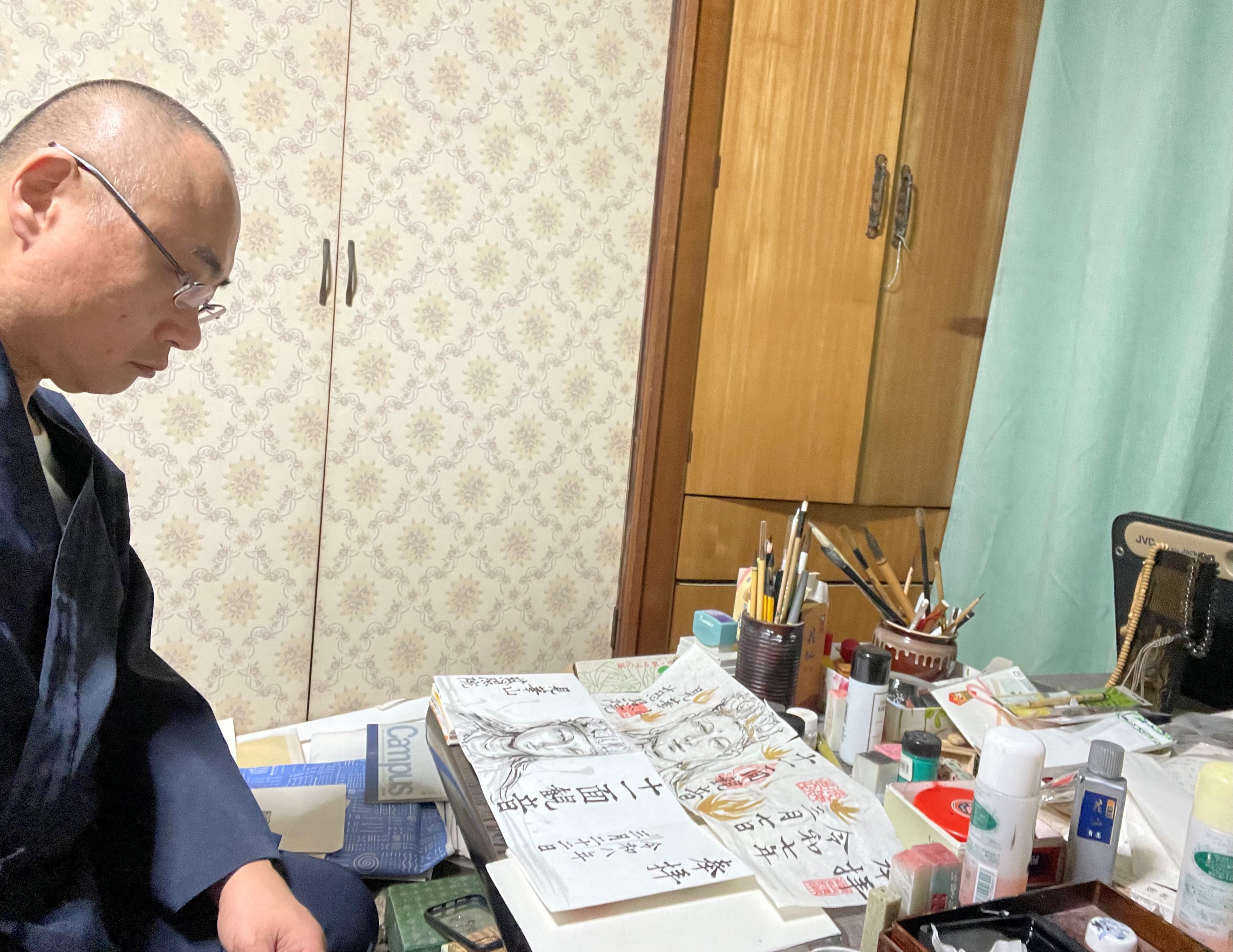
However, the seal carving that I like to work on now is the exact opposite. Once a stone is carved, it cannot be repaired. It will be a completely different style from what I had imagined. It doesn't go according to the calculations, and even if it fails, it can't be fixed. The same goes for ink painting. That's why this is interesting. I would like more people to know about this reverse AI fun. By the way, the rehabilitation that Jung did was to carve stone like the ancients.  
 
-Thank you. Finally, please give a message to those who come into contact with the work. 
 
If you say "Buddhism" or "Zen" like me, you may be somewhat defensive. However, I think it would be okay to use "Tekito" like Senya Yoshihom's painting.  
This is true for art as a whole in modern times, but even if it is the work of a great person, if you think it is boring, it is so, and vice versa.  
I don't think it's okay to think that art is noble or that it has to be interpreted in a special way. I draw a very strange world, but I would be happier if you could enjoy it freely and "greatly".