Show more

Artist 中島裕樹 Nakashima Hiroki

中島裕樹

INTERVIEWInterview

Yuki Nakajima

Please tell us about your encounter with art.

After entering high school, I became friends with a slightly different person. He was a person who was quite interested in art and literature, and when he went home, he saw posters for overseas exhibitions. That's when I first encountered a work of art. I still remember that it was very impressive, and then I started painting.

And one more thing when it comes to encountering art. I visited Kyoto and Nara for the first time after entering university, where I encountered "Buddhist statue art" and, to put it bluntly, turned my life upside down. I felt that this was what I really wanted to do. I entered law at university, but eventually dropped out after one year and decided to pursue a career in Buddhist art.

I had an acquaintance in Kyoto, so I worked part-time there and studied painting, but within a year, an ink painter I knew told me to go to Tokyo if I was going to paint anyway, so I moved to Tokyo at the age of 21 and started this path in earnest.

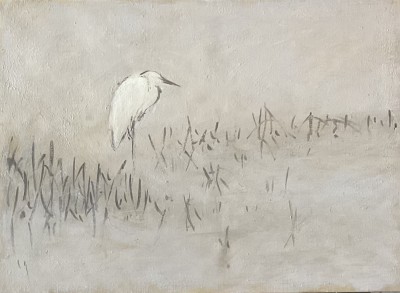
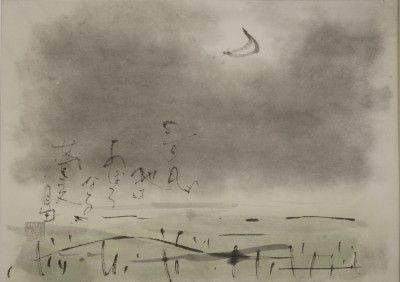
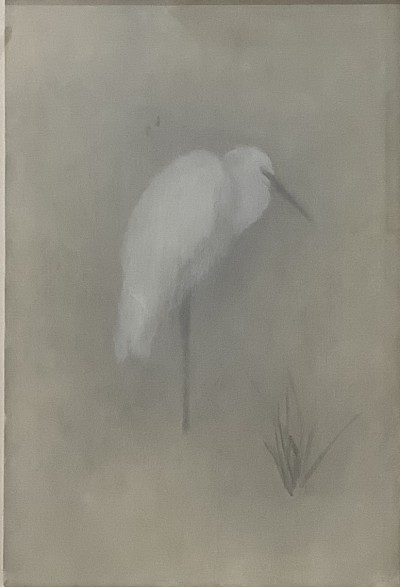
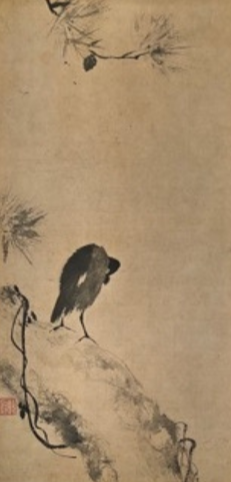
"Bird Diagram" Written by: Mu Xi Mr. Nakajima's favorite work

Mr. Nakajima decided to follow the path of Buddhist art. What kind of thoughts do you have in your daily creative activities?

The ink painter in Kyoto who recommended me to go to Tokyo was a theory of art, or rather, the basic idea of painting was related to "Zen". Even when I was in Kyoto, I went to talk almost every day and asked more fundamental questions rather than technical things, such as what painting is and why humans paint.

Therefore, even when I move to Tokyo and start painting on my own, the underlying Zen and religious mindsets are my basic stance. It is not an act of "painting", but a creative activity in the form of a philosophical pursuit in a sense. I don't deny that I make a living as a painter, but it's only secondary, and I think that whether a painting sells or not is a completely different story.

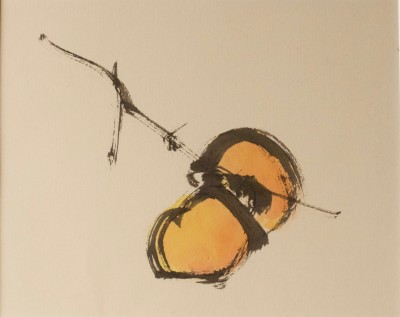
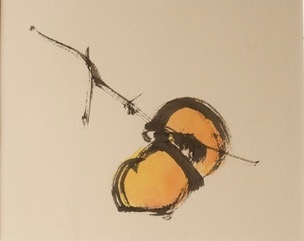
"Persimmon Diagram" Written by: Yuki Nakajima

What kind of works do you mainly work on?

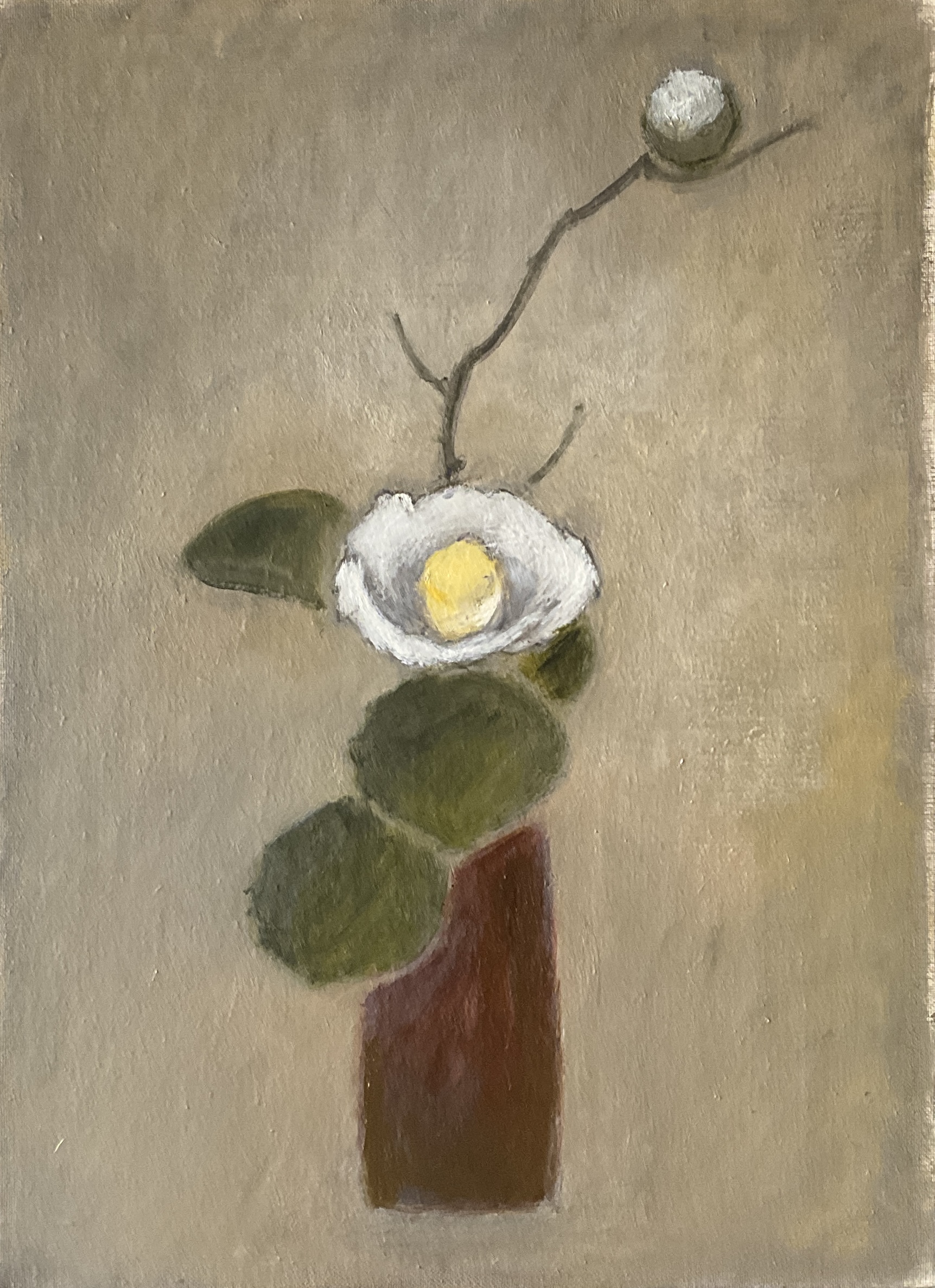
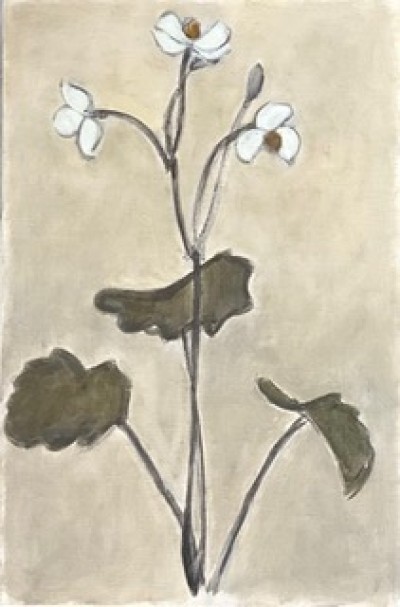
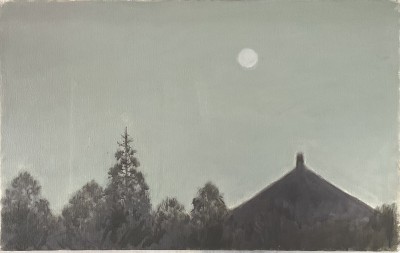
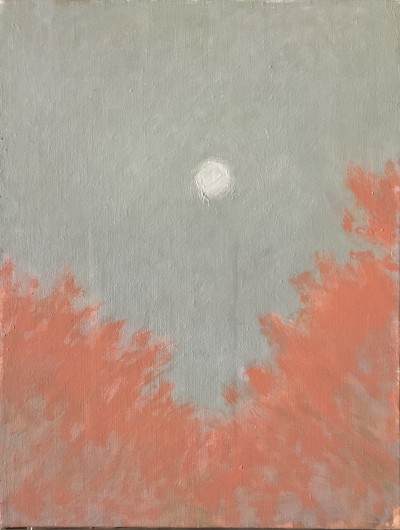
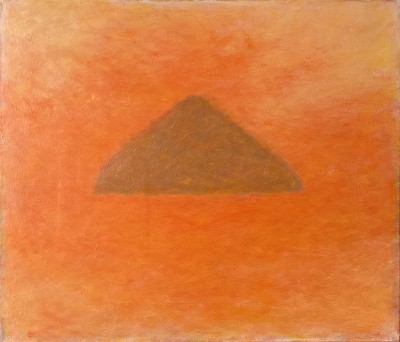
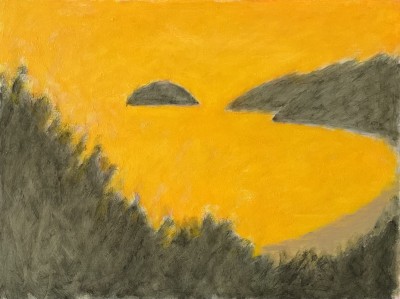
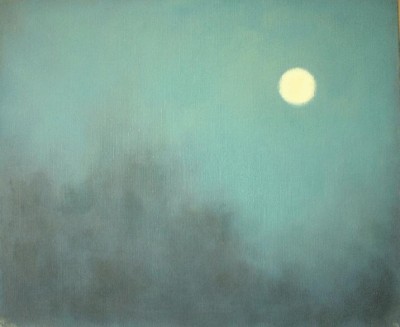
Basically, I paint oil paintings as ink paintings. It's not monotone, but I also paint oil paintings that don't use much color. However, I myself do not place much emphasis on the method itself. For example, when I paint landscapes, there are landscapes such as mountains and rivers, but I myself want to depict the atmosphere and space around them, not the mountains themselves.

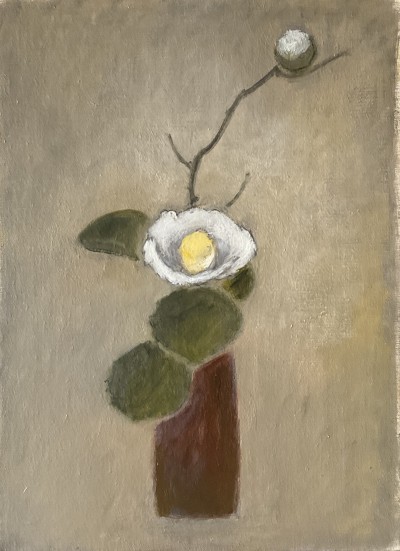
Therefore, even if I draw flowers, I want to draw a "space with flowers" rather than a flower. In other words, I think that "painting is abstract painting". I think that what I really want to express is not only the motifs drawn, but also the surrounding space = space, and I think that space is connected to the essence of things, to put it more philosophically. I think it's a difficult expression to understand, but I want to depict air, space, and existence itself. What to draw or use as a motif is not so important to me.

It's a bit difficult to put into words, but it's a conceptual art.

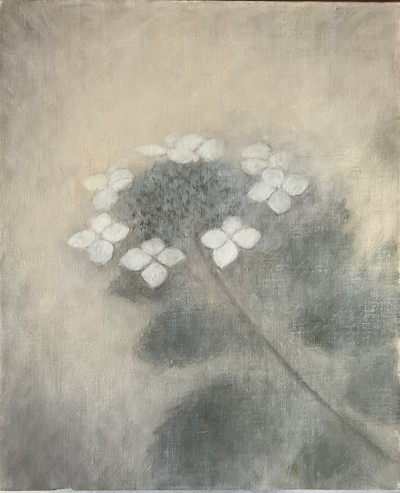
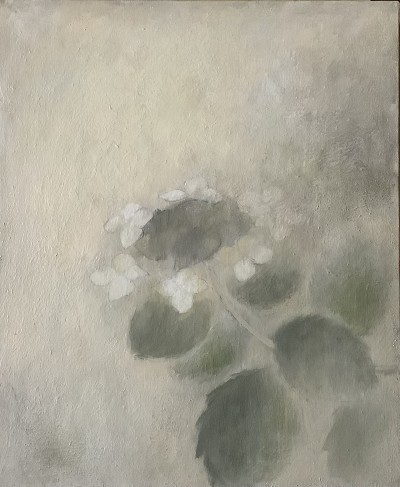
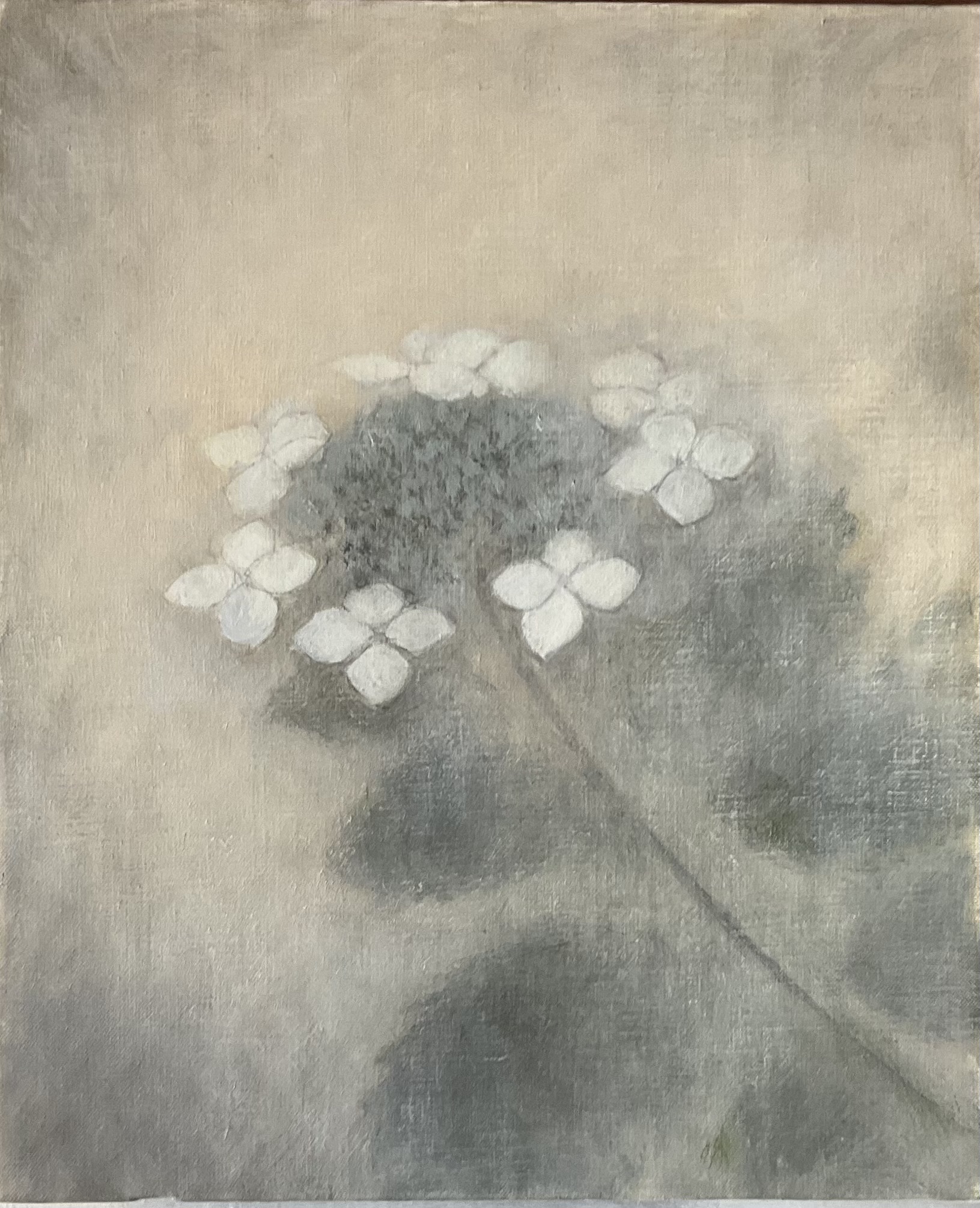
Well, I painted a picture of a hydrangea a while ago, and it's mostly monotone, and the shape is a little blurry. If you draw the shape clearly, such as the position of the leaves, it will become a "picture of hydrangeas". I want to depict the air and atmosphere around the hydrangeas.

Therefore, when I draw, I almost never draw while looking at photos. Since you are trapped in the real thing and dragged along, it is easier to draw when the image is digested in your own mind to some extent and your own image is formed. I actually take pictures and sketches of hydrangeas, but if I leave them alone for a while, the hydrangeas will be deformed in their own way, or rather, they will transform into hydrangeas that match my image. I guess it is easier to connect it to expression if you make it into a picture.

"Hydrangeas" Written by: Yuki Nakajima

Do you have any aspirations for the future?

What I want to do in the future is to add a little color to the monotone paintings. I am currently working on the challenge of whether I can express the spirituality of ink painting while using color, and express it as a single cohesion without contradiction.
If you add color, the picture will be broken. If you don't add any color, it will come together, but if you add color there, it will bring you back to reality... I hope to harmonize them well and express them as a single painting.

I am not satisfied with my art at all. This is what the teacher said, but a picture is a painting that depicts the artist's desire to paint. The most vigorous thing is children's drawings. Children's drawings are messy and full of vitality. And when I watch it, it becomes fun for some reason. I think it's because the child has a "feeling" of being happy to draw. However, as you get older, it is difficult for such pure feelings to come out. There are aspects of trying to put it together or drawing a picture with your head. Therefore, I think it is important to have a pure and calculating feeling like a child. Of course, it's difficult, but...

Even if you can't express the picture you were aiming for, even if you don't get the answer, I think the process of trying to get there is the answer in a sense. It is meaningful to draw in the same way that children enjoy playing with it. I think that's what "playing" is like, and it's not about playing because you get something, it's just because it's fun to play. Therefore, I think that the "result" of what kind of picture will be finished is a different story.

Driven by the impact of his exposure to art, Mr. Nakajima says that he is still searching for the perfect form of art he aims for every day. I would like to continue to pay attention to his future works, which "I want to depict 'space' rather than 'things'".

EXHIBITIONS Exhibition Information

2025.09.01 - 2025.09.15

Hiroki Nakajima Web Solo Exhibition
Oil painting, but "Japan painting" or "ink painting"

Ink painting and oil painting, literally water and oil, are opposites and should be expressed naturally. East and West, if you analyze them, it's troublesome, but as my teacher, who was an ink painter, said, I think it's okay to say that what the Japan painted is Japan painting.

His teacher, Katake Murakami, called the painting a "prayer behind closed doors." The child with paper and crayons in his hands forgets himself and is immersed. At the root of all of them is the work of life, its joy, and the method of expression. Draw what you want to draw as you want to draw, that's all.