Shiko Munakata
See Munakata

A small manju shop sees through the 'world's munakata'

—— Shiko Munakata, The Life of a Blacksmith's Child Obsessed with Woodblock Paintings

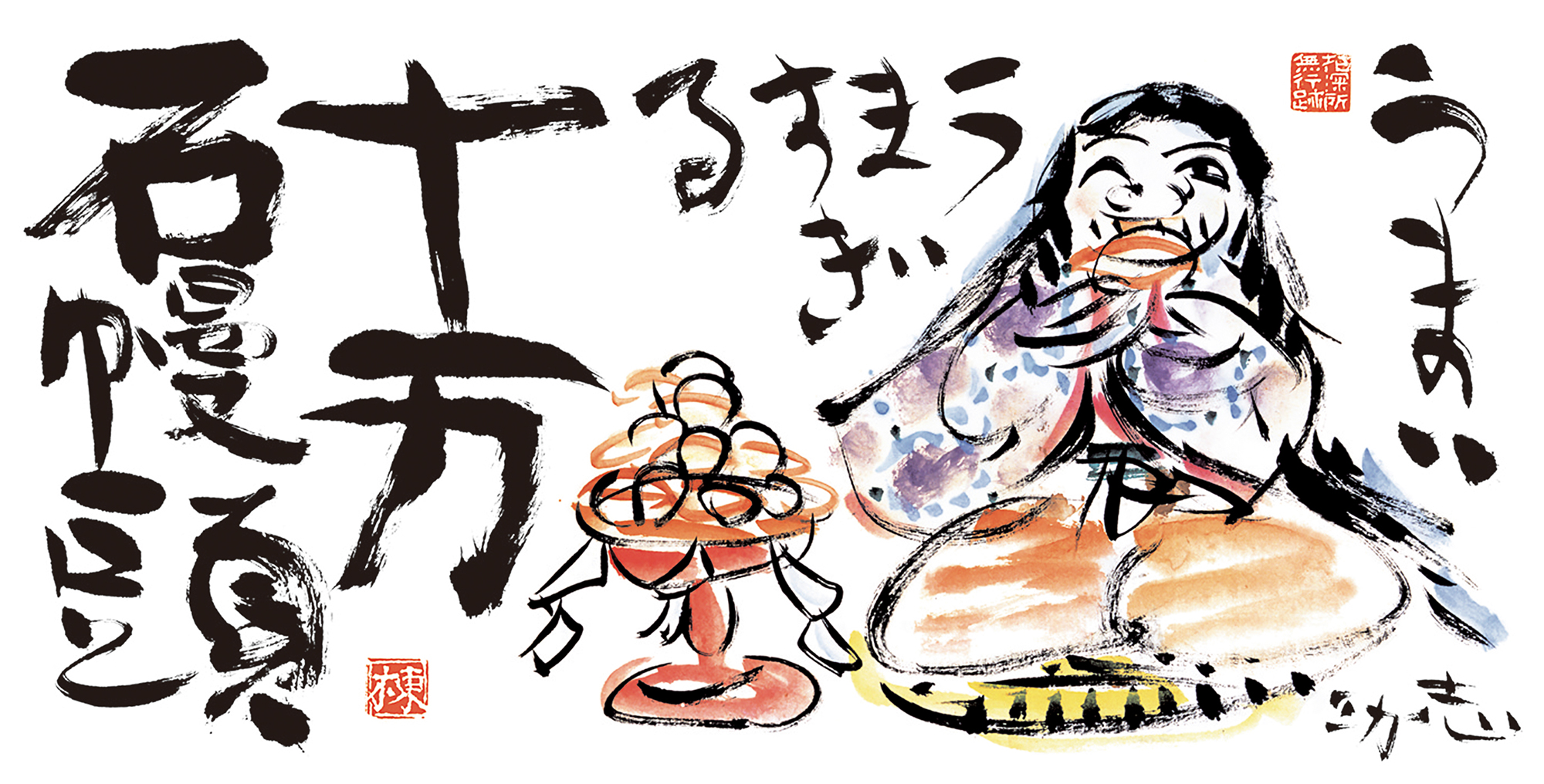
In 1953 (Showa 28), the owner of a small Japanese confectionery shop in Gyoda City, Saitama Prefecture, visited a printmaker. After taking a bite of the manju as a gift, the printmaker muttered, "Delicious," and continued. "It's way too good to keep it a specialty of Gyoda."
That man was still not widely known to the public. It was an era when even being labeled an 'unusual printmaker' was not uncommon. However, it is said that the confectionery shop owner saw the work and intuitively thought, "This is the real thing." It was about three years later that he was called the 'World's Munakata' at the pinnacle of the world. A local confectionery shop recognized the talent of an unknown artist ahead of the rest of the world—such a story remains, showing that Shiko Munakata's character was extraordinary from the start.
So, who exactly was that 'man who was seen through'? Munakata celebrated his 120th birthday in 2023 and 50 years after his death in 2025. At this milestone, large-scale retrospectives have been held one after another in Japan, and internationally, he is being called the 'Van Gogh of Japan,' and his reputation is rising once again. How a nearsighted blacksmith child carved out a unique universe called 'woodblock prints' and engraved them in the world. 120 years since his birth, and 50 years since his passing—based on achievements both domestically and internationally, I want to reconsider the concept of 'Munakata of the world.'

"If you have a rude, you become Van Gogh"—The origin of the blacksmith's child

Shiko Munakata was born on September 5, 1903, in Yasukata, Aomori City (then Omachi). He was born as the sixth child (third son) among nine sons and six daughters to his father Kokichi and mother Sada. The family had been engaged in blacksmithing for generations.
From a young age, he suffered from severe nearsightedness, but Shikō was a boy obsessed with drawing. When he was in sixth grade, while running to see a plane crash landing, he found a white aquatic plant flower (Sawashaki) in a rice field. Captivated by her beauty, she resolved, "I want to become someone who can express this beauty"—such an episode is conveyed. After graduating from Nagashima Elementary School in 1916, he helped out with the family blacksmith business together with his older brother.
At 17, he was hired as a waiter at the court's lawyer's office, and in his spare time, he devoted himself to sketching at Gappura Park in Aomori. At 18, he was shown a color version of Van Gogh's "Sunflower" by the painter Tadaaki Ono, which left a profound impression."If I make a mistake, I'll become Van Gogh! (I will become Van Gogh)"—The words he shouted at that moment have been passed down as lines symbolizing his life.
When Shiko moved to Tokyo in the early 1920s, his goal was to pursue oil painting. However, he continued to be rejected at the official exhibition (Teiten). After much struggle, in 1928, on his fifth attempt, his oil painting 'Miscellaneous Gardens' was finally selected and received official recognition for the first time.

From Oil Painting to 'Woodblock Prints'—A Single Print That Changed Destiny

The turning point was his encounter with a print. In 1926, after seeing Sumio Kawakami's "Early Summer Wind," Shiko was overwhelmed by the power of woodblock prints. The following year, in 1927, he created woodblock prints himself, and in 1932, he visited woodblock printmaker Unichi Hiratsuka to learn techniques. Around this time, works he exhibited at the Kokuga-kai Exhibition received scholarship awards and were purchased by the Museum of Fine Arts in Boston and the Musée de l'Luxembourg in Paris, quickly gaining recognition overseas.
The decisive leap came in 1936. His large-scale work, 'Yamato Shibishi Hanga Maki,' which included a title mixed with old characters, caught the attention of leaders of the Mingei movement such as Soetsu Yanagi, Kanjiro Kawai, and Shoji Hamada, and was purchased by the Japan Mingei Museum. From then on, Shiko regarded Yanagi as his lifelong mentor, and through rich friendships centered on folk crafts—such as washi craftsman Karine Kurashina and painter Kazumasa Nakagawa—he developed his own style of expression.

Sumio Kawakami, 'Early Summer Breeze' (1926) / Public Domain

Then, in 1942, in his essay 'Ban Sange,' he declared that his works would be called 'hanga' rather than conventional 'hanga.' This was because they believed in the vitality generated by the board itself. In 1952, he left the Japan Print Association and, together with Kibachiro Shimosawa and others, founded the Japan Printmaking Institute. Starting from traditional woodblock prints, he began to walk a unique path unlike anyone else.

The unique universe of 'woodblock prints'

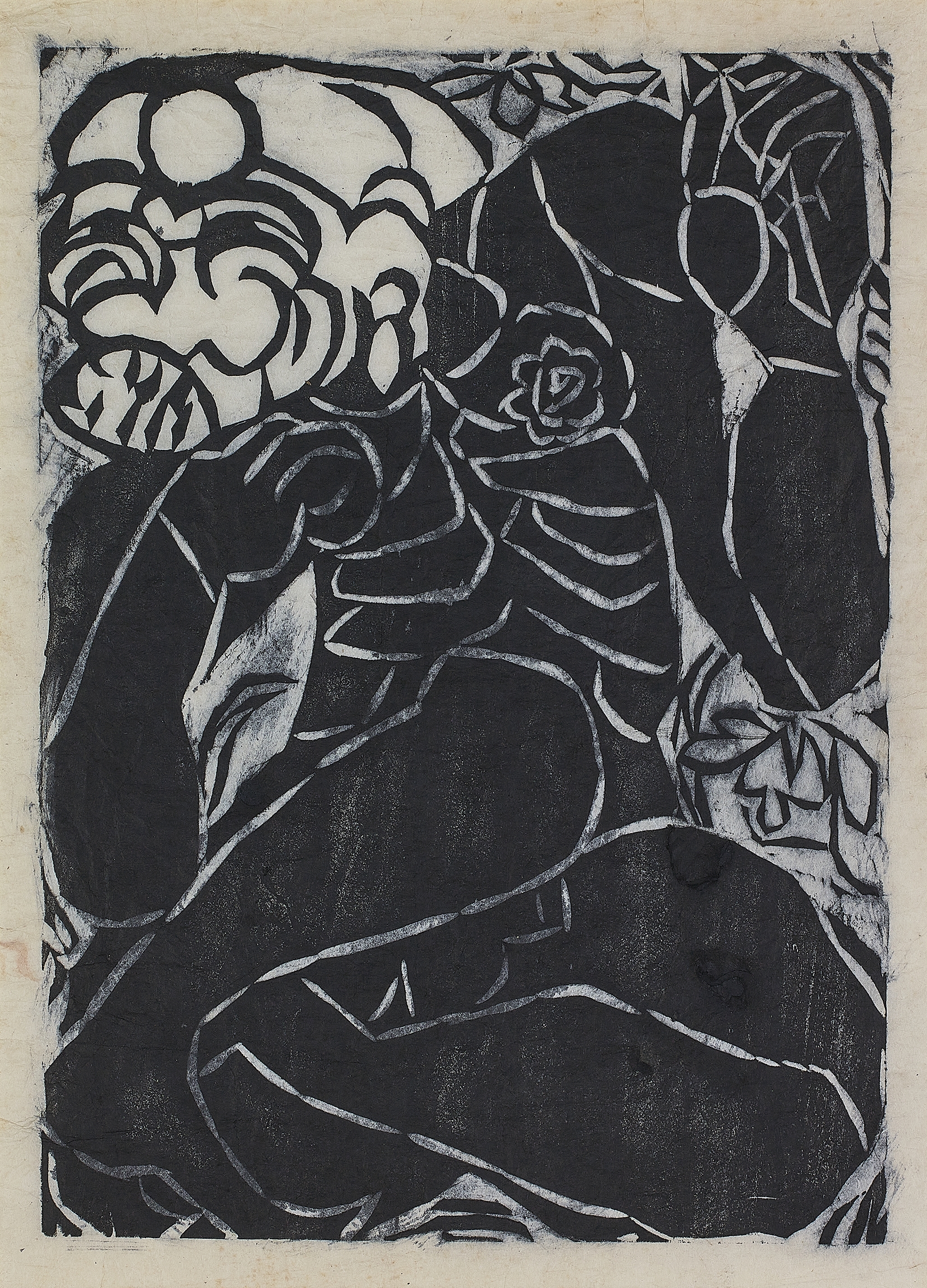
Munakata's style was unique, fusing traditional Japanese woodblock prints with a primitive strength that eliminated perspective. His work is based on monochrome ink printing, while also featuring the artist's qualities of writing titles and poems in large characters on the canvas. He boldly carved large woodblocks and, with high brushwork, created images that were both rough and dynamic. He also made full use of reverse coloring, and after the war, works incorporating vermilion and green became more common. Many of his subjects are inspired by Buddhism, folk tales, and poetry.

A list of his representative works reveals his journey.

Title of the Work Year of Manufacture Techniques and forms Main Holdings Notes
Yamato Beautiful Print Scroll 1936 Sumiori Woodblock & Folding Screen Japanese Folk Craft Museum First Exhibition and Purchase at the Kokugakai Exhibition
The Ten Great Disciples of the Two Bodhisattvas Shakyamuni 1939 Ink folding woodblock ・ Six-panel folding screen Chiba City Museum of Art 1940 Kokuga-kai Exhibition Sawake Prize
Zhongxi Ode 1946 Ink-printed woodblock prints and scrolls The National Museum of Modern Art, Tokyo, and others 1946 Nitten Okada Prize
Woman Kannon Panel Scroll 1952 Sumiori woodblock and hanging scroll Japanese Folk Craft Museum 1952 Lugano Print Exhibition, Excellence Award
Song Boards and Painted Fences 1956 Sumiori Woodblock & Folding Screen The National Museum of Modern Art, Tokyo, and others 1956 Venice International Print Award

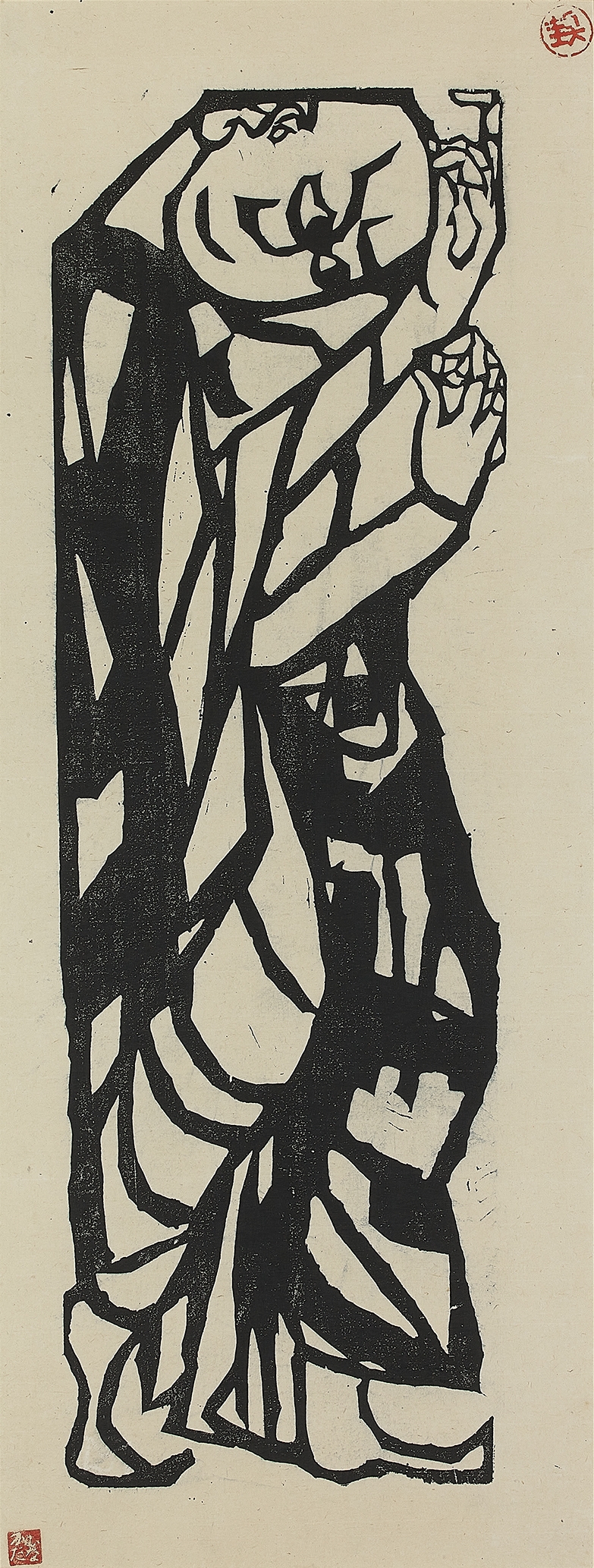
The Ten Great Disciples of the Two Bodhisattvas Shakyamuni: 'Subhuti's Fence'

Zhong Xisong, 'The Fences on This Bank'

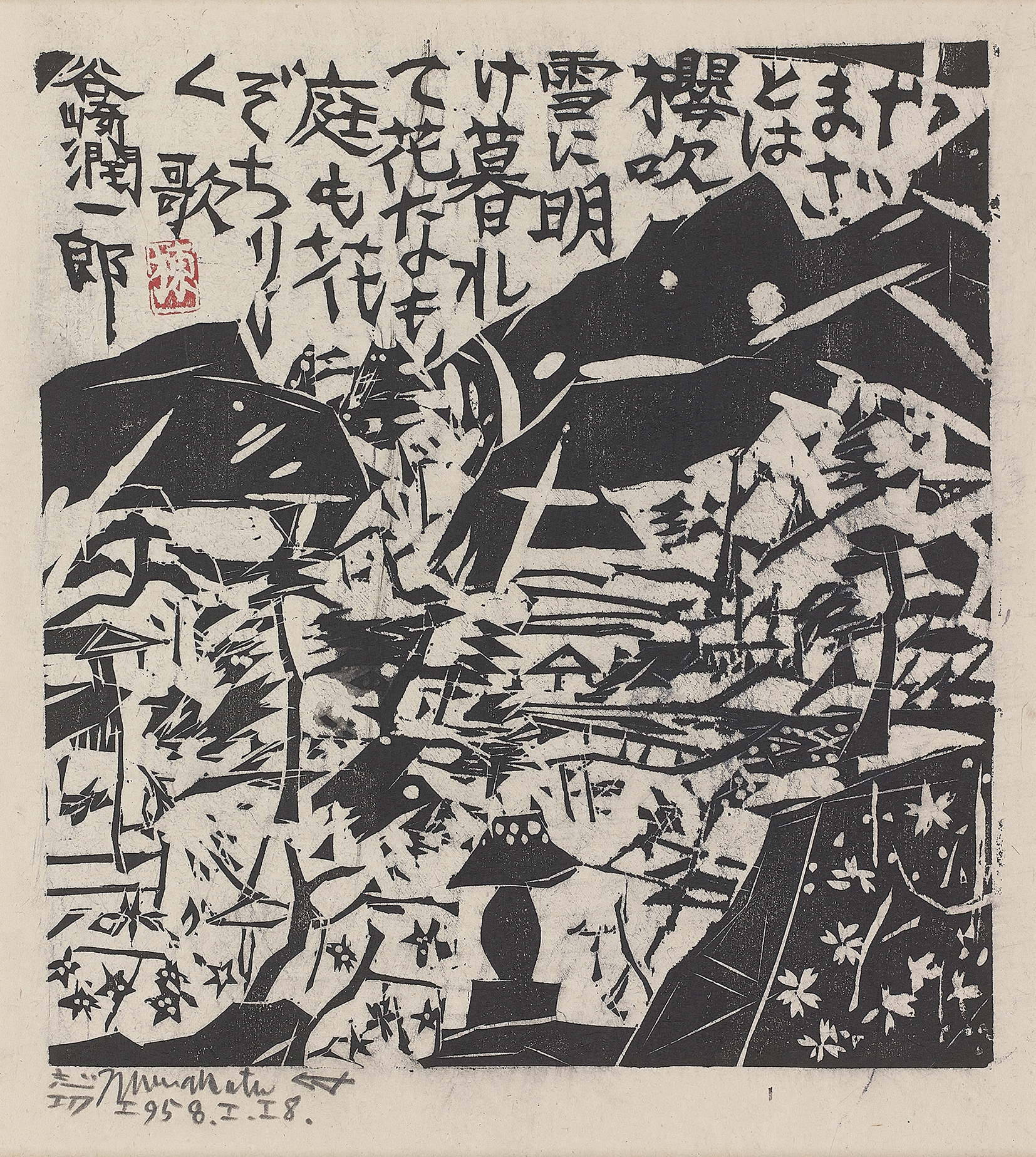
Kasakaban Picture Fence: 'Cherry Blossom Blizzard Fence'

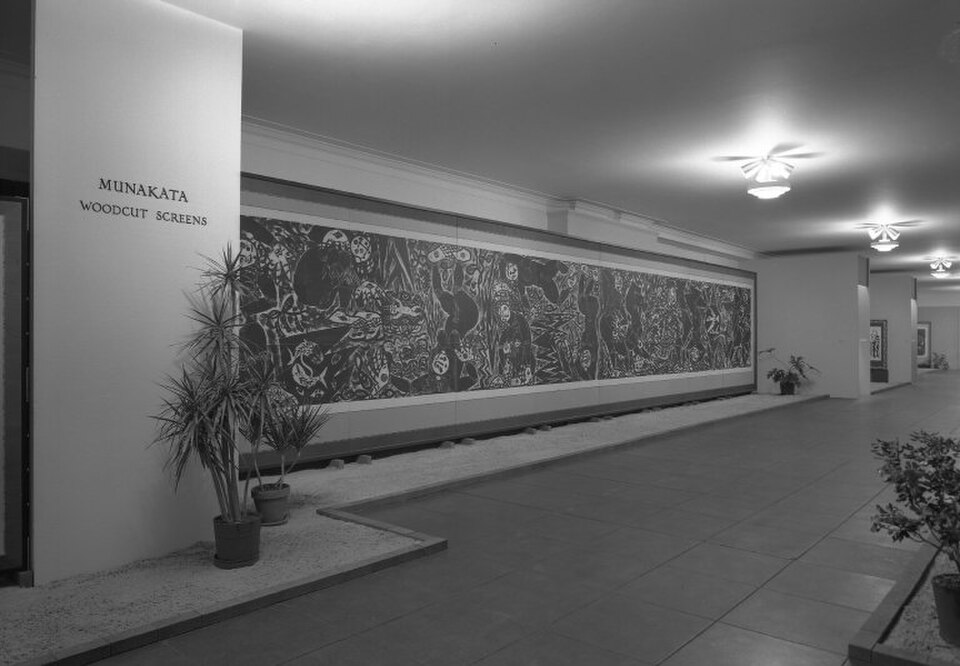
In particular, 'The Ten Great Disciples of the Two Bodhisattvas and Shakyamuni' is a six-curved folding screen inspired by the statue of Subhuti at Kofuku-ji, featuring large wooden planks with dynamic carvings, making his name renowned worldwide. The 'Woman Kannon Woodblock Scroll' is a postwar representative work based on the Thousand-Armed Kannon tradition at Kiyomizu-dera, with the title 'Woman Kannon' written in large ink at the upper right of the painting. When he became so absorbed in his craft, he became so absorbed that he could no longer see his surroundings, and due to his extreme nearsightedness, he would rub his face against the board while carving, which was described as 'almost divine in nature.' Shiko himself said, "I am not responsible for my work. There is someone who moves me," believing he entrusted his creation to the power of the Buddha.

To the 'Munakata of the World'

After the war, Munakata's woodblock prints continued to gain recognition on the international stage.

  • 1946: 'Ode to the Bell River' won the Okada Prize at the 2nd Nitten Exhibition
  • 1952: First Japanese to win the Excellence Award (Bronze Prize) at the Lugano International Print Exhibition in Switzerland
  • 1955 São Paulo Biennale, Grand Prize in Printmaking Category
  • 1956 Venice Biennale International Print Grand Prize

1968 Exhibition view of Shiko Munakata's woodblock print screen
Brooklyn Museum of Art, New York

In particular, winning the grand prize in Venice in 1956 cemented the title of 'Munakata of the World.' In 1960, a retrospective was held at the Cleveland Museum of Art, touring New York, Seattle, and Los Angeles. Domestically, it received the Asahi Cultural Award in 1964, the Order of Culture and the Mainichi Arts Award in 1970.
His works have long been held in collections of the Museum of Fine Arts in Boston and the Musée de l'Luxembourg in Paris, and today are held in numerous museums around the world, including the Smithsonian in Washington, D.C., MoMA, the Philadelphia Museum of Art, and the Ohara Museum of Art.

Behind the glory, Munakata's life was marked by a series of hardships. During his childhood, financial hardship forced him to take over the family business, and he also suffered from violence from his alcoholic father, Kokichi. In 1930, due to financial difficulties, he left his wife, Chiya Akagi, in Aomori and moved alone to Tokyo, placing a heavy burden on his family.
War mercilessly took away what had been built. In 1945, while evacuating to Nanto City, Toyama Prefecture, his home 'Aizenen' in Yoyogi was completely destroyed in the Tokyo air raids, resulting in the loss of most of his prewar block woodblocks. After the war, he settled in Fukumitsu Town (now Nanto City). In terms of health, in addition to his natural nearsightedness, he lost sight in his left eye in the late 1950s. Even so, he never stopped working. In 1959, after the U.S. military plane crash at Miyamori Elementary School in Okinawa, the following year, at the request of a monk, he created ink paintings to honor the victims and presented them to the bereaved families. Munakata's brushwork often quietly accompanied people's sorrow.

A gentle personality and an uncontrollable improvisation

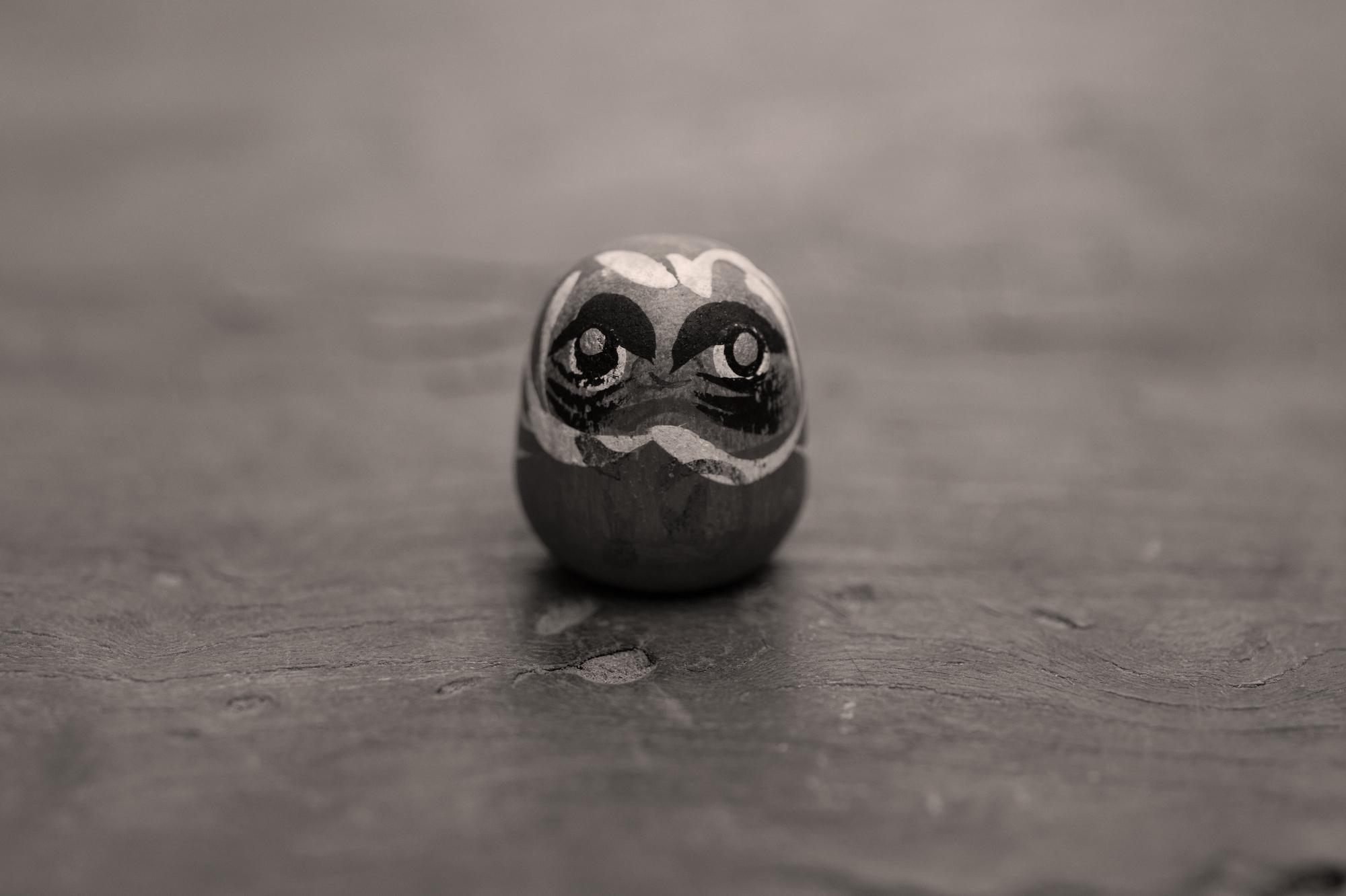
Despite enduring many hardships, those who knew Munakata unanimously described his character as "bright, philanthropic, and kind to everyone." In contrast to his alcoholic father, his devoted admiration for his mother Sada never disappeared throughout his life, and it is noted that this became the source of the goddess-worshipping imagery that repeatedly appears in his works. In his later years, he was famous for continuously sending thank-you letters with paintings to many acquaintances. Among them, the letters depicting the Dharma statue, according to her grandson Yoriko Ishii, "were not completed because she suddenly passed away during the process, so the Dharma's appearance gradually became weaker depending on the recipient." One can sense part of the creative impulse that continued until the very end, resembling dedication and skill.

On the other hand, his uncontrollable improvisation sometimes erupted as endearing eccentricities. In 1934, he drew an octopus on the sliding door of his rented house in Nakano, Tokyo, for which he was scolded by the landlord; it is said that during the production, he spread out paper like a master of painting and danced with his brush. There is also an anecdote that he was nicknamed 'Bo' among his friends.

"The steamed bun story at the beginning was also a product of this improvisation."

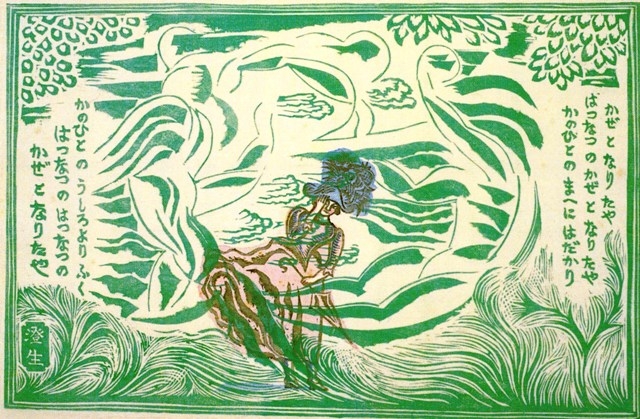
In 1953, Shinzo Yokota, the first head of the Gyoda confectionery shop—the famous 'Jumankoku Manju' (formerly Fukuchaya)—visited Shiko to request a painting for a hanging paper at the introduction of calligrapher Daitō Atsumi. Shiko, who had a big sweet tooth, eagerly devoured the manju he brought as a gift, praising it as 'delicious' and 'unbelievably good' (there are various theories about whether he ate five or six, and the official record is not specified). Then, going beyond the requested design boundaries, he picked up a brush on the spot and drew a picture and title on colored paper featuring the princess of Oshi Castle. Whether it was the request or not, it was Munakata himself who inspired him to create that one piece—and that impression continues to live on as the packaging for the shop's signature confectionery to this day. Incidentally, "Delicious, too good" later became the restaurant's iconic catchphrase. The confectionery shop owner at the beginning met exactly this kind of man.

An Unexpected Connection Beyond the Printmaking World

Munakata's friendship extended beyond the print world. His emotional anchor was always in his hometown, Aomori. In 1969, he was selected as the first honorary citizen of Aomori City, and in 1971, at the request of Mutsu Shimpo newspaper, he produced the 'Shiko Neputa' and had it displayed at the Hirosaki Neputa Festival. In the world of art, it is said that around 1938 he met and received support from the father and son Magosaburo and Soichiro Ohara, who were involved in the establishment of the Kurashiki Ohara Museum of Art. In 1963, a woodblock art gallery was opened at the same museum.
The international reach is also not to be missed. In 1958, he participated in an international touring exhibition hosted by the Ministry of Foreign Affairs, and in 1959, invited by the Rockefeller Foundation and others, he traveled to the United States, holding solo exhibitions across the country and lecturing on Japanese prints at universities. He was highly respected by the religious community, and in 1961 and 1962, he was awarded the titles Hokyo and Hogen for printmaking art by Horinji and Nissekiji Temples. The art of a man born into a blacksmith's family was easily appreciated across boundaries of region, nation, and religion.

Tracing the Life of Shiko Munakata in a Timeline
  • Born in Aomori City in 1903
  • 1916: Graduated from Nagashima Elementary School and helped with the family blacksmith business
  • 1926: Encountered Sumio Kawakami's 'Early Summer Wind' and became interested in printmaking
  • 1928: Oil painting 'Miscellaneous Garden' selected for the 9th Teiten Exhibition (fifth attempt)
  • In 1932, he received a scholarship award at the Kokugakai Exhibition. The work was purchased by the Museum of Fine Arts in Boston and the Luxembourg Museum
  • 1936: Exhibited 'Yamato Shibi Meishi Hanga Scroll' at the Kokugakai Exhibition, acquired by the Japan Folk Craft Museum
  • 1938: 'Katsumanpa Zenchi Bird Mandala' was selected as a special print for the first time at the Shinbunten Exhibition
  • 1945: While evacuating to Toyama, his home was destroyed in the Tokyo air raids, resulting in the loss of many woodblocks
  • 1946: 'Ode to the Bell River' won the Okada Prize at the 2nd Nitten Exhibition
  • 1952: Received the Excellence Award at the Lugano International Print Exhibition. Founded the Japan Printmaking Institute, first overseas solo exhibition in New York
  • 1955 São Paulo Biennale, Grand Prize in Printmaking Category
  • 1956 Venice Biennale International Print Grand Prize
  • In 1959, invited by the Rockefeller Foundation and others, made his first trip to the United States, holding solo exhibitions and giving lectures nationwide.
  • 1960 Retrospective at the Cleveland Museum of Art (touring within the United States)
  • 1964 Asahi Culture Award
  • 1969: Named an Honorary Citizen of Aomori City
  • 1970: Received the Order of Culture and the Mainichi Arts Award
  • He passed away on September 13, 1975, due to liver cancer. In November of the same year, the Shiko Munakata Memorial Museum opened in Aomori City

The boy who shouted, 'If you have a worst, you'll become Van Gogh,' and what happened afterwards,

Born as the child of a nearsighted blacksmith, the boy who shouted, "If you make a mistake, you'll become Van Gogh," became a "world of the world" who resembles no one instead, instead of becoming Van Gogh. Growing up in harsh environments while carving out his own unique world, his style fuses the strength of woodblock prints with calligraphic and pictorial expression, and his style continues to influence many younger generations today. And—the wrapper of Gyoda's manju is also an unmistakable work by Shiko Munakata, seamlessly connected to the many woodblock prints he left behind. Before the world called him 'Munakata,' there was a confectionery shop that recognized his talent. That very fact quietly tells us how genuine his talent was.

50 Years After His Death—Re-evaluation Continues Even Now

In 2025, Shiko Munakata marks the 50th anniversary of his death. However, rather than fading into the past, that reputation has become more intense in recent years. In 2023, marking the 120th anniversary of his birth, a grand retrospective exhibition titled "Making of Munakata" toured Aomori, Tokyo, and Toyama, revealing a comprehensive picture that effortlessly transcended genres—not only woodblock prints but also Japanese paintings and oil paintings, as well as design for binding and wrapping paper. The following year, in 2024, the Shiko Munakata Memorial Museum in Aomori, with its 49-year history, has ended its role and transferred all its collection to the Aomori Prefectural Museum of Art. The exhibition space was more than doubled, and the honors were passed down to the next generation. Then, in 2025, 50 years after his death, commemorative exhibitions were held one after another at the Aomori Prefectural Museum of Art, including 'Children of Aomori: The World's Munakata,' as well as in Osaka, Hiroshima, and other locations.
Its reputation overseas is quietly but surely rising. The English media referred to Munakata as 'Japan's van Gogh' and discussed the rough abstraction of the 'Ten Great Disciples of the Two Bodhisattvas Shakyamuni' by comparing it to Picasso's 'Guernica' of the same era. His works are held in major museums in Europe and America, including MoMA, the Brooklyn Museum of Art, and the Los Angeles County Museum of Art, and there are records of his masterpieces selling for nearly one million dollars at auctions.

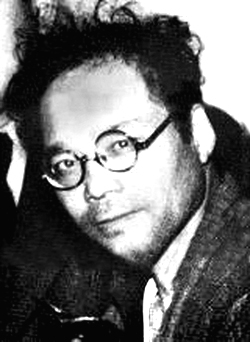
Shiko Munakata

Now, from anime, games, folk crafts to Japanese cuisine, Japanese culture, on an unprecedented scale, is attracting global attention. Amidst this trend, Munakata's woodblock prints, which abandon perspective and engrave prayer and vitality solely with ink black and empty space, are becoming increasingly irreplaceable in one regard for being "Japanese, yet unlike anywhere else in the world." A boy who admired the West and shouted, 'If you make a mistake, you'll become Van Gogh,' reached the world with the most indigenous techniques—precisely because half a century has passed,"Munakata of the World" is not a title of the past, but continues to serve as a reliable guidepost for future Japanese art to face the world.

[Document Cooperation]
Jumangoku Fukusaya Co., Ltd.
2-27-28 Nagano, Gyoda City, Saitama Prefecture 361-0023
https://www.jumangoku.co.jp/

Gallery Sozuru Co., Ltd.
1F, Tomasu Building, 16-1 Nihonbashi Hakozakicho, Chuo-ku, Tokyo 103-0015
https: //soukaku.co.jp/