InterviewFeatured Artist

Japan Painting
Hiroaki Tanaka
When he was in high school, he encountered Japan painting at the Art Research Institute and decided to pursue a career after being impressed by the exhibition at the institute. After graduating from Aichi University of the Arts graduate school, he devoted himself to copying national treasures for 15 years, and developed the patience of "the power to endure" more than technique. Currently, he always visits the site and continues to work while valuing the light and scenery he feels with his skin. Recently, with the theme of light reflected in the sea, he has taken on the challenge of expressing only the width of the light, omitting even the waves. Now that I can express myself in my own way, I feel the joy of being born with new ideas every time I finish drawing.
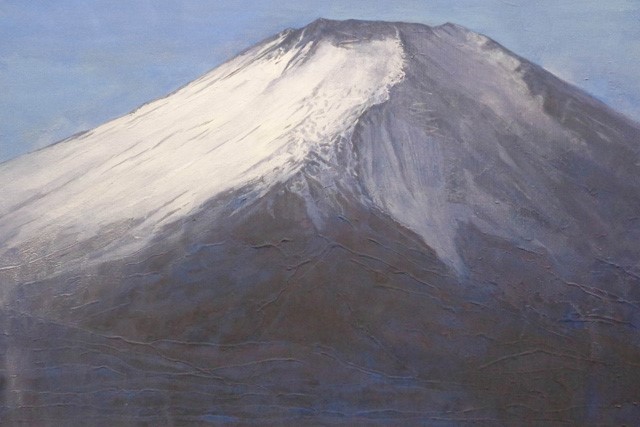
"Fuji" Written by: Hiroaki Tanaka
Why did you go on the path of Japan painting? Please tell us about your history since high school.

I declined the invitation to kendo and entered the general public, and started attending an art research institute in my first year of high school. I couldn't understand the challenges of the design department, and I liked to draw detailed pictures, so I longed for the meticulous work of Japan painting. However, the main reason may have been a parent's words to stop oil painting because it would make the house stink (laughs). When I was in high school, most of the cram school instructors were members of the Japan Art Academy, and I was so moved when I went to see the art school exhibition for the first time that I firmly decided to go down this path. During my two years as a ronin, my desire for Japan painting strengthened, and I studied with the desire to learn from a teacher at Aichi University of the Arts.

 
Until the 15-year copying period bears fruit

After graduating from graduate school at Aichi University of the Arts, I worked on copying national treasures for 15 years. It was interesting to copy a classic painting from 1300 years ago in the form of conservation and restoration, and I was satisfied with it. Therefore, I neglected my activities as a writer. I only exhibited works at the Academy Exhibition due to my relationship with the university. In 2012, I was selected for the first time at the 68th Spring Exhibition, but I didn't think I would enter, so I left it without opening the seal even after receiving the notice. After the copying team disbanded, I became serious about my writing activities and was able to be selected.
The most important thing is to be patient rather than technique. When I accumulate paints, if I want to get results quickly, I want to skip the middle of the process, but I can now put up with the tedious work between bringing it to the finish. I think this perseverance led to the result of being selected for the National Exhibition.

What do you value when creating?

I can only draw what I saw on site. I never look up photos or the Internet and draw them. I don't think you can make a work without feeling the local air, the overwhelming scenery of the mountains, the scenery that sucks you in, and the impact of being blown away. When I create, I always hold the brush while thinking about what I feel from the local area.
It's how to show the sense of scale you feel on a limited screen. Even if you draw everything you see, the picture will only get smaller, so it is difficult to choose what to put in and what to omit. Especially when drawing mountains, you need to express the size of the mountain to some extent, even if it is a small screen. Sometimes things don't go well while drawing, and you change direction.

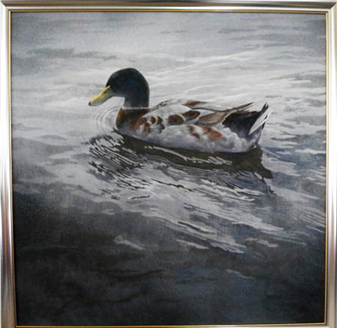
"Water Surface-Swim" Written by: Hiroaki Tanaka
Are there any themes you've been working on lately?

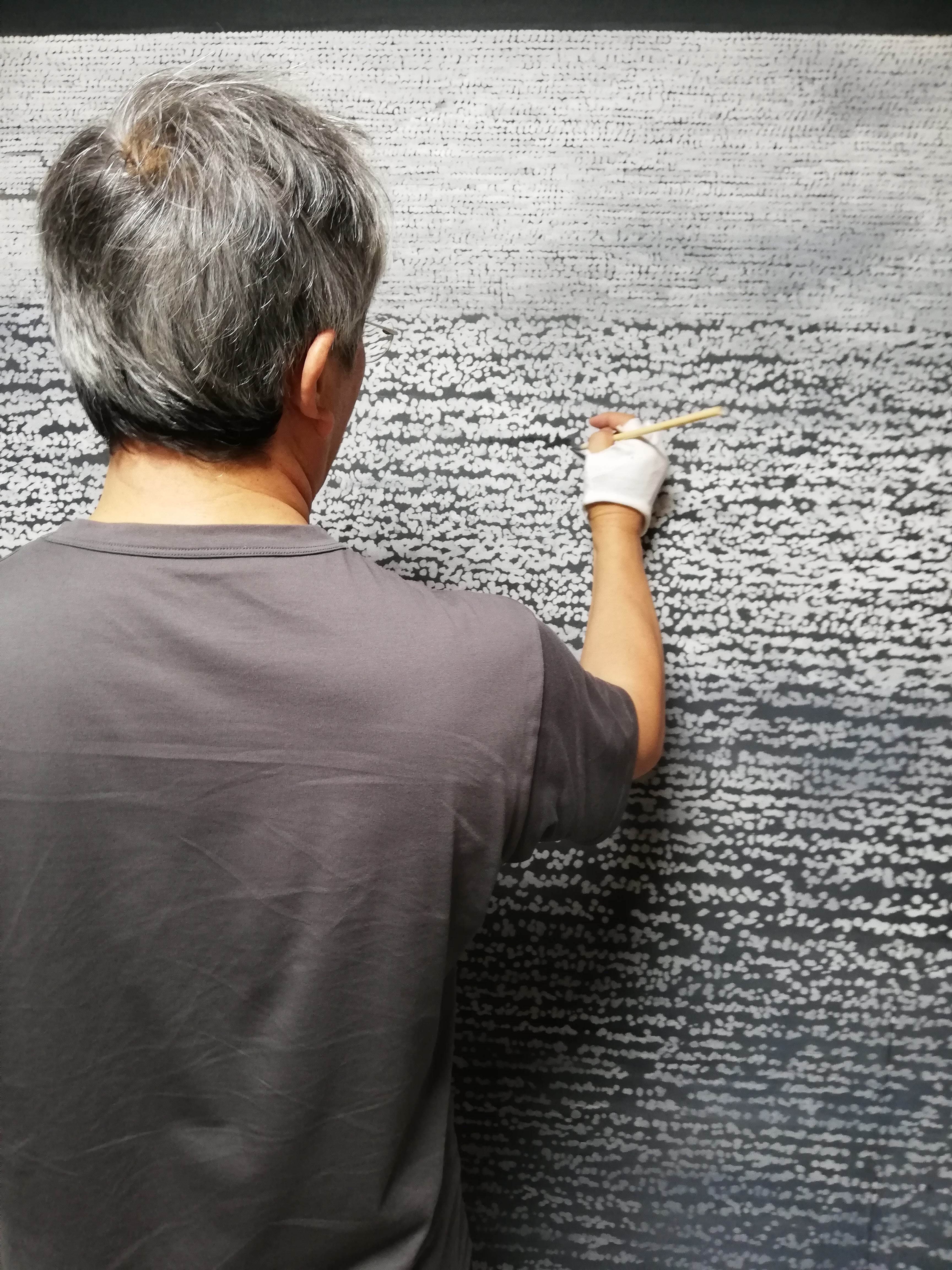
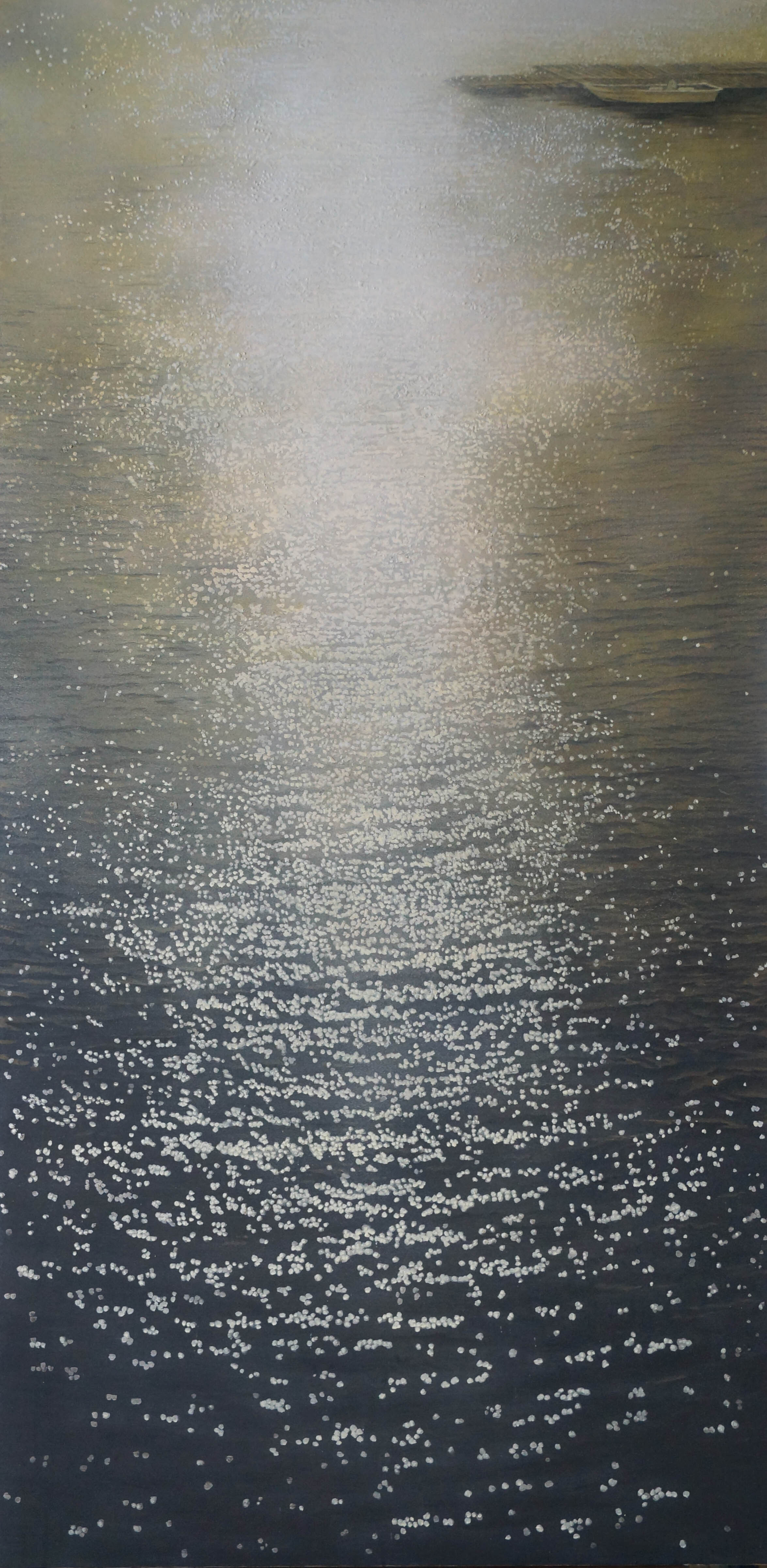
I am working on the theme of light reflected in the sea and light on the surface of the water. I have been working for two months to express the light, dotting it finely with a brush. The light part is not painted, but is applied one by one, and then mist is sprayed. Repeat it twice or three times. When I was young, I couldn't stand it, but now I have the strength to take my time.
I am conscious of eliminating the superfluous as much as possible when expressing myself. I paint a picture of a ship floating in the light reflected in the sea, but if you want the light to express it, you don't need waves. There are only ships, light, and horizon. I don't draw waves at all, but I take the plunge to express the waves only with the width of light. Now I am drawing with the idea of erasing as much excess as possible.
I feel like this will be fine. When I wasn't selected, I didn't know how to finish it and created something messy, but now I have come to value the atmosphere. This would be fine if you were able to create an atmosphere rather than the number of moves. It ends the moment you are able to express what you want to express and coincide with your first thought. If I think it fits my image, I don't add anything myself.

What is the fun of Japan painting materials? How long will it take to make it?

Rock paints made from natural stones are expensive, but the material is interesting because they are painted using natural colors. The way the paint looks different from oil paintings is also moist, or rather, I love the unique texture of Japan paintings. The feeling and feel of stacking paints. It's a paint that is difficult to apply and difficult to handle, so it's irresistible to layer one color at a time while controlling it. It's addictive. In order to be able to do sharp work, I set a maximum of 8 hours a day to face my own drawings.

"Sparkle" Written by: Hiroaki Tanaka
When do you feel joy in your creative activities?

I can say it now, but I think I've become able to do what I wanted to express and express as a writer. When the audience sees it, they will evaluate what they are aiming for, and I am very happy to be able to express myself in my own way, which is fun. It's painful when I'm drawing, but there are things that are close to the sense of accomplishment when I'm done drawing, and when I'm done drawing, the next idea comes out. It's fun to come up with more and more ideas for this kind of expression next time. However, it's hard to draw because I don't have time.

Armed with the patience cultivated over the 15-year copying period, Hiroaki Tanaka delicately and boldly expresses the breath of nature felt in the local area. Now that he has acquired his own expression of stripping away the excess and drawing the ocean only with the width of light, he says that he does not have enough time for the ideas that come up one after another. Expectations are growing for his future works, as he continues to pursue his own expression.

Interview: 2025/11/26