"I started working as an artist around the age of 20, and in parallel with my own painting activities, I am currently running a painting class for children. I have loved drawing since I was a child, and when I was in the third grade of elementary school, I studied with a local ink painting teacher. However, I belonged to elementary, junior high and high school and kendo clubs, and majored in mechanical engineering at university, so I kept a little distance from painting. However, when I was 20 years old, I was unsure about my future career, so I decided to pursue a career in painting."
Takuji Sooka became independent in a painting class when he was 30 years old. Until then, he had made a living by working as a caregiver and as a staff member at a bookstore and a major furniture and interior chain, but he also had a passion for creative activities, such as applying for painting competitions. In addition, the thinking and knowledge he cultivated in mechanical engineering became the foundation for teaching children in his later painting classes.
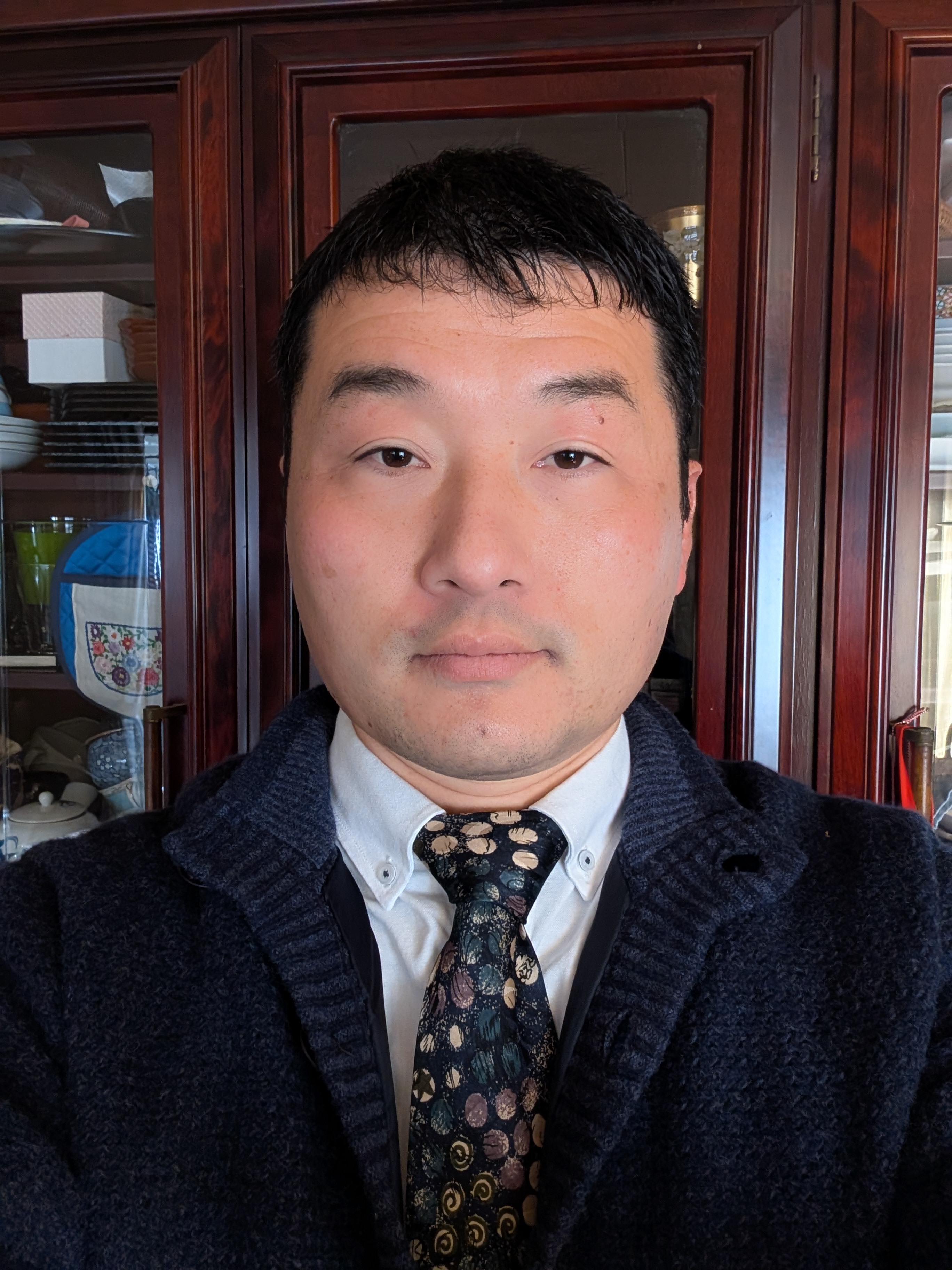
The concept of the painting that Mr. Sooka draws is "a picture that makes you smile with a smile". In fact, Mr. Sooka, who runs a temple business and has a face as a monk, is trying to depict a pure land = paradise from Buddhist teachings.
"In the Pure Land Shinshu sect, there is a saying in the sutra called the Amitabha Sutra, "red red light, white white light". It means that everyone is different and everyone is good, and it is important for each person to shine their own light as they are, but I myself think that it is best for animals, flowers, and people to bring out their own beauty. Each of them wants to express a world that shines, so they paint in bright tones. If the person who sees my painting feels cheerful, the person next to me will be brighter, and the person next to me will also be brighter... I want to create a wonderful cycle."
A wonderful cycle with a picture that makes you smile
Inspiration from children and animals
"When I was in my 20s, I used to draw realistic pictures with pencils, but after becoming independent, I changed to my current warm and bright style. This is mainly due to the fact that I started seeing children in painting classes and my own heart became brighter. Children make unpredictable movements. For example, if you give him clay, he will try to play catch with it... The flexible ideas and expressions that are not bound by conventions are also hints for my own creations, and above all, the smiles and power of the children are the driving force behind my hard work."
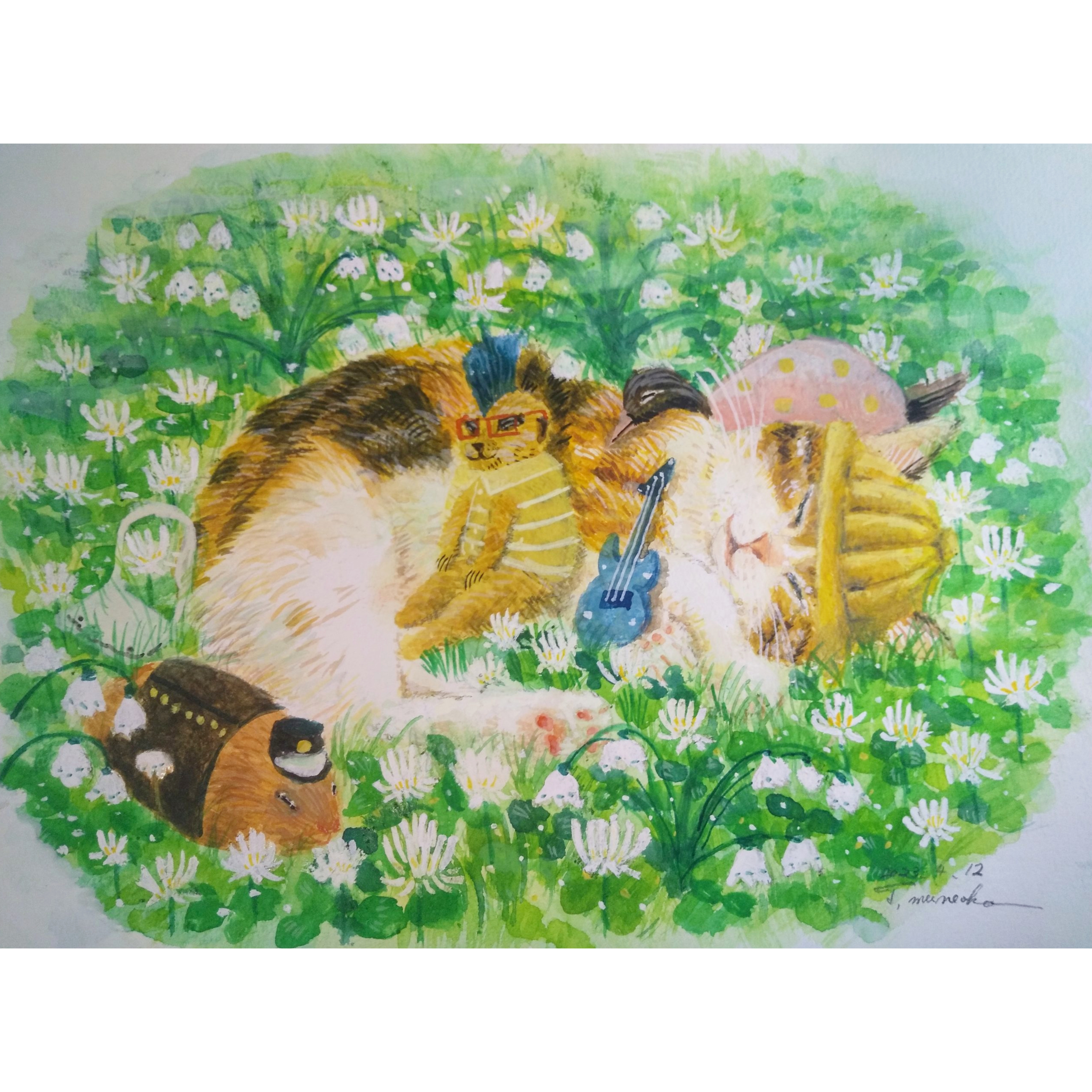
Mr. Sooka said that he was positively influenced by the children, and the pictures he drew changed. The subjects he draws are a wide variety of landscapes, people, plants, and animals, but his cat is often the motif. This is probably because just like children make unpredictable movements, they are free to make unexpected movements and give them surprises. In fact, even during the online interview, Mr. Sooka was on the edge of his seat trying to lick the soy sauce in the kitchen as if he had crossed the screen. However, such moments may be the source of inspiration for Sooka.
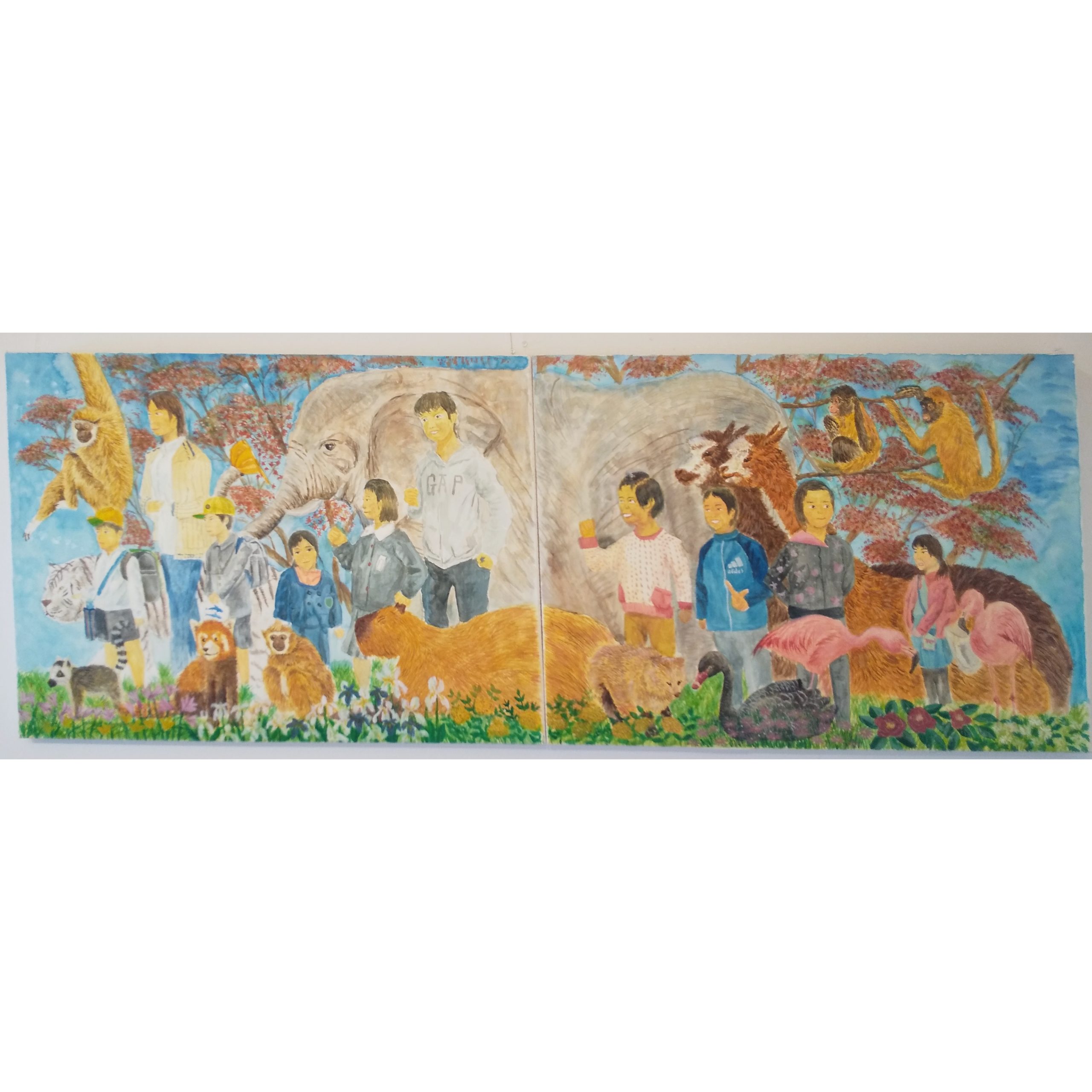
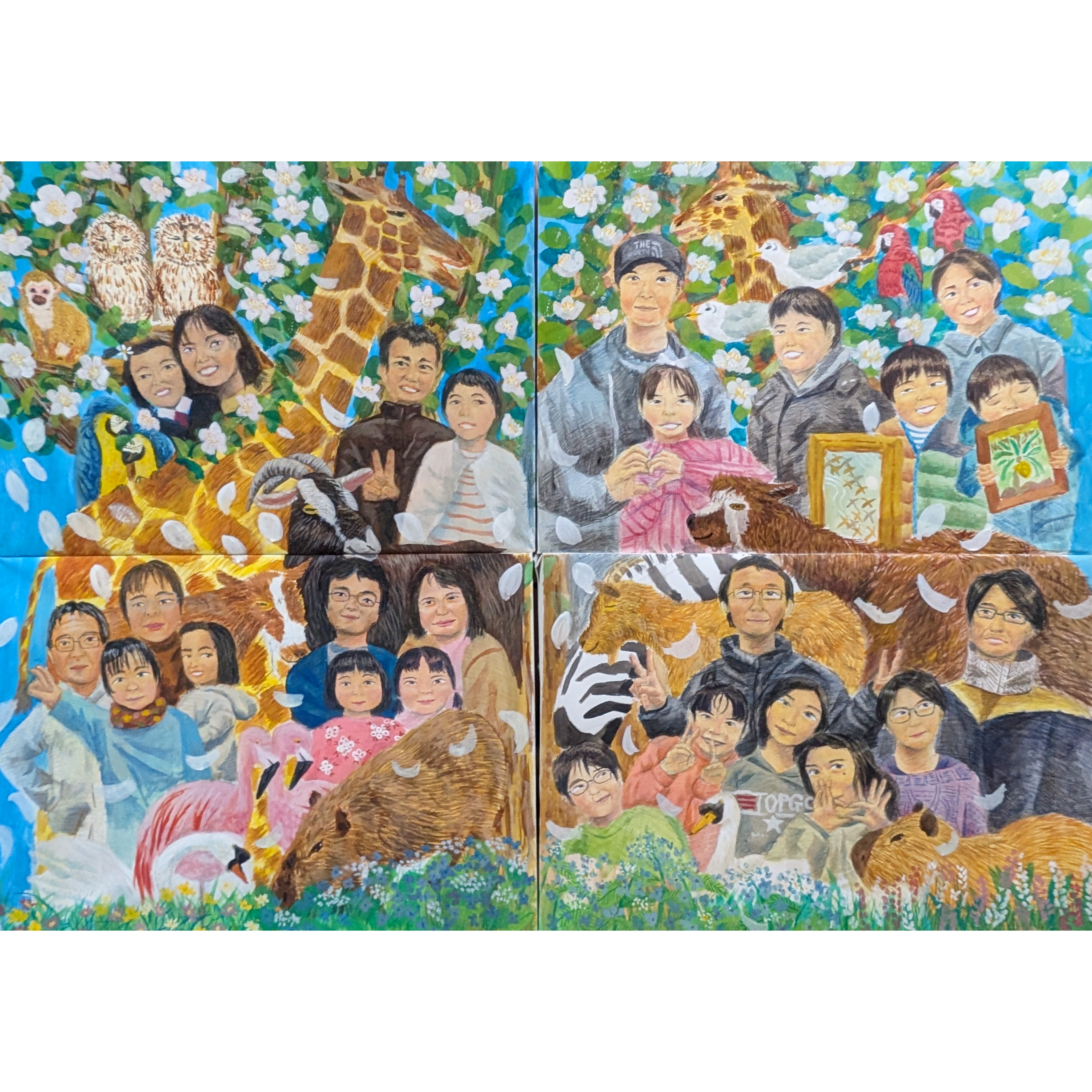
For the same reason, it is said that they often visit zoos. "Let's walk in paradise", which depicts children in a painting class and zoo animals together, seems to be particularly unique to his previous works.
"In the Pure Land Shinshu sect, there is a wish of Amitabha that all lives are golden and all lives are shown to be valuable. I didn't directly draw Buddha, but I was conscious of including Buddha when I drew children, animals, and flowers. For me, it is a work with prayers similar to the Arhat painting with multiple monks."
Mr. Sooka said that he was positively influenced by the children, and the pictures he drew changed. The subjects he draws are a wide variety of landscapes, people, plants, and animals, but his cat is often the motif. This is probably because just like children make unpredictable movements, they are free to make unexpected movements and give them surprises. In fact, even during the online interview, Mr. Sooka was on the edge of his seat trying to lick the soy sauce in the kitchen as if he had crossed the screen. However, such moments may be the source of inspiration for Sooka.
For the same reason, it is said that they often visit zoos. "Let's walk in paradise", which depicts children in a painting class and zoo animals together, seems to be particularly unique to his previous works.
"In the Pure Land Shinshu sect, there is a wish of Amitabha that all lives are golden and all lives are shown to be valuable. I didn't directly draw Buddha, but I was conscious of including Buddha when I drew children, animals, and flowers. For me, it is a work with prayers similar to the Arhat painting with multiple monks."
Keep a sense of gratitude and make everyone happy
"When I was 32 years old, I stayed in Italy for about a week because I wanted to study in the home of Western art. I studied under a teacher who copied Leonardo da Vinci's paintings. By studying the history of Western art there, I realized once again the goodness and depth of Japan art. Over there, there are art books by Katsushika Hokusai, and Japan anime and games are also popular. It was an impressive event that made me feel confident in my own creations after witnessing how my own culture was appreciated in a foreign country.
In addition, it is a happy memory to receive an honorable mention at the prefectural exhibition. I was happiest that the children and those around me were happy."
When I asked Mr. Sooka if there was anything he consciously incorporated into his creations, he replied, "I am grateful for the paintings."
"I am a person who has been saved by paintings, so I live every day grateful for paintings. Don't forget to thank them for their kindness."
Sublimate gratitude into a painting and make the viewer feel warm and cheerful. And it is because of a humble attitude that we can create a positive cycle. What does Mr. Sooka want to challenge in the future?
"I would like to try to create works that express children and animals on large canvases such as No. 200 and No. 300. At the same time, I would like to continue to create good teaching materials in the painting class I am currently running. I always have a desire to make my children happy because I receive positive power, so I want to make everyone happy through such activities."
When I asked Mr. Sooka if there was anything he consciously incorporated into his creations, he replied, "I am grateful for the paintings."
"I am a person who has been saved by paintings, so I live every day grateful for paintings. Don't forget to thank them for their kindness."
Sublimate gratitude into a painting and make the viewer feel warm and cheerful. And it is because of a humble attitude that we can create a positive cycle. What does Mr. Sooka want to challenge in the future?
"I would like to try to create works that express children and animals on large canvases such as No. 200 and No. 300. At the same time, I would like to continue to create good teaching materials in the painting class I am currently running. I always have a desire to make my children happy because I receive positive power, so I want to make everyone happy through such activities."