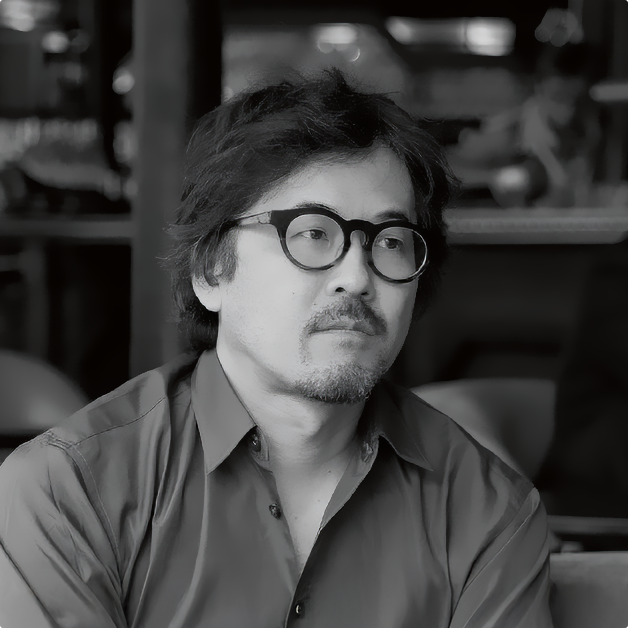
Akira Kugimachi
Kugimachi Akira
"Fusing tradition and modernity
Creator of "Absent Landscape"
Specialty: Japanese painting
Related webs:https://www.akirakugimachi.com/
With a novel painting style that fuses traditional techniques and modern sensibilities in a unique realm, Akira Kugimachi is a painter who runs at the forefront of the contemporary Japanese art world. His innovative expressions, which use ancient materials such as washi paper and rock paint, interweave photographic perspectives with philosophical thoughts, have attracted widespread attention from the art world in Japan and abroad.
His works question the fundamental theme of "what is landscape?" The painted picture is characterized by a quiet poetry that emerges between the visible and the invisible, between existence and absence. The true value of "Kugicho art" lies at the intersection of the multifaceted perspective cultivated from childhood experiences in different cultures and the techniques that inherit the essence of Japanese art. In today's world dominated by digital technology, his attitude of daring to confront traditional materials and handicrafts can be said to be an act of re-examining the intrinsic value of art. In this special feature, we will unravel Mr. Kugimachi's half life and style.
A unique artistic perspective created by cross-cultural experiences
Born in Kanagawa Prefecture in 1968, Kugicho spent a crucial period in Belgium, between the ages of 3 and 8. His exposure to European classical art from an early age and his acquisition of an objective perspective on his Japanese identity from the outside were crucial in shaping his artistic outlook, and it was this childhood experience of different cultures that had a great influence on his later artistic activities.
His multifaceted perspective of seeing things from both the "inside" and "outside" that he had raised every day, including his life in Belgium, was later sublimated into his own theme of "presence and absence". Kugimachi, who graduated from Tama Art University in 1993 at the top of his class, proved his youthful talent by winning the International Takifuji Art Prize, an award given to young people who will lead the future of public art. This honor marked his starting point in the art world, and after completing his master's degree in 1995, he returned to France, the home of art, to pursue deeper reflection and learning.
Kugimachi entered the University of Paris 8 and majored in media art. I set "Art as a Time Apparatus" as the theme of my master's thesis. This philosophical approach established a perspective on art as a device that reconstructs the experience of time and space, rather than just a visual pleasure, and became a key conceptual nucleus in his later work. This point of reflection, where Western media theory and Eastern traditional art views intersect, can be said to be the origin of Kugimachi art.
Pursuing "Light, Time, and Distance"
Unique technique
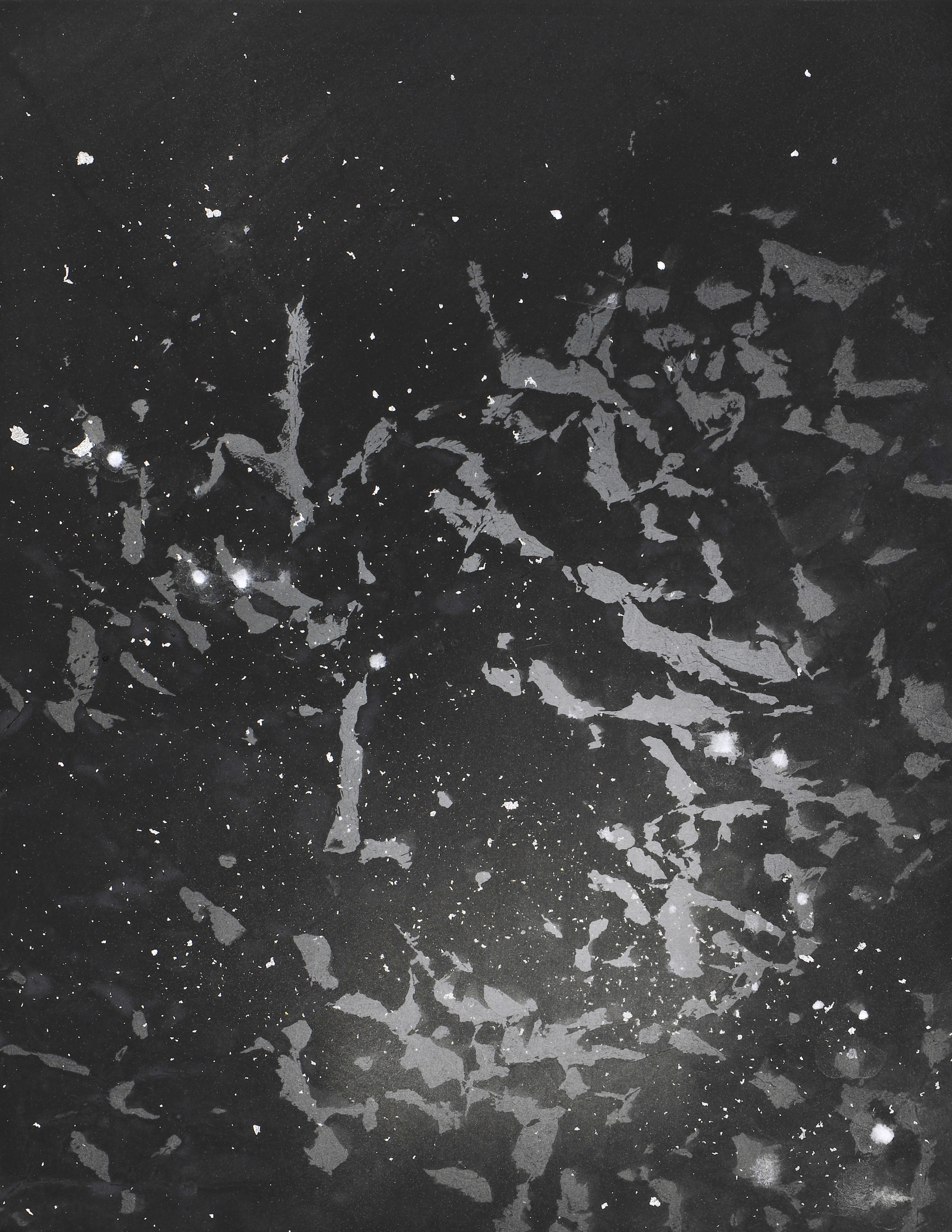
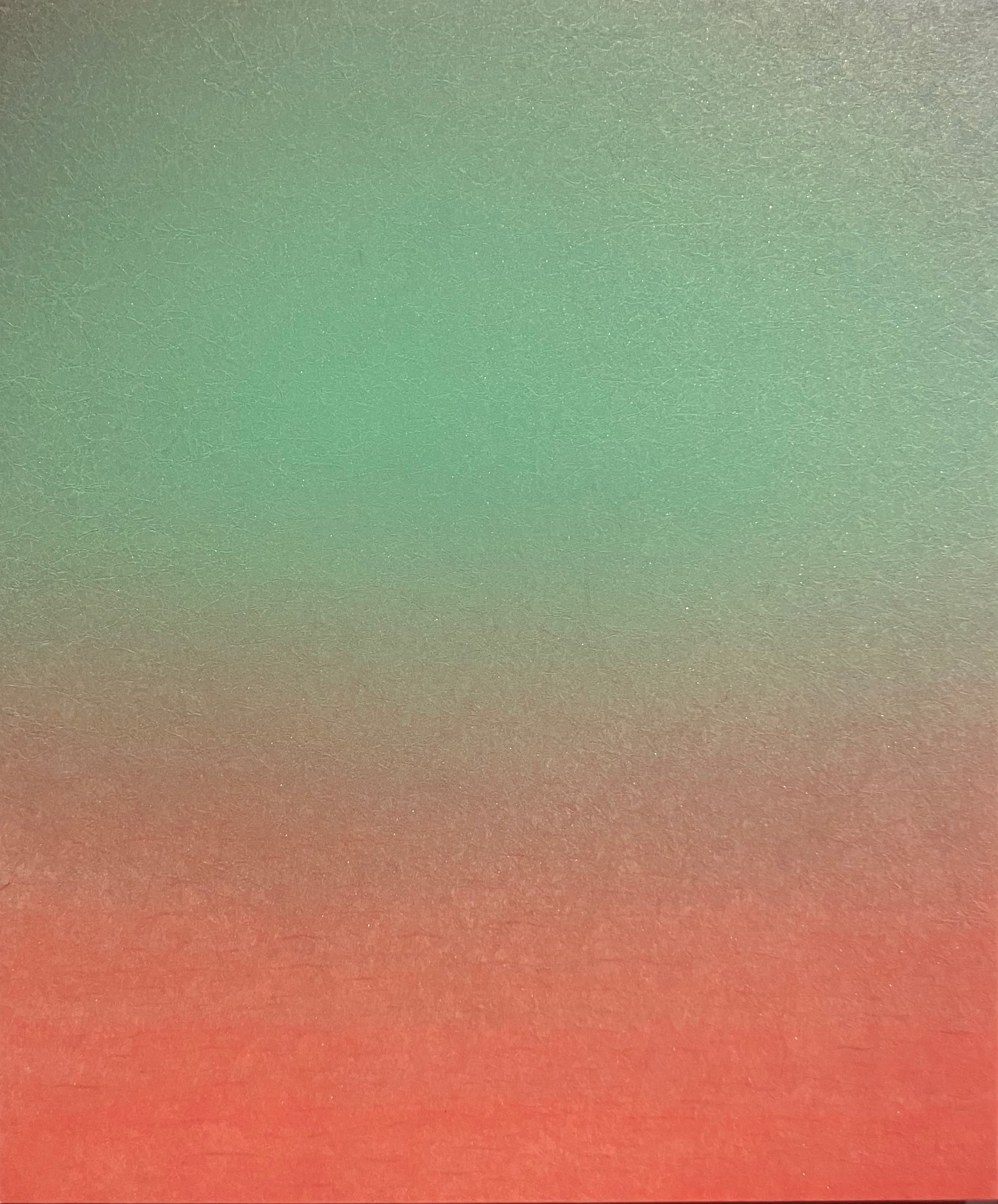
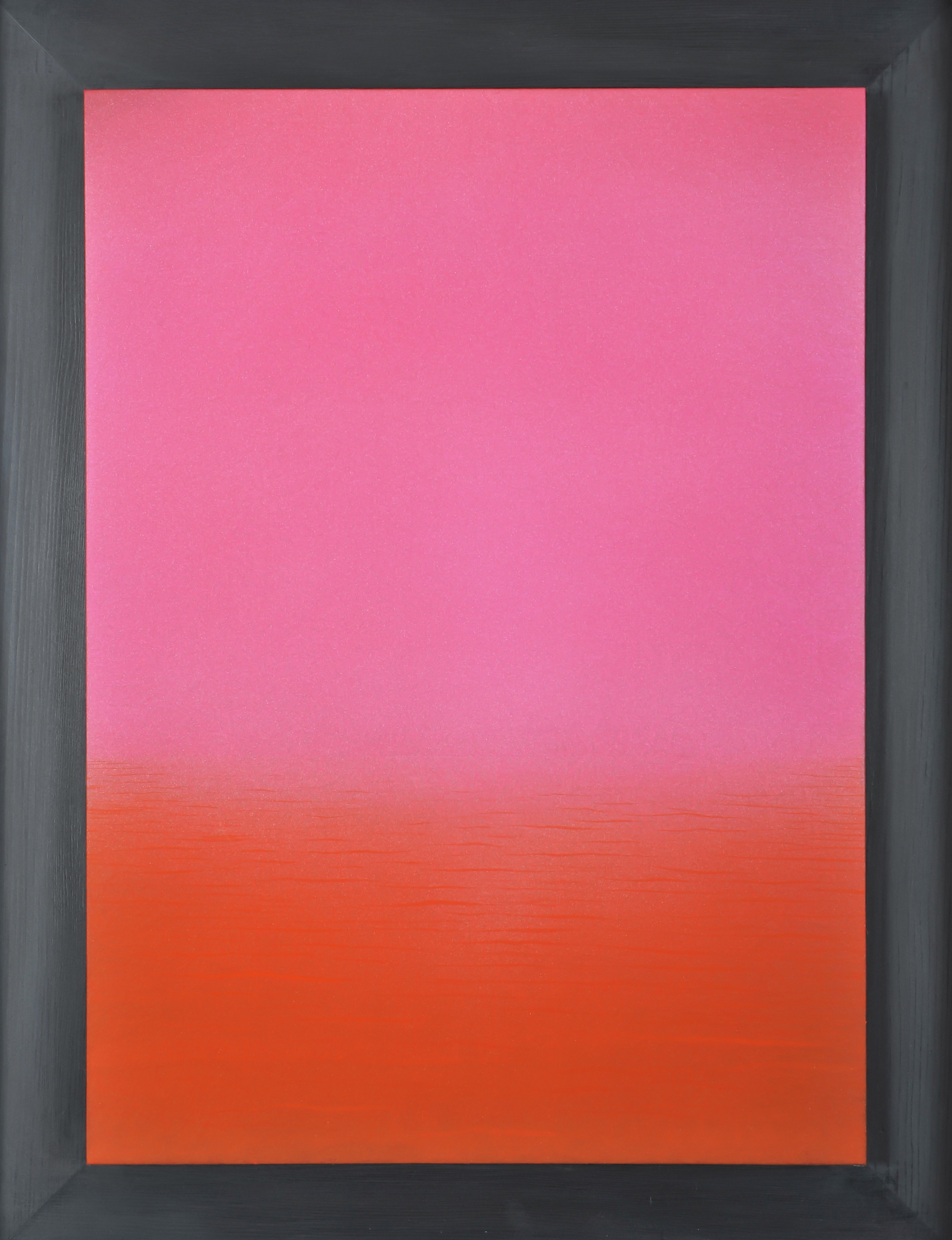
Kugimachi's world of work is characterized by its original style, which is based on the traditional Japanese painting technique of rubbing paper and painting with natural rock paints, while incorporating inspiration from photographic expression. His production process is extremely detailed and takes a long time. First, several layers of ink are layered on the washi paper, and then a thin layer of powder melted with glue is applied over and over again. This repetitive action creates a unique depth and transparency on the screen, creating the effect of light rising from within. This seemingly simple repetitive process is "the act of evoking light from the darkness of the void" for Kugicho, and it is also a physical activity that continues to question the meaning of drawing and being.
"Landscape is a 'place' that reaffirms the position of human beings, and a device that questions the relationship between the world and human beings."
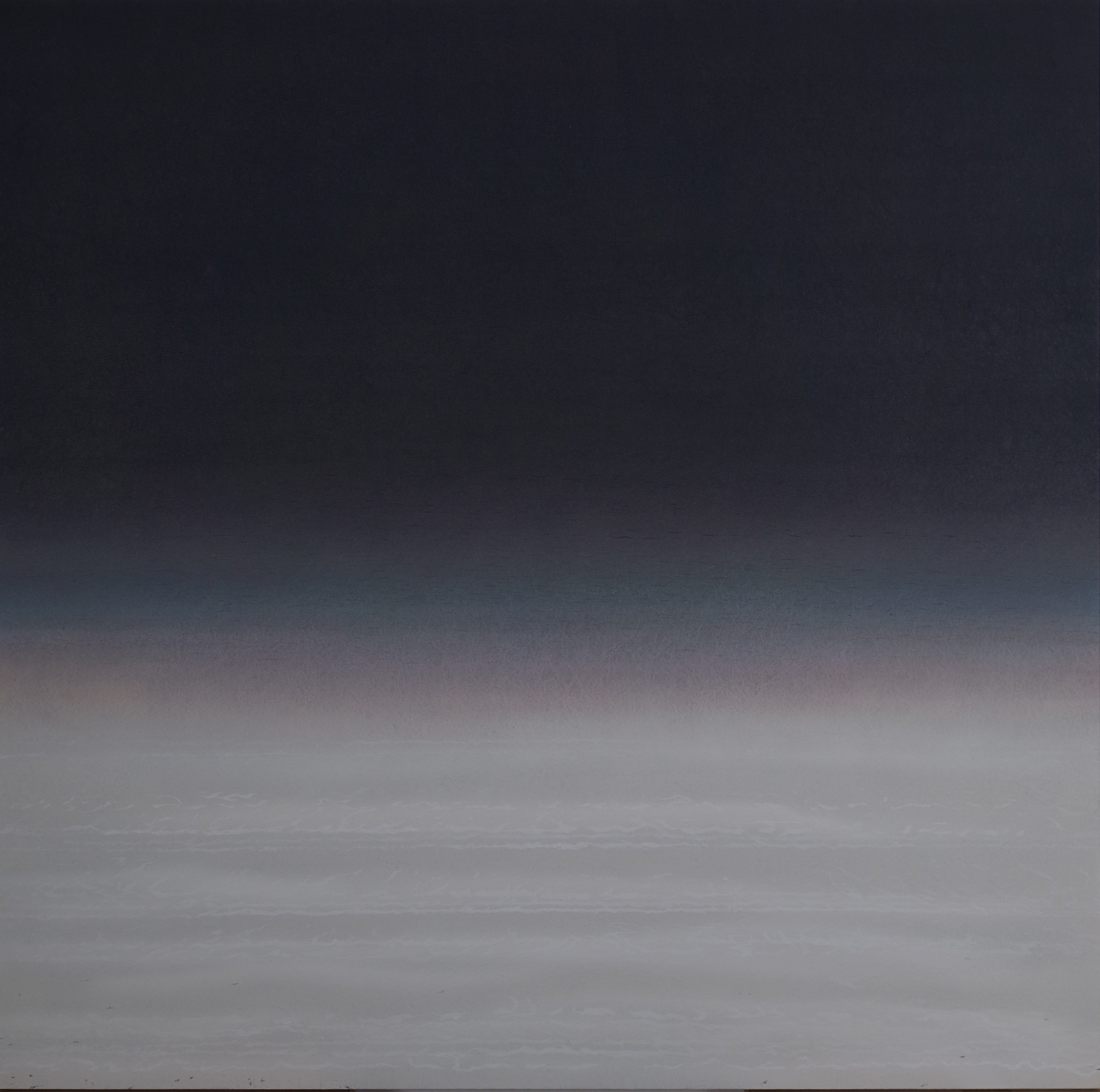
As expressed in this phrase, for him, "landscape" is not just a video, but a "philosophical proposition" that questions the relationship between existence and absence. He sees himself as a "mediator" and expresses "emptiness" that suggests the absence of objects through a "conceptual method" that identifies the means, processes, and materials of his painting. It comes to fruition as a picture that seems to depict nothing but celebrates infinite depth and tranquility. When the viewer stands in front of the screen, he can clearly sense the presence of something that is not depicted. It can be said that this feeling is the unique poetry created by Kugimachi's works.
"Another element that brings a unique tension to his work is the introduction of a photographic perspective. Just as photography cuts out and fixes a moment, Kugimachi encapsulates a 'cross-section of time' in his paintings. However, at the same time, the organic breathing of the material materials of washi paper and rock paint also engraves on the canvas the accumulation of time that never resides in photographs. This coexistence of contradictions invites the viewer to a strange tranquility.
Major works and spatial installations
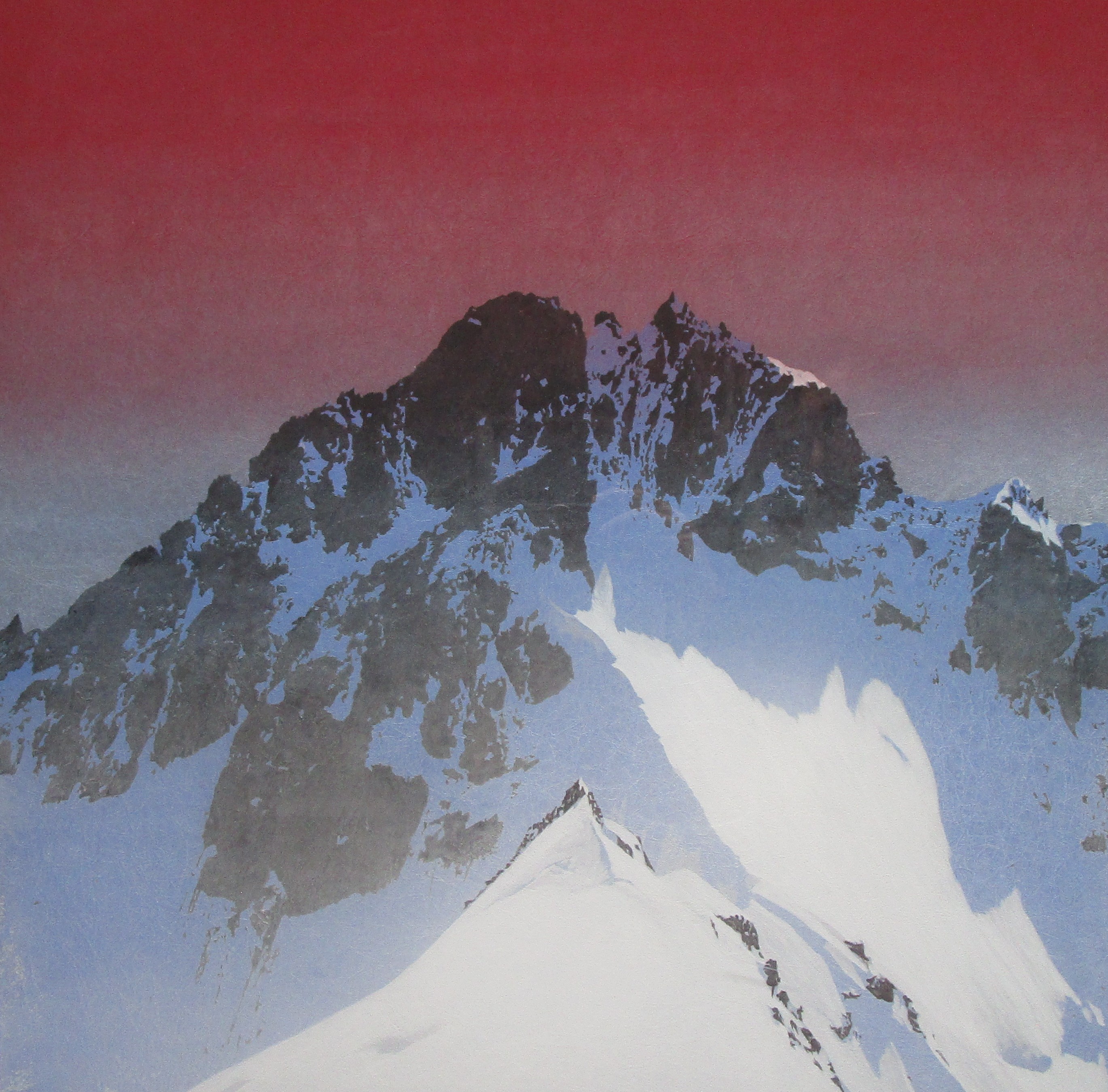
His representative works include "Bifröst", "Air", "Shadows", "Snowscape", and "Seascape", which are characterized by unique expressions that abstract elements of nature.
Bifröst
"Bifröst" is a title that evokes the rainbow bridge in Norse mythology, serving as a metaphor for connecting the visible and invisible worlds. While borrowing mythological images, what spreads on the screen is not excessive narrative, but only a serene layer of color and the fluctuation of light.
Air
The "Air" series is an attempt to visualize the invisible existence of "air". The flow of "ki", which should not be touched or grasped, appears on the screen through the delicate shades of rock paint and the texture of washi paper.
Shadows
"Shadows" focuses on the traces of the shadow's existence, exploring the beauty of contours that are left only after the loss of substance.
Both series share the fundamental question of how to depict "what is not there".
In recent years, he has also developed installations that combine paintings with rock paint and flowing images. In order to integrate with the architectural space, he actively attempts to turn the entire space into a work of art, such as creating murals on all eight sides of the oval main salon at the former residence of Kenzo Takada in Paris, and is also focusing on large-scale projects that immerse viewers in the world of the work and provide an experience that transcends the boundaries of painting. In a space where static paintings and moving images coexist, the viewer perceives the relationship between time and existence as if it were their body.
International recognition and market recognition
Kugicho's works are housed in major facilities in Japan and abroad. One of them is the "Cernuschi Museum" in Paris, which is known as a prestigious institution specializing in Asian art, and this collection can be said to be a testament to its international reputation. In Japan, the exhibition has also realized permanent exhibitions at the "Niimi Museum of Art" in Okayama, the "AMAN Residence" in Azabudai Hills, Tokyo, and the dialogue with the religious space "Ritsugenji", which stands out for the wide range of contexts in which the works are placed.
In 2019, Abeno Harukas' solo exhibition was almost sold out, and two-thirds of the exhibited works were sold at "Art Paris" held in Paris in the same year. Collectors have commented on its "quiet yet powerful presence" and "spirituality that purifies space," indicating that it is highly regarded for its ability to transform the space itself beyond mere decoration. In the contemporary art market, Kugicho is steadily building a firm position.
Latest Works and Future Prospects
Most recently, from December 2025 to January 2026, Kugimachi held his first large-scale solo exhibition "Absentia - Absentee Landscape" at YUKIKOMIZUTANI in Shinagawa, Tokyo. The word "Absentia" in the title encapsulates the theme that Kugicho has been exploring for many years. Among the exhibits, the large-scale work "Air (Gandate)" over 6 meters attracted a lot of attention with its overwhelming scale and delicate expression. During the exhibition, a dialogue was held with writer Takamitsu Yamamoto, and in-depth discussions were held on the intersection of art and philosophy.
"Wind: It begins with layering several layers of ink on washi paper, and then applying a thin layer of glue powder on top of it.
Kugicho is a painter who continues to approach the fundamental questions of the universe through natural materials. The gaze that tries to see the invisible, the handiwork that tries to touch the untouchable, and the spirit of continuing to question the meaning of existence through drawing——。 The world of his work, which combines the international perspective cultivated through cross-cultural experiences with a sensibility that captures the essence of Japanese art, will continue to open up new horizons of artistic expression. By depicting "absence", the brilliance of "existence" is accentuated. This is the core of the unshakable art of the painter Akira Kugimachi.
Akira Kugimachi's art is a paradoxical search for beauty, highlighting the brilliance of "existence" by depicting "absence". The tranquil poetry created by washi paper and rock paint continues to engrave quiet and deep questions within the viewer.
In the next issue, we will deliver a special feature on the painter Claude Monet, who tried to capture light itself with a paintbrush. We will approach the essence of beauty that the "painter of light" pursued throughout his life.