Show more

Artist 高島夏来 Natsuki Takashima

高島夏来

INTERVIEWInterview

Natsuki Takashima

Please tell us about your encounter with art.

My father graduated from the oil painting department at Tokyo University of the Arts, and our home was full of art supplies.

As a result, drawing and crafting naturally became part of my life from a young age.

I became passionate not only about painting, but also about clay, handicrafts, and beadwork. They make teddy bears ranging from small to large, and when they get hooked on beads, they make something almost every day. I tend to be obsessive, and once I fell in love, I think I kept it up for a long time.

He attended a high school with an art course, and at university, he enrolled in the Department of Graphic Design at Tama Art University. I thought I would get some kind of creative job, but after encountering video production at university, I chose to pursue a career in film. Currently, my main profession is video director, involved in video production including corporate commercials.

What prompted you to start painting again?

After I started working in video, I abruptly stopped drawing. I hadn't drawn for about ten years, but during the COVID-19 pandemic, my work temporarily decreased, and I found some free time. At that time, I wanted to return once again to drawing the art I originally loved and making things with my hands.

However, when resuming the series, I felt it would be better to have a theme that suits me. That's when I remembered the memo of a dream I'd been taking for years. Whenever I had strange or mysterious dreams, I would write them down so as not to forget. I decided to pull out those notes and make them the core of my work, which led to my current creation.

Dreams aren't always interesting; there are times when we only have realistic dreams. Even so, when I dream that I think this could become a work, I try not to forget to record it as much as possible, extract elements from them, and turn them into paintings.


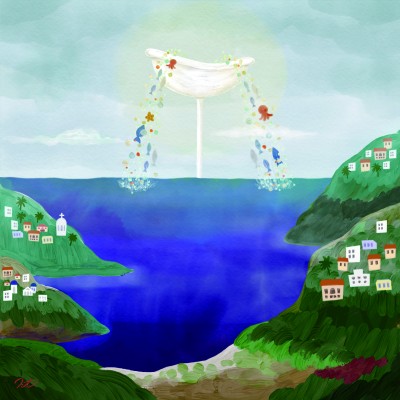
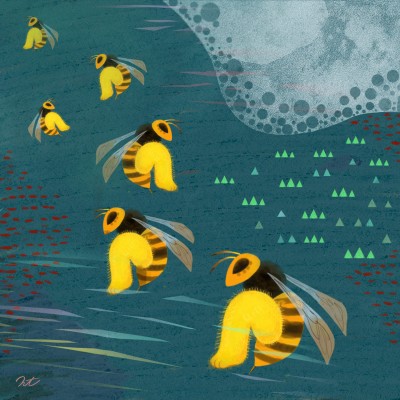
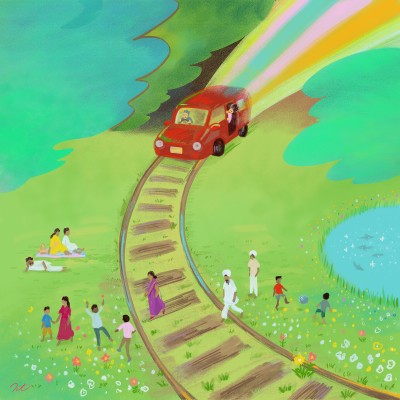
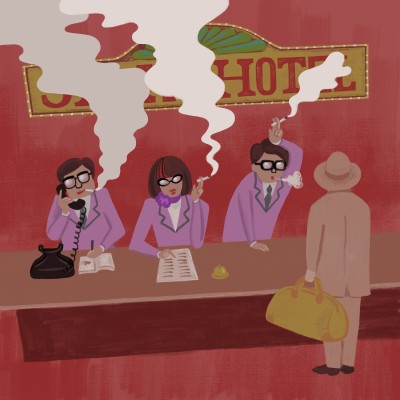
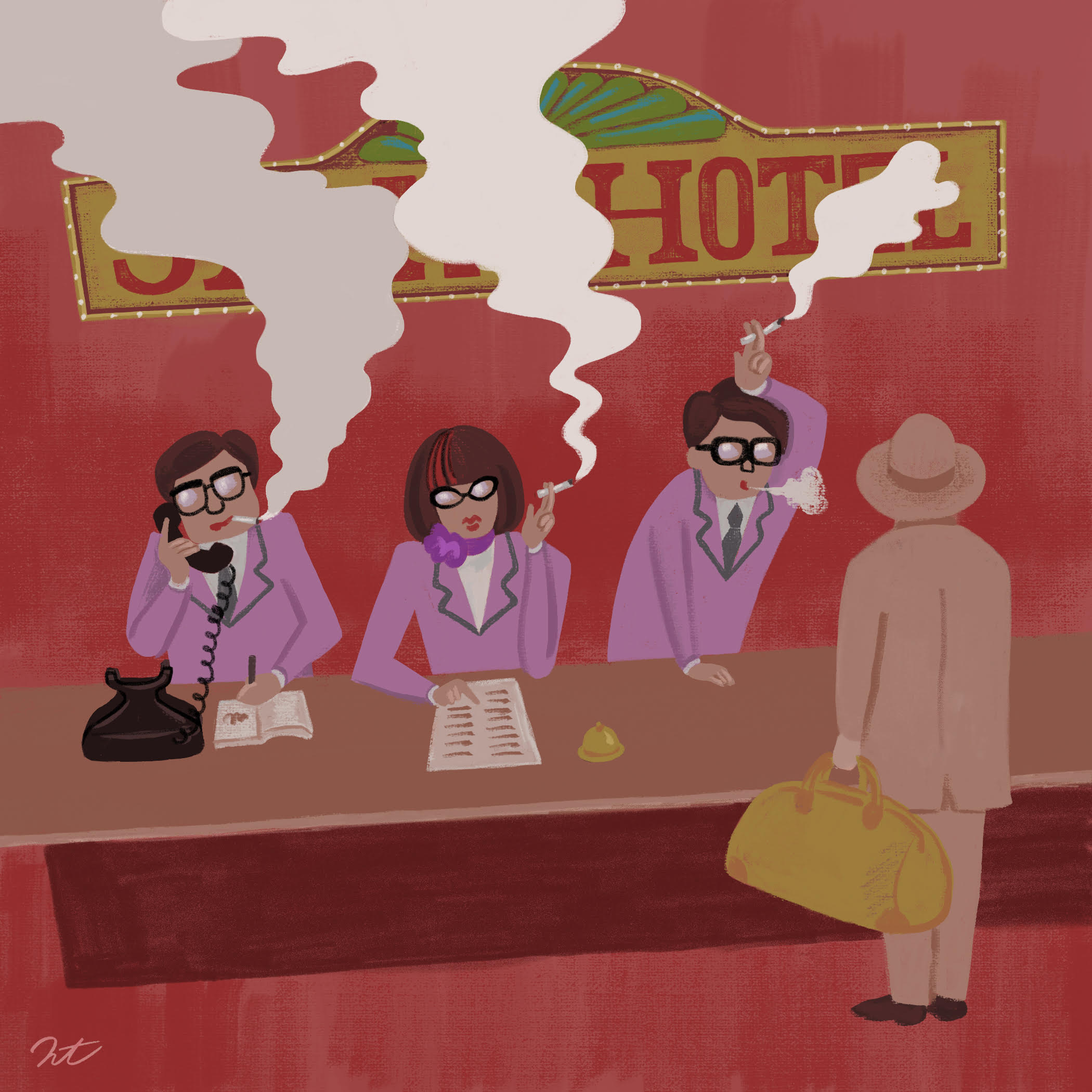
"Smoke Hotel" Author: Natsuki Takashima

How do you turn your dreams into your work?

Since I see my dreams as live-action footage, I extract only the most memorable scenes and interesting elements from there, and turn them into a single painting with my own taste.

What I value most is the impression I had when I had that dream. Was it scary, strange, or a little funny? I try to make sure that feeling stays on screen as much as possible.

I believe my experience learning design is alive with extracting elements and reconstructing them within the frame. On the other hand, I also feel like I'm doing the opposite of my video work. Visuals show the flow of time, but paintings must capture a long story on a single frame. That's why it's interesting to think about which moments to capture and what to keep.

Sometimes, people who come to solo exhibitions ask to see these on video. But precisely because I usually work in video, I am now attracted to making it a fixed image in a single image.


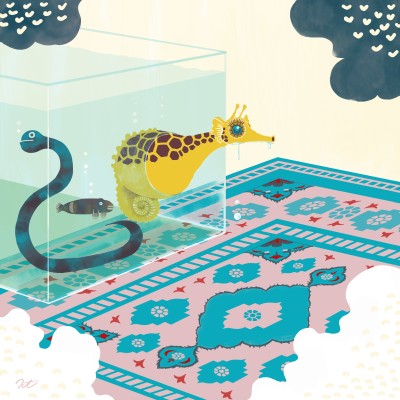
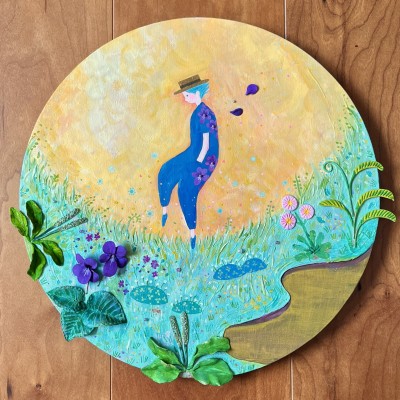
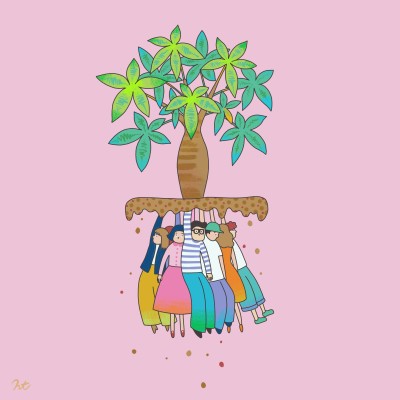
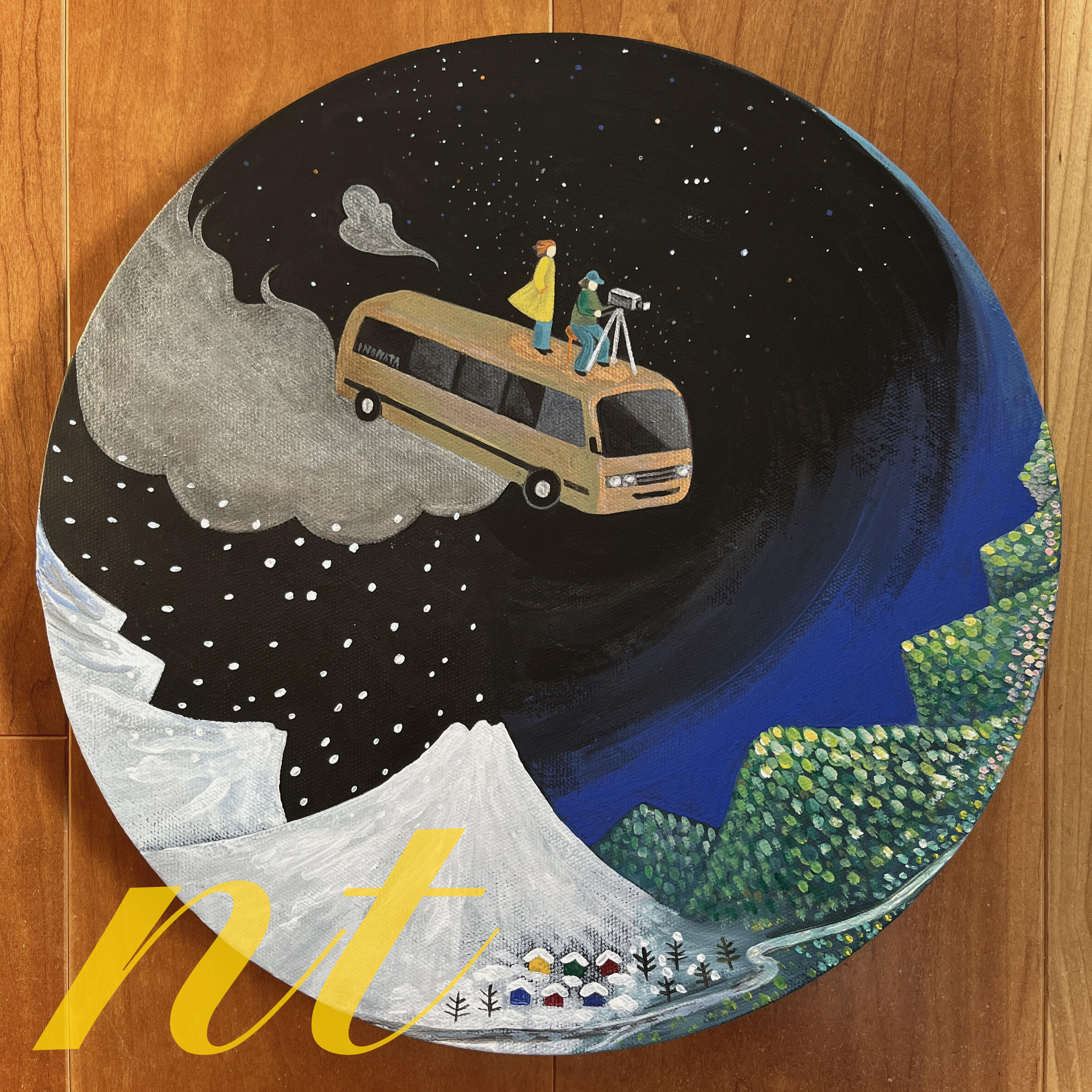
"Location Han Location Shoot" Author: Natsuki Takashima

Please tell us which works left a strong impression on you.

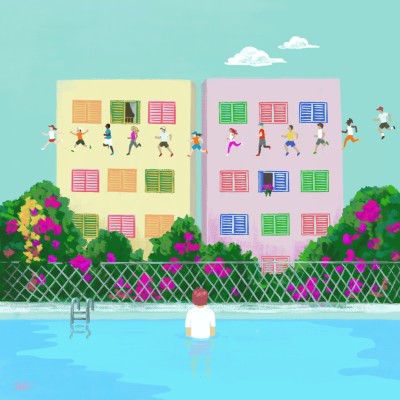
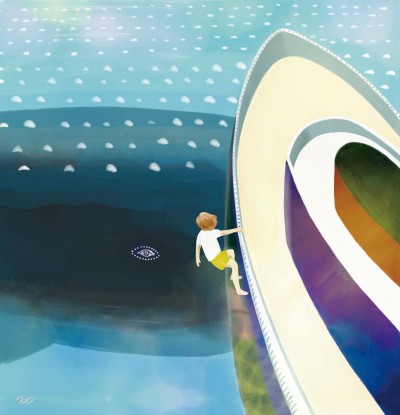
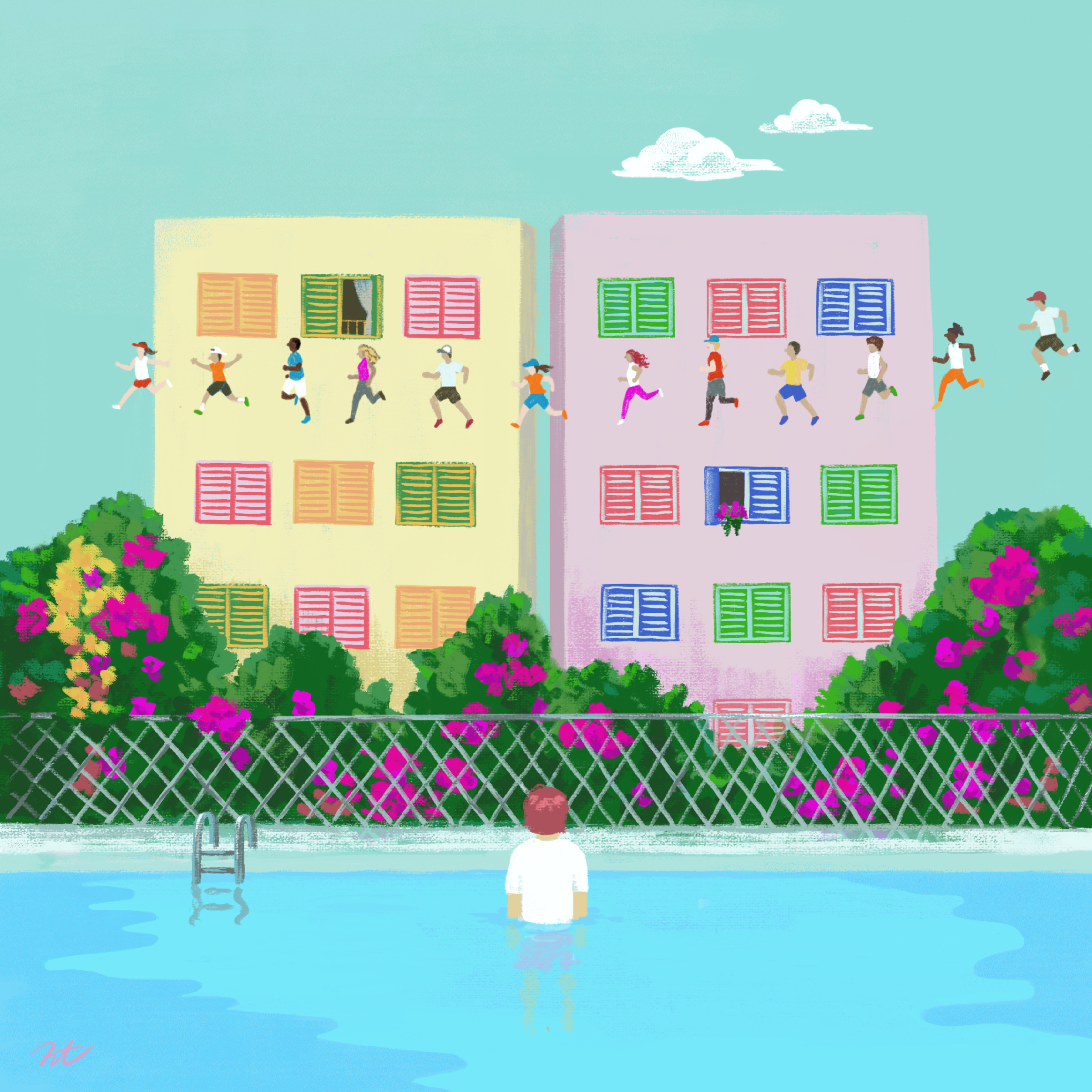
The piece "Runner" is one that many people have asked for every solo exhibition they wanted. I drew it based on a dream of looking up at the sky from the pool and seeing a runner running through the sky. The place is like Europe, like Brazil... I expressed the impression of a 'foreign' country in pastel colors when I saw it somewhere.

Recently, I have also started working on hand-drawn works. Until now, I printed on canvas what I drew on my iPad, but when I hand-painted, it becomes a one-of-a-kind piece. Because of that, the time and effort spent are completely different, and the sense of accomplishment when it's completed is also significant.

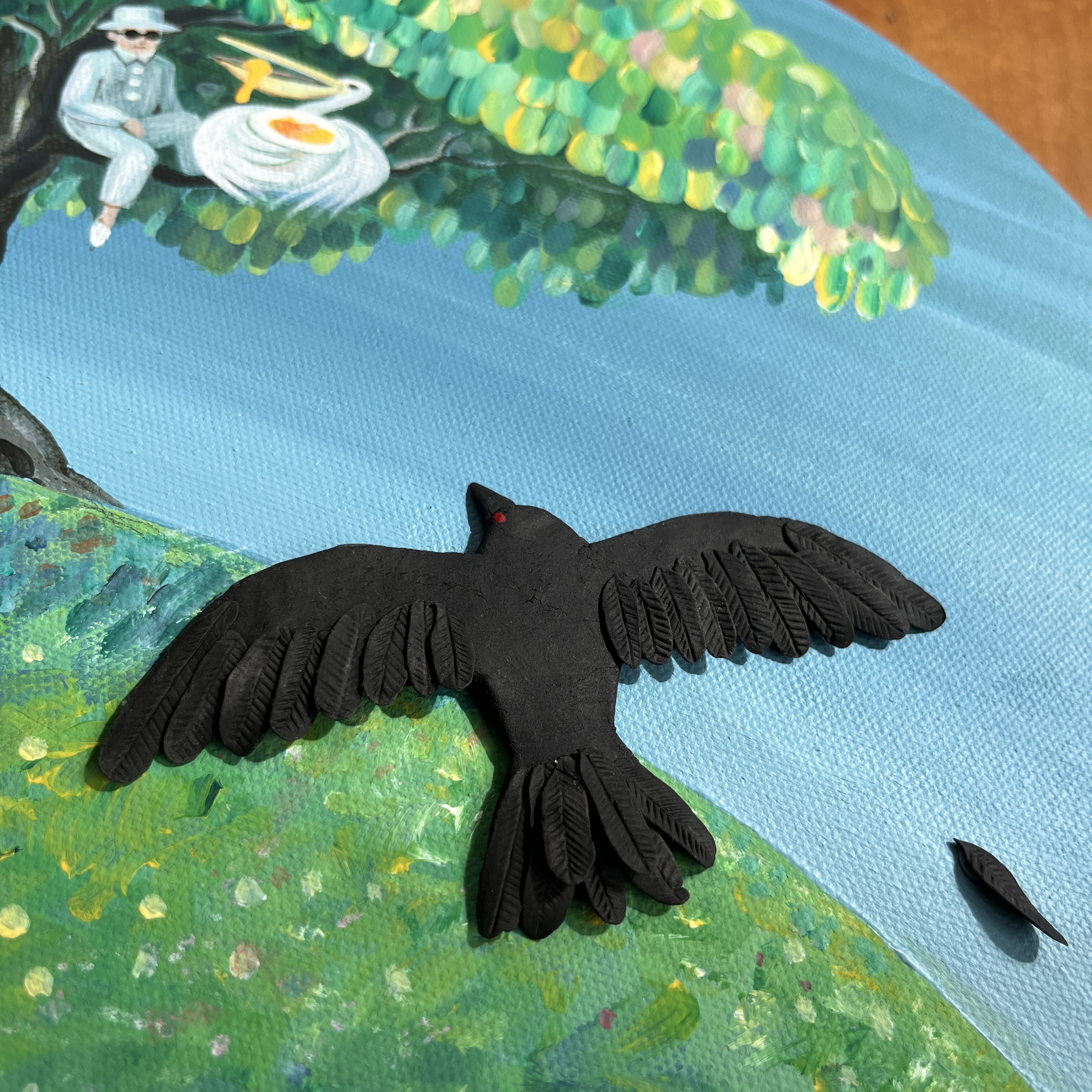
On the other hand, switching to hand-drawn painting significantly slowed down the production speed. Since I create between work and childcare, it's not easy to bring out my art supplies, wash my brushes, and secure a lot of time. Even so, I'm gradually experimenting with new forms of expression, such as using clay to create semi-three-dimensional forms.


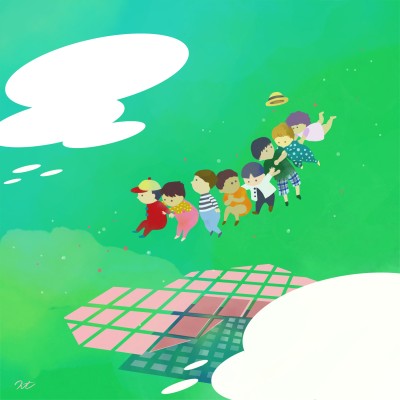
"Runner" Author: Natsuki Takashima

What do you value most in your creation?

We value perspectives that make people think, 'Only Takashima has dreams like this.' I want to make a work that's a bit quirky, one that can give a small surprise to those who see it.

How should you structure the events in your dream so that viewers find them interesting? When considering composition and color schemes, I naturally keep the recipient in mind.

This feeling also applies to video production. Viewers use their precious time to watch. I don't want to make you think it was boring after watching. The same goes for the artwork—I hope viewers might chuckle a little, find it interesting to have such a dream, or feel even a little brighter.

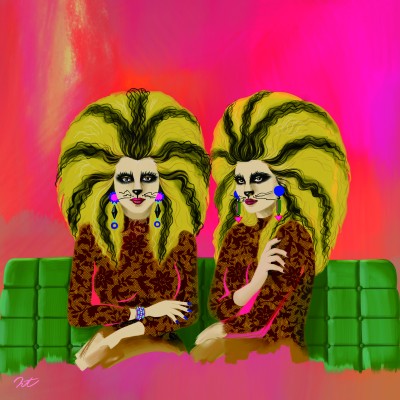
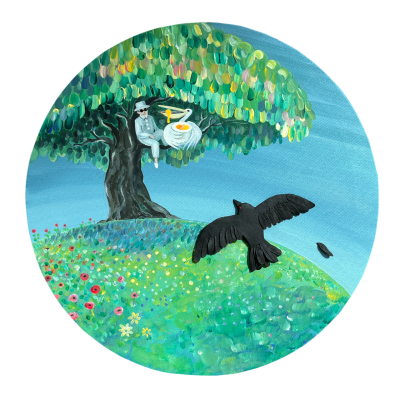
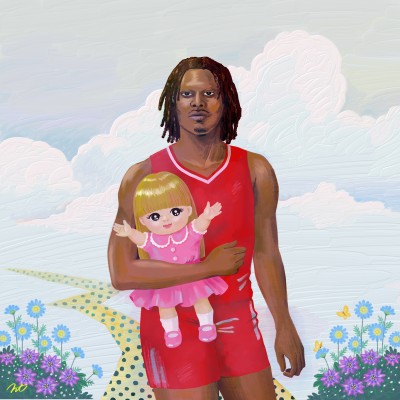
"The target is you." Author: Natsuki Takashima

Finally, could you share your future outlook and goals?

The goal is to keep going as much as possible. As I continue, I want to gradually update my own expressions and explore new ideas.

Of course, I would be happy if many people would know about it and display my work in their rooms. However, if I set that as a big goal, I feel like it can make me feel uncomfortable. That's why I want to prioritize having fun and continuing for a long time.

If creation becomes an obligation, it becomes just like work. For me, painting should always be a proper way to relax. In that context, I hope to deliver small surprises and joys to the hearts of those who see it.


Mr. Takashima reconstructs mysterious events seen in dreams from a design perspective and elevates them into a single painting. The perspective cultivated in the world of visual media, combined with the pure joy of creation that has continued since childhood, gives the works a unique narrative quality. What kind of dreams will appear on screens from now on, and in what forms? That journey quietly but surely expands.