
I mainly work as a calligrapher, focusing on kana. Classical calligraphy is my teacher and always in my heart. I want to cherish that foundation and freely create my own calligraphy. I strive to create works that allow readers to feel the atmosphere and scenes of songs and prose.
[Profile] 2010 ・Fully started calligraphy 2014 ・Joined a calligraphy organization 2020 ・Obtained Kana calligraphy master certification 2023 ・Left calligraphy group [Awards] 2014–2022 ・Yomiuri Calligraphy Exhibition: Outstanding 1 time, Selected 5 times ・Hokkaido Calligraphy Exhibition: Special Selection 4 times [Overseas Exhibitions] ・Salon de Art Japone (France) ・Calligraphy Original Art Exhibition in San Francisco (USA)



INTERVIEWInterview
beautiful fragrance
Please tell us about your journey as a calligrapher.
I mainly create works in kanacalligraphy.
Until 2023, I belonged to the calligraphy community, where I learned the basics of calligraphy from scratch.
I feel that what I learned back then—such as line movement, ink handling, the shape of characters, and how to create space—has become the foundation for who I am today.
Currently, I am not affiliated with any company and exhibit my works in solo exhibitions and overseas exhibitions.
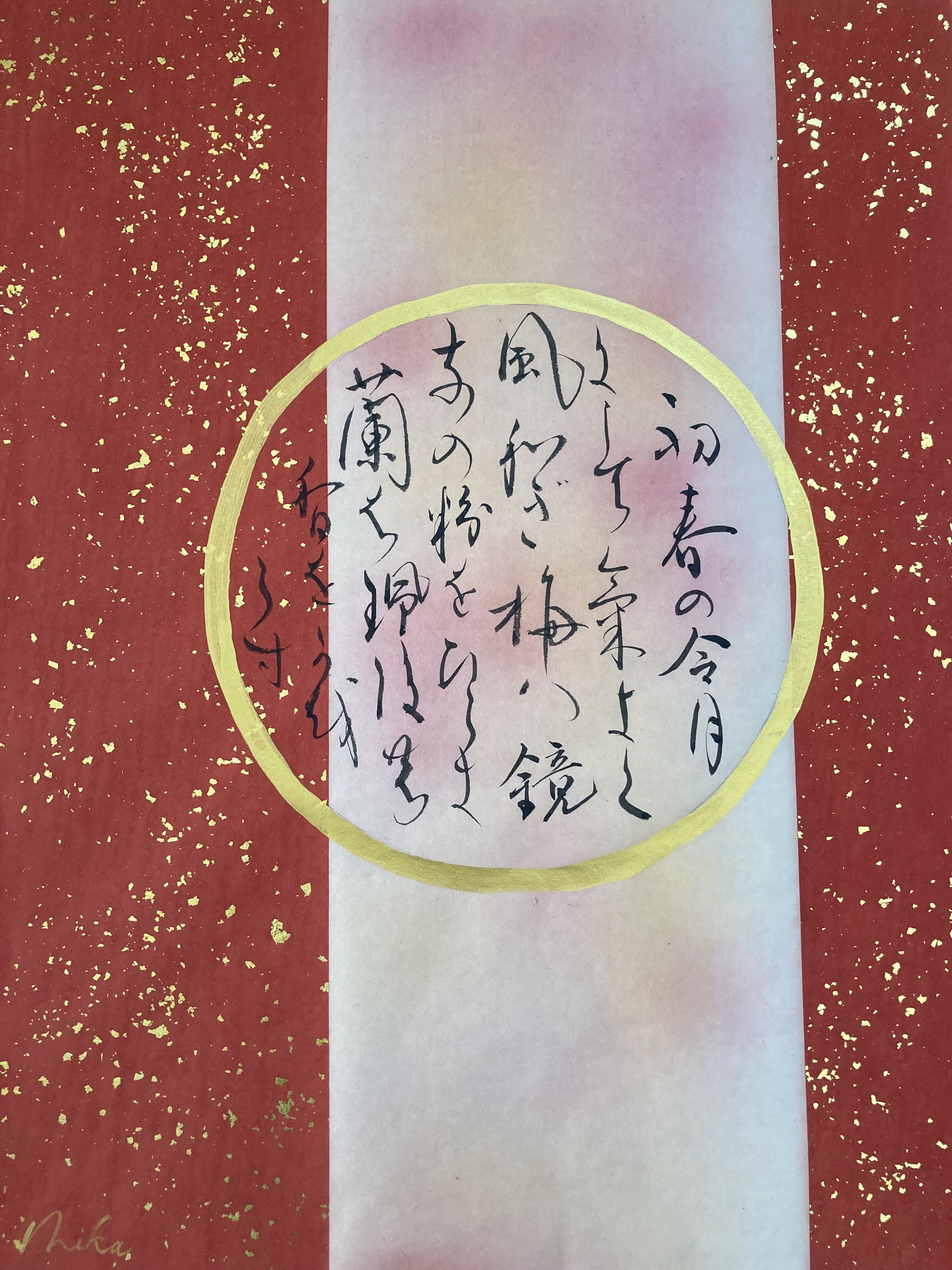 "Reiwa Era" Author: Mika
Can you tell us about any exhibitions that left a strong impression on you?
This is the "Salon de Art Japonet" in France, where we exhibited for the first time overseas.
While I was happy that Japanese works could be seen by people from overseas, I was also nervous about how this piece would be received.
What inspired you to become a calligrapher?
There was a period when I attended calligraphy classes as a child, but it didn't last long.
However, as I became an adult and wondered what would help me make the most of myself, I suddenly felt as if a book had come to me.
Strangely, books I couldn't keep up with as a child felt incredibly appealing when I faced them again as an adult.
There, I met my master and gradually discovered the wonders and value of calligraphy.
The more you learn, the more you learn that the familiar act of writing can contain such beauty and depth.
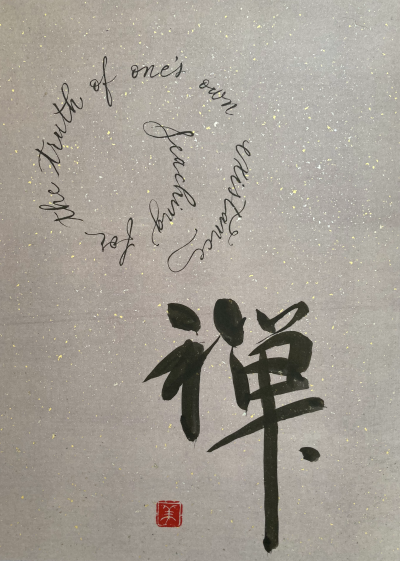
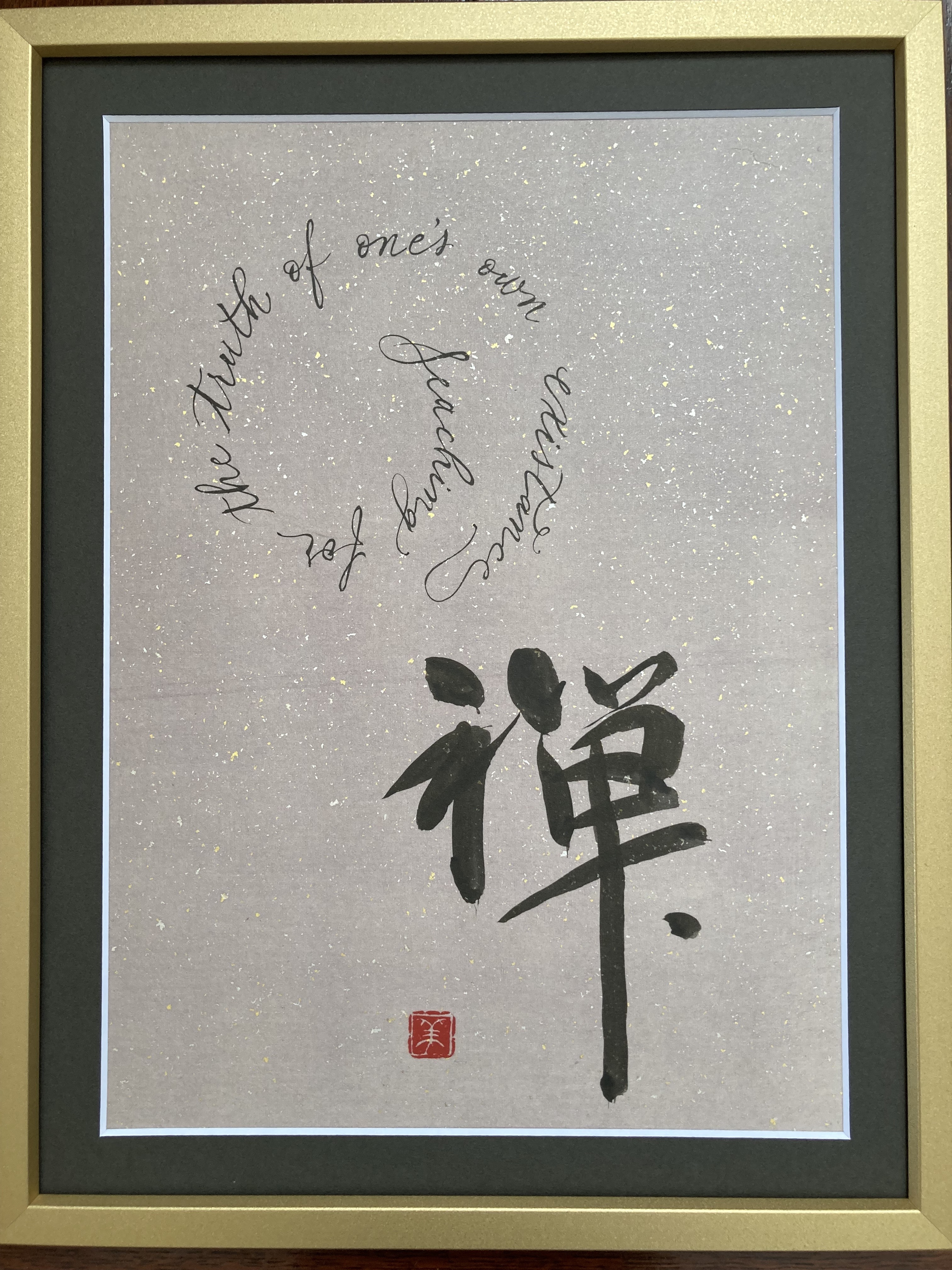 "Zen" Work: Mei Xiang
What kind of feelings do you put into your work?
I love classical works, and when I think about what to create, I write while imagining the background and the author's feelings rather than just the songs and texts I choose.
Even poems composed over a thousand years ago still hold the joy and sorrow at their core, and I cherish the time spent reflecting on them.
Kana calligraphy is difficult even for Japanese people, and I believe it is even more difficult for people overseas.
Among these, I approach my daily creation with the hope that people will appreciate the beauty of Kana just like painting.
Even if you can't read it, I hope it will be a piece that moves your heart.
By staying close to the author's heart embedded in the song, I always strive to convey the beauty of the letter's form, the atmosphere and scenery behind it, and even the author's own feelings.
Which work feels most authentic to you?
This is "Japanese Night Sky," exhibited at the Salon de Art Japonet in France.
This work is based on a poem by Kakinomaro no Hitomaro, which is included in the Manyoshu.
I carried my brush while imagining the beauty of the night sky.
Golden lines float on deep indigo paper, and as I write with attention to the strength of the lines and the use of blank spaces, I imagine the sky Hitomaro looked up at, evoking the same night sky across eras.
It was also a milestone work for my first overseas exhibition, and I feel I was able to express myself in my own way. Even now, every time I look back at it, the feelings from that time come flooding back.
Nowadays, one of my pleasures is imagining what kind of emotions people might feel when they see my works.
I hope that the feelings of Hitomaro looking up at the night sky can be conveyed, even a little.
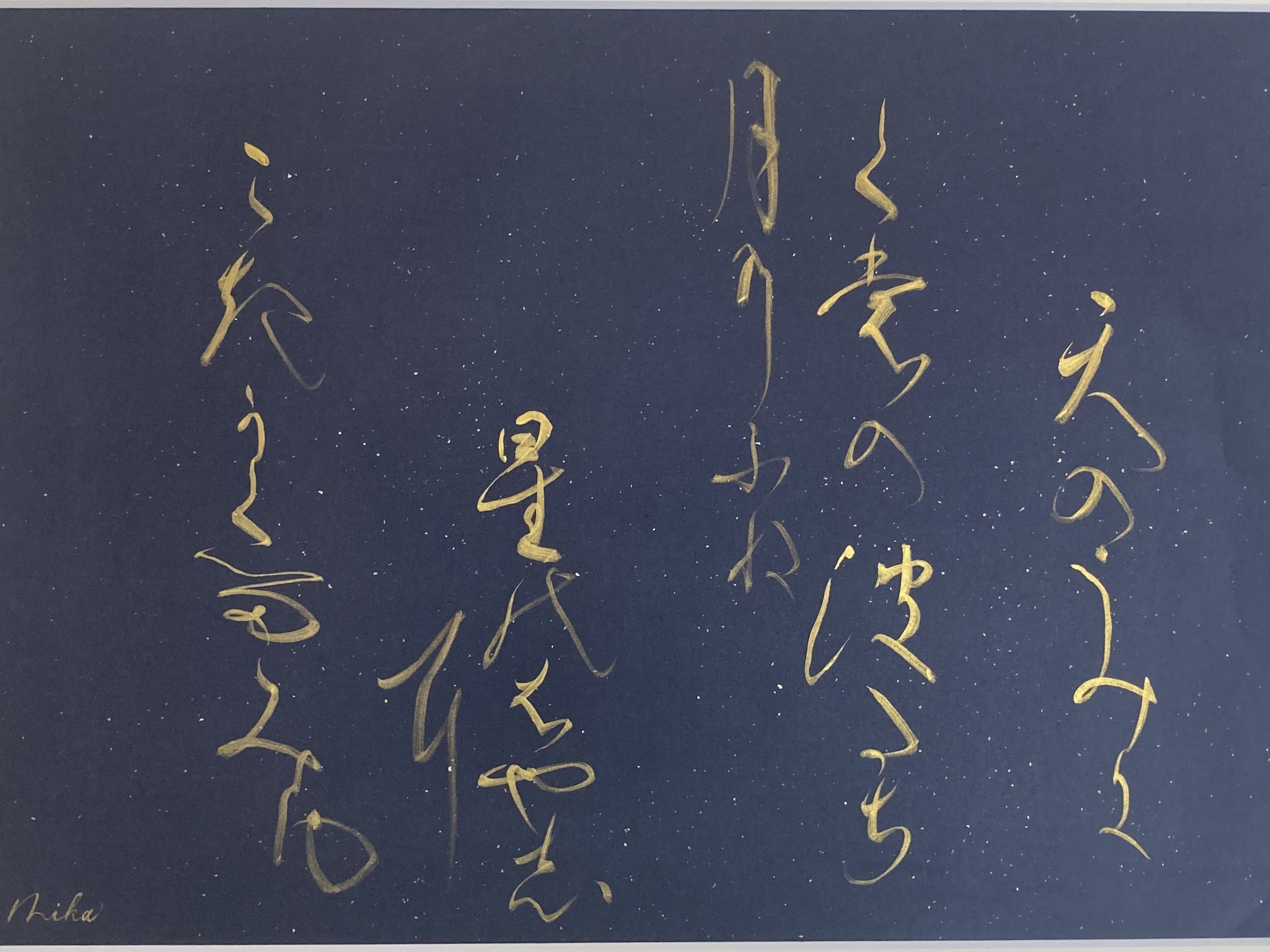 "Japanese Night Sky" by Mika
Please tell us about your future outlook.
I have been studying calligraphy since around the year before last.
It all started with the idea that it might be interesting if Eastern and Western scripts could be fused.
Characters written with a brush and those written with a pen are completely different in both the tools and the expression of the lines, but I hope that by combining these differences, a new kind of charm will emerge.
Going forward, I want to continue valuing classics and share works that serve as a marriage between East and West both in Japan and abroad.
With deep respect for the classics in her heart, Mika's works deliver Kana's beauty like a single painting, gently touching the hearts of viewers beyond language barriers.
Her challenge, which opened a new door to calligraphy, was only just beginning.
What kind of scenery unfolds where Eastern and Western letters meet?
Her journey of conveying Japanese beauty through calligraphy will quietly move the hearts of many people going forward. Expectations are high for her future creations and activities that will spread both domestically and internationally.