Show more

Artist 岩澤武司 Iwasawa Takeshi

岩澤武司

INTERVIEWInterview

Takeshi Iwasawa

Fascinated by drawing

-Please tell us how you decided to become a painter.

  "I was born in Showa 34, and when I was born, there was a black and white TV and I used to watch it a lot. Since kindergarten, I have been obsessed with drawing pictures of things I saw on TV, and that was the beginning of my involvement with painting. I just liked to draw, and I continued to draw for a long time. When I was in high school, I had many options when choosing a career, but when I thought about my favorite field and what I was good at, I thought that painting was still the way to go. So I set my goal of going to art university, and eventually went on to Aichi Prefectural University of Arts to study oil painting."  ―Did you work as a painter immediately after graduating from university?  "After graduating from university, I have been working as a painter while working as an art teacher. Even when I looked at the people around the university, it was difficult for me to suddenly make a living as a painter selling only paintings. Many of my friends who studied oil painting with me continue to be painters while working as teachers. When I graduated from university, contemporary art was flourishing, so I was working on installations. Although he temporarily took a break from his activities due to marriage and child-rearing, he resumed his work as his children grew up. After that, I came up with a new idea called 'Hitomi' to photograph my own eyes, draw them, and turn them into a work. Based on that work, I was able to hold multiple exhibitions at contemporary art galleries. I received the Kyoto Exhibition Award at an exhibition sponsored by the Kyoto Municipal Museum of Art and the Excellence Award at the Byodoin Omotesando Art Exhibition, and I felt a great sense of accomplishment."  ―What kind of work do you do in apparel?  "After graduating from university, I have been working as a painter while working as an art teacher. Even when I looked at the people around the university, it was difficult for me to suddenly make a living as a painter selling only paintings. Many of my friends who studied oil painting with me continue to be painters while working as teachers. When I graduated from university, contemporary art was flourishing, so I was working on installations. Although he temporarily took a break from his activities due to marriage and child-rearing, he resumed his work as his children grew up. After that, I came up with a new idea called 'Hitomi' to photograph my own eyes, draw them, and turn them into a work. Based on that work, I was able to hold multiple exhibitions at contemporary art galleries. I received the Kyoto Exhibition Award at an exhibition sponsored by the Kyoto Municipal Museum of Art and the Excellence Award at the Byodoin Omotesando Art Exhibition, and I felt a great sense of accomplishment."

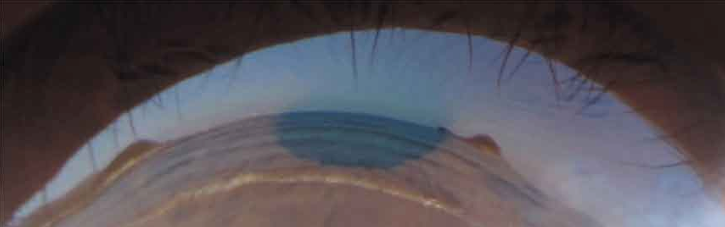
Hitomi - UMI 2012 Beijing Exhibition Award Winner

Drawing in the eyes of a unique

―How did the biggest feature, "Hitomi", start?

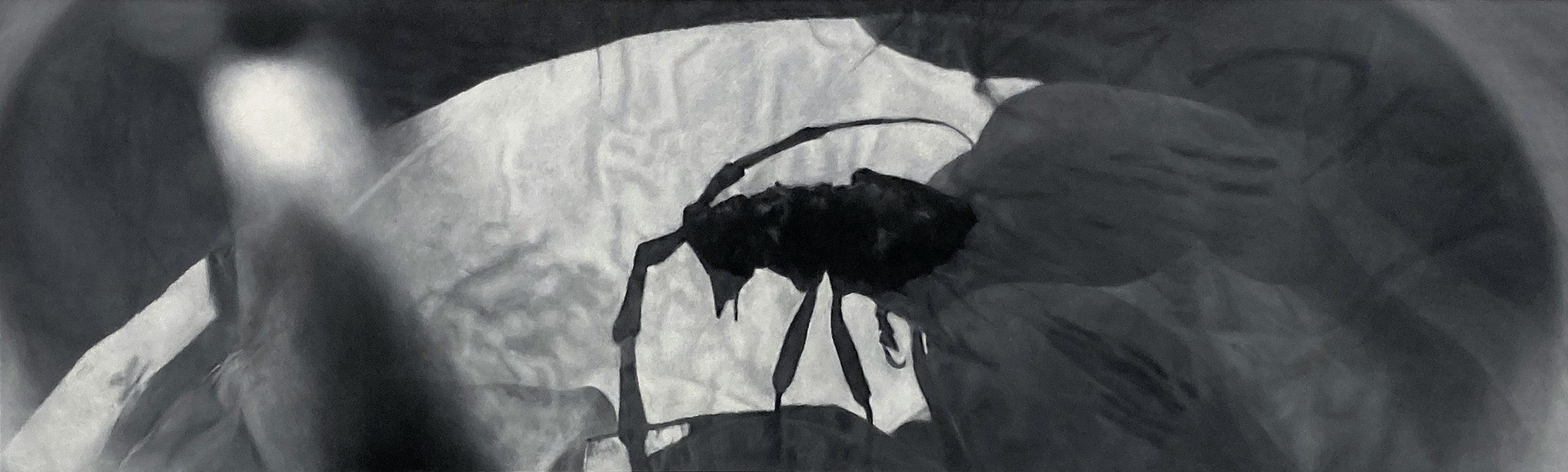
  "I've always liked cameras and used them myself, so I thought I could draw works that made use of them. When digital cameras started to come out, they were expensive and had low pixels, but more and more affordable cameras with high pixel counts came out, and it was possible to take pictures of the inside of the eye from a distance of about 1 cm. Also, the eyes are something that will not change for a lifetime, just like fingerprints, and are one of the factors that help us identify us as human beings. Therefore, I thought it would be interesting to draw the eyes as a self-portrait. However, when I take a picture of the eyes, I inevitably capture the scenery I am seeing, so I thought it would be interesting to draw that scenery as well. It was very interesting to see the scenery in my eyes and my iris pattern overlapping at the same time. Also, when looking at the scenery, things that you feel with your five senses, such as noise, smell, or temperature, accumulate in your head, but you can only output them yourself. In other words, after one's own death, all such things will disappear from this world. I thought it would be a good idea to depict such impermanence or Japan-like transience. The desire to paint contemporary works and the development of cameras to realize them overlapped, and Hitomikei started."  -It's a novel idea, but what was the reaction of those around you at the time?  "I draw the best shots of hundreds of my eyes taken in analog, but there are many things that don't come through. I received an award, but I feel that it was not recognized by those around me. At that time, social media was not as developed as it is now, and the way to appeal may have been poor."

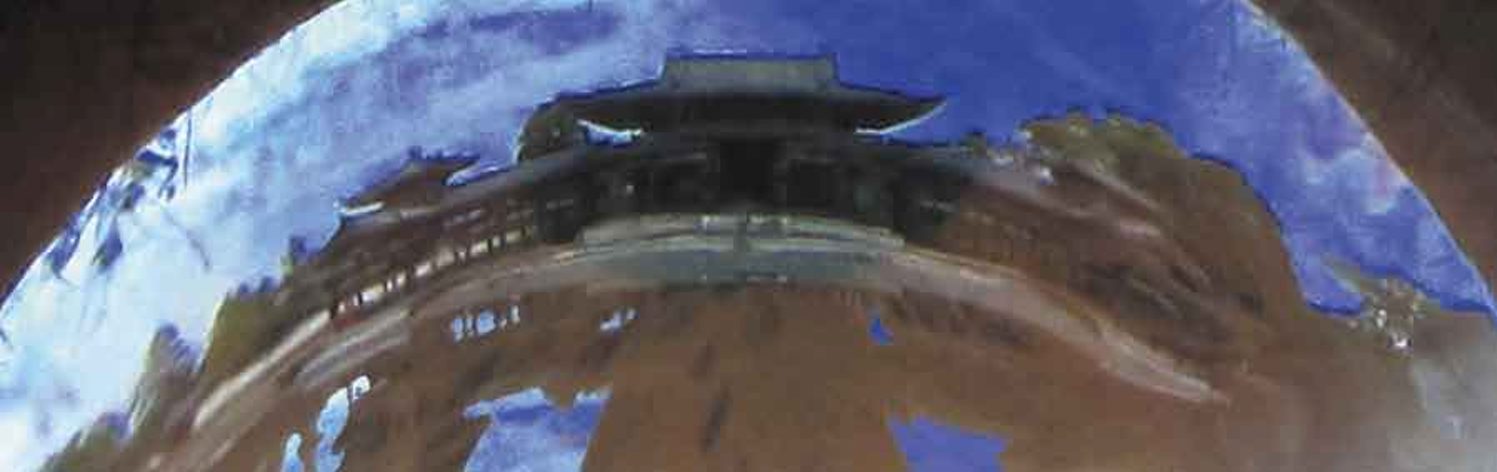
Hitomi Scenery - Pure Land Byodoin Omotesando Art Exhibition Excellence Award 2014

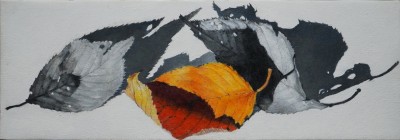
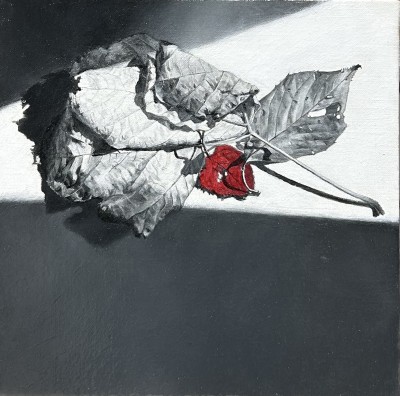
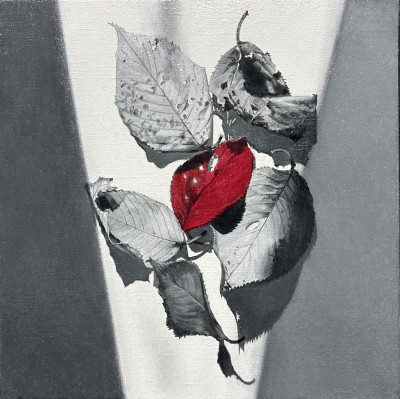
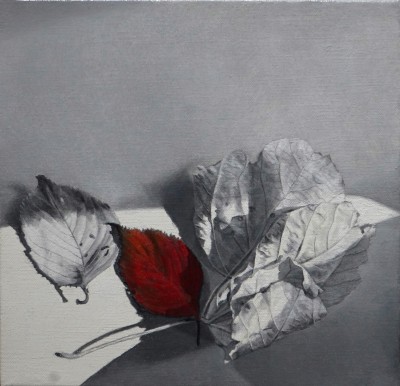
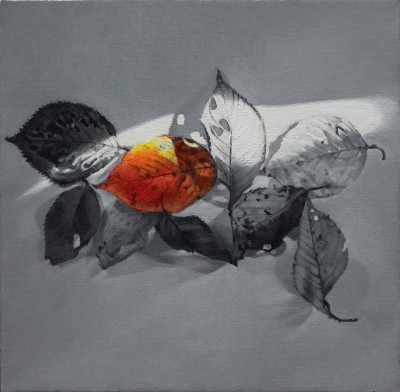
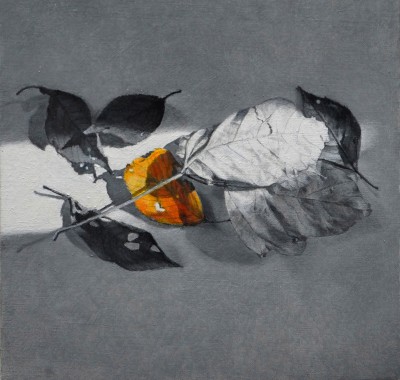
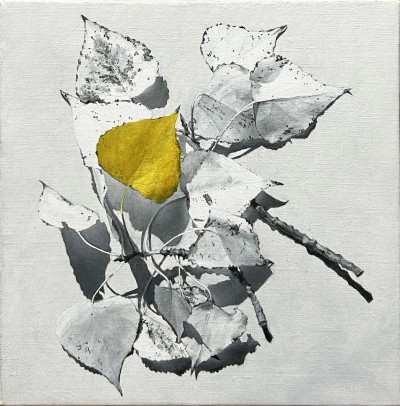
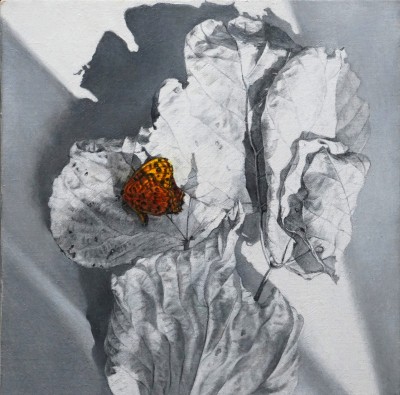
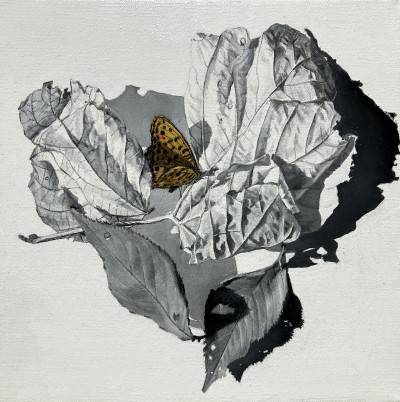
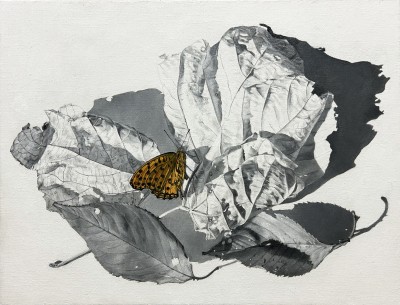
Another "falling light" series

-Are there any fields you would like to expand in the future?

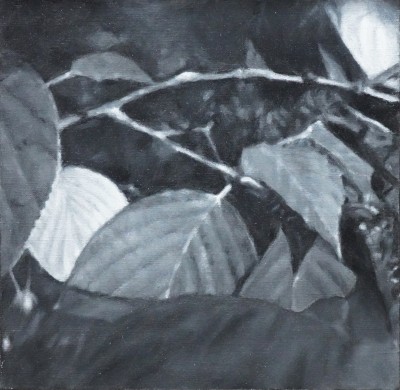
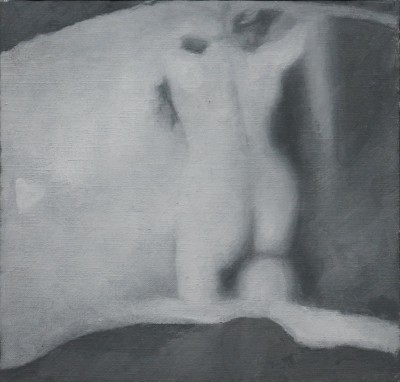
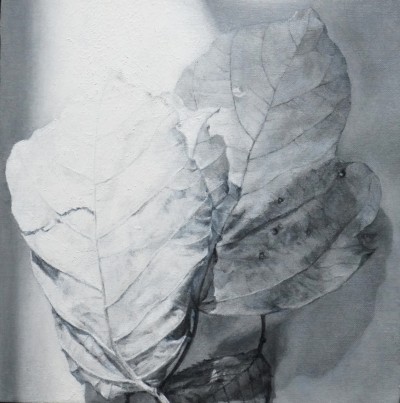
  "Since last year, I have been developing still life works, and in fact, I used to collect butterflies when I was a student, so in addition to my high interest in nature, I would like to express the shading method in a modern way. I am thinking of creating this work of the 'Falling Light' series in parallel with the work of the 'Hitomi' series."  ―Where does your extraordinary energy for drawing come from?  "I read foreign interior magazines and social media so that I can propose paintings that can be decorated like flowers and integrated into a part of my life. If I don't have a dog, I would like to visit museums overseas, but for now, I'm using the Internet to find something that enriches me."  -Please tell us about your future aspirations.  "Now that I've set foot on this path, I want to give it my all. Ideas come to mind, so the rest is a battle against time and place constraints. All of them are not fully outputted, so I would like to give shape to them as much as possible. I draw my works based on cropped images taken on a computer, but ideas come out in the process, so I feel like I want to draw that and this too. I think I will continue to draw until I am physically unable to draw as my life's work."  -Please tell us about your most recent exhibitions.  "I am planning a web solo exhibition in May. We will mainly exhibit the works of the "Falling Light" series. In addition, a contemporary art exhibition is held every year sponsored by Ibaraki City, where I am from, and at this year's contemporary art exhibition in June, I will be selected as a featured artist and presented, so I am trying to draw a new work of "Hitomikei" for that purpose. I'm thinking of drawing a work of eyes looking at the sea, which is about 5 meters wide."

Hitomi - Lonely Kamikiri

EXHIBITIONS Exhibition Information

2023.09.17 - 2023.09.29

Takeshi Iwasawa Solo Exhibition [ Hitomi Kei – Genealogy of Self-Portrait ]
Looking at the self and the world, a strange "self-portrait" Takafumi Kobuki, art writer

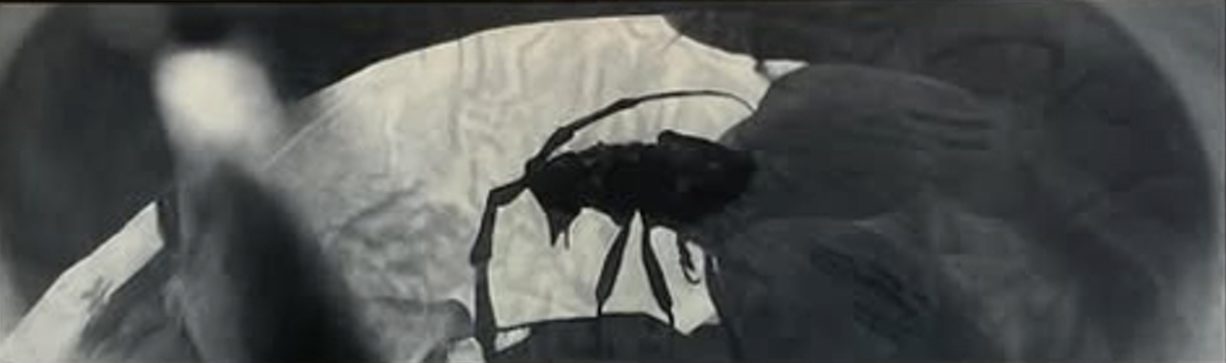
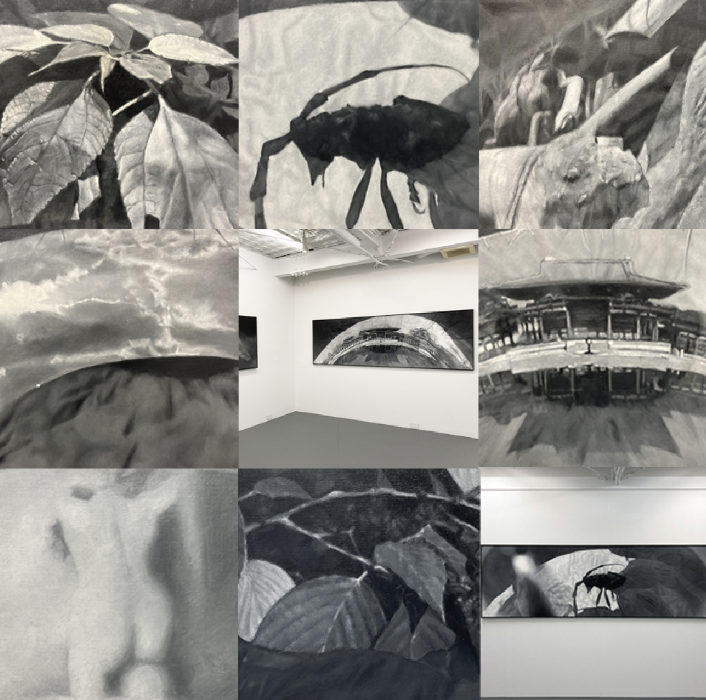
Takeshi Iwasawa is an artist born in 1959. Since 2011, he has been releasing a series of works titled "Hitomikei". They are "self-portraits" according to the person himself, but they do not resemble ordinary self-portraits at all. I tried to unravel what this unique work is like. The work is of extreme horizontal size, and the image curved in an arc (driftwood, vegetation, captured beetles, birds flying, Byodoin Temple Phoenix Hall, etc.) is painted in monotone oil paint. There is also a black circle in the center of the picture, and depending on the work, an organic group of lines is drawn around the circle. What exactly are these? When I asked him, he gave me a surprising answer. "I depict my own eyes and the scene reflected in them." The black circle was the pupil. Normally, the artist depicts his own face, upper body, and whole body in self-portraits, but Iwasawa focuses on his own eyes. The iris of the eye has a different pattern for each person, just like fingerprints. In other words, it is unique to the person. However, the iris has no expression beyond a pattern, and simply drawing the eyes would lack artistic depth. However, the scene reflected in the eyes depicts the meaning of the work changes significantly. First of all, it is a private scene seen by the artist. It reflects the artist's own existence, values, and subjectivity. Next, the chosen motifs give us a glimpse of the artist's private life and view of life and death. For example, the captured beetle is associated with life and death, and Byodoin Phoenix Hall is a metaphor for the Pure Land. Also, while the iris is unique to the individual and does not change throughout the life, the scene changes and never remains the same. Furthermore, the scene reflected in the eyes is accumulated in the brain as data along with the sounds and smells of the moment, but if you die, everything will be lost. By the way, the size of the distinctive work depends on the proportions of the bottom of the coffin that will be placed when Iwasawa dies. In other words, "Hitomi" is a "multi-layered self-portrait" that contains various contrasting relationships such as self and the world, eternity and ephemerality, life and death, etc., and is an attempt to throw a stone at conventional self-portrait expression. What is densely conveyed from this is a clear gaze looking into the abyss of oneself, private memories, and Japan sensibilities related to life and death = a view of impermanence. Iwasawa had been presenting installation works from the 1980s to the 90s, but in the 2000s, he stopped presenting in search of a new direction. Eventually, he came to the subject of self-portrait, and when he took a close-up shot of his own eyes with a camera, he discovered that what he was seeing was reflected in his eyes, so he moved on to his own self-portrait expression. Initially for his photographic works, he won the Kyoto Exhibition Award in the printmaking category in 2012 and the Excellence Award at the Byodoin Omotesando Art Exhibition in 2014. From 2022, he will transition to painting. This exhibition is the second painting exhibition following last year. ▼Information Period: 2023/09/17 (Sun) - 2023/09/29 (Fri) Time: 12:00~18:00 *Until 16:00 on the last day of 9/29 (Fri.) Admission fee: Free Location: CASO Lonuge (〒552-0022 Osaka City, Osaka City, Minato-ku, Kaigan Street 2-7-23