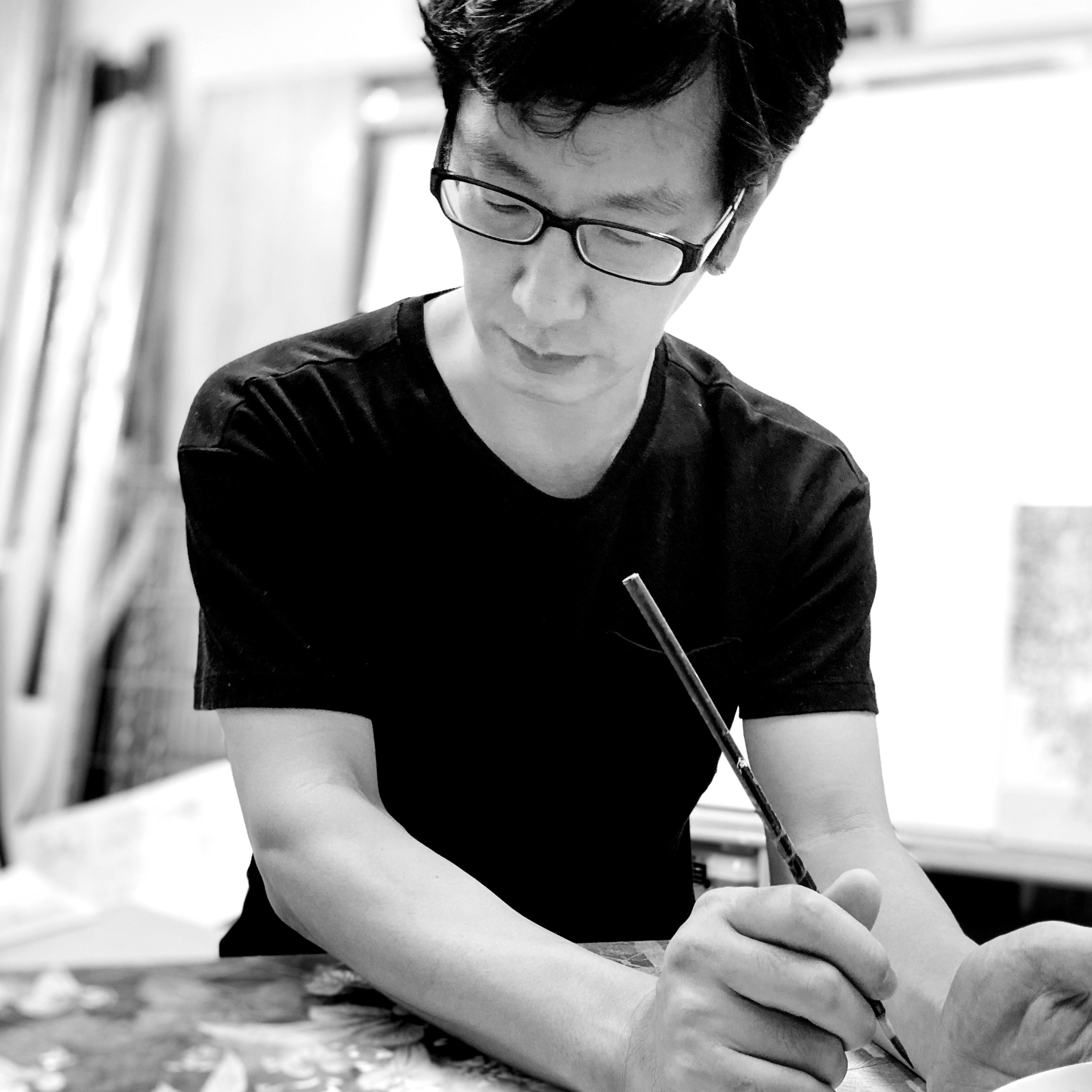
In the spring of my third year of high school, I was impressed by a collection of Monet's paintings that I picked up at a bookstore. When I saw "Evening View of Straws" on the page that opened, I was very impressed and decided that I wanted to do it with this. I talked to my parents about going to an art university, but at first they were quite opposed. In fact, both of my parents graduated from art universities, and they objected because they could see that they were struggling. In the end, I was able to get cooperation and start studying drawing in earnest.
InterviewFeatured Artist
At university, I decided to major six months after entering the university, but at first I was thinking of going on to oil painting or sculpture. When I was hesitating, my senior recommended that Japan paintings be interesting, so I started trying them. When I actually tried it, it was difficult, and there were many talented people around me, and I thought I couldn't do it.
After graduating from university, I quit painting once and there was a time when I didn't draw at all for a year. However, when I didn't draw, I wanted to draw again, and I didn't know what I was doing when I wasn't drawing. When I thought about what I could do, I thought that the only thing I could do was to draw. Before I knew it, painting had become one of my life cycles, and it had become a part of me rather than a matter of liking or disliking. Still, since I decided to paint again, I have been drawing ever since.
I have been taught that Japan painting is a subtraction painting, but it was difficult for me to get used to that approach and rock paint. There were times when I thought that I was not suitable for Japan painting so much that I compared myself to those around me. I still don't think it's suitable for me, but I enjoy how to use paints that I still can't master even though I've been drawing for 20 years, and I feel like I'm getting better little by little. It's fun to try and make mistakes.
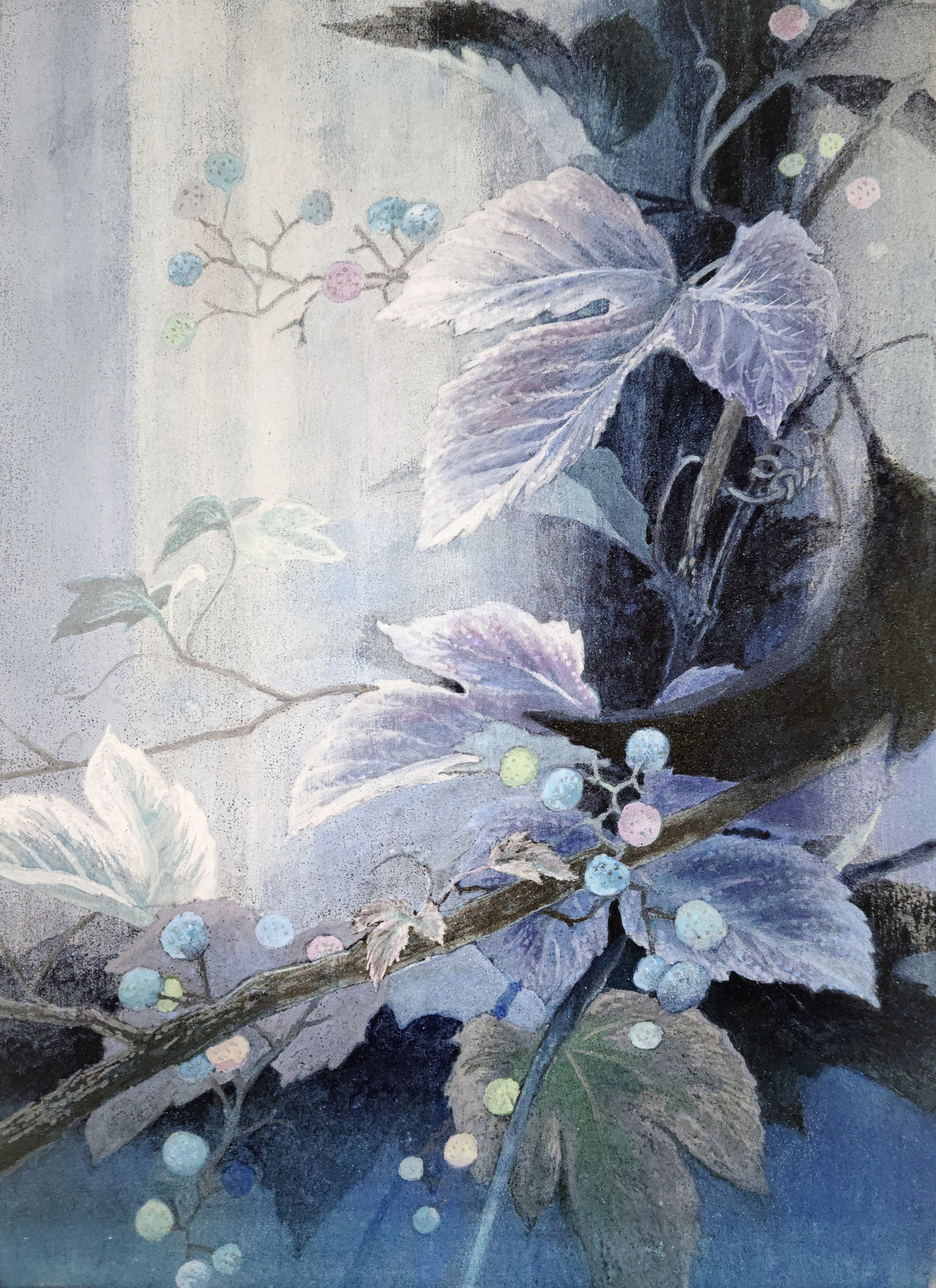
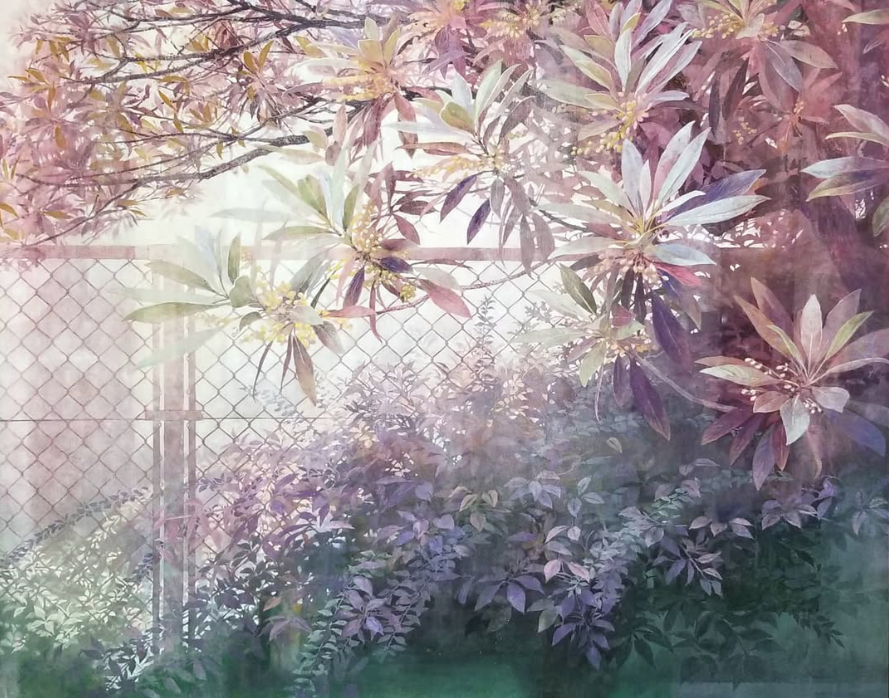
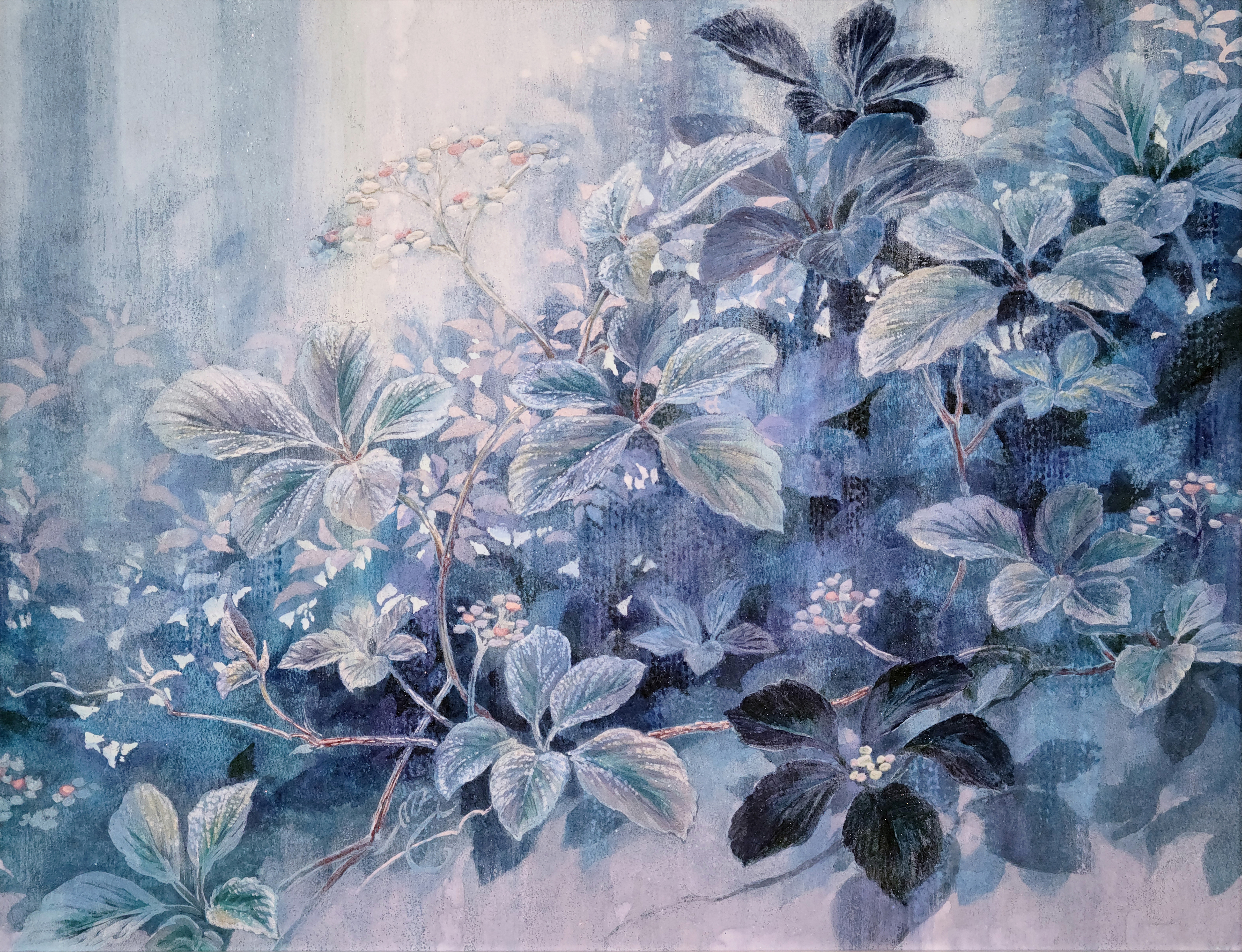
The subject matter is a scene that seems to have plants entering familiar scenes of life. There are many points that make me feel good about being close to me, such as the fact that such a plant grew in such a place. There are scenes such as weeds growing in places where buildings have been destroyed and become vacant lots, and ivy is entangled in fences. I don't want to draw much about magnificent nature such as nature or deforestation. I want to depict people and plants living like this at a familiar level. I like nature in my daily life, such as parks, squares, and houses.
It is easy to empathize with things that are within reach and that you have been familiar with for a long time. I am not simply drawing shapes, but I am drawing concrete objects as a means to put my thoughts into them, so it is very important to be able to empathize with them. When I draw landscapes, I don't just draw what I see, but I draw it with my own image. Maybe that's why, for example, it's hard to draw beautiful scenery that I covered overseas. I think that the countryside, mountains, and rivers around my grandmother's house where I played when I was little, and the activities of nature that I have come into contact with, are my starting point.
When I started painting, I was also trying to draw buildings and natural phenomena. The style has changed through stages, but I think the last few years have changed the most. One of the triggers was the Hokusetsu earthquake that occurred in Osaka. My house was close to the epicenter and suffered considerable damage, and my PC, which left data on my past works, was damaged and I could never see it again. So I changed my mind and decided to draw something that was closer to my feelings. I couldn't see my old works anyway, and I decided that I had no choice but to make them from now on. It was also triggered by the birth of a child around that time. I sketch what I find while walking with my child later. When you are raising a child, you start to look at things that are more familiar to you. I recently noticed that children are better at finding various things. It's also fun to draw what your child finds.
You may not have been very conscious of it as art. In my case, it is not that I want to do art, but that I am accumulating what I want to do and what I can do. Painting is a way to convey something to people, but my paintings are something that I want to be convinced of and want to get better as much as possible, and I don't look outward much. That's why it's more about self-improvement than art. However, it is often a message to a limited number of relatives.
If I had to say it, it might be similar to not wanting to publish a love letter. Presentations have only been made in a limited number of places until now. The reason why I have been doing it for 20 years is because I am still not satisfied with my drawings. Maybe it's because you're not convinced that you haven't become an outward energy yet. In the future, I would like to actively present little by little.
While honestly facing his own life and emotions, Daisuke Yoshikawa has deepened his expression through familiar nature and scenery. In this work, there is a quiet strength and a certain gaze that exudes because he has been painting for many years. His journey of continuing to face Japan painting sincerely will continue to expand into new expressions. I look forward to seeing what kind of scenery he will draw in the future.