
I was born in 1969, and when I was born, there were black-and-white TVs and I often watched them. Since kindergarten, I have been obsessed with drawing pictures I saw on TV, and that became my first connection with art. I just loved drawing and kept drawing for a long time.
When I was in high school, I had many options when choosing my career path, but when I thought about my favorite and strong fields, I realized that drawing was the best choice. So, I set my sights on entering an art university, and eventually enrolled at Aichi Prefectural University of Fine Arts to study oil painting.
InterviewAuthor Interview

His passion for painting from childhood eventually led to oil painting, deepening into a unique form of expression while balancing teaching and creative work. "Eye View," which depicts the "light and scenery" seen in the eyes, is a layered self-portrait that captures the intersection of inner and real worlds in oil painting, contemplating the impermanence of eternity and fleeting phenomena. The simultaneously unfolding "Ochokou" series reconstructs modern light through colors embedded within monochrome. Through her works, she engages in a quiet dialogue between light and shadow, and memory.
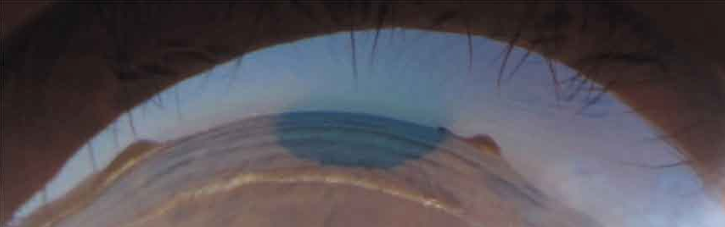
"Eye View-UMI"
2012 Kyoten Award Winning Works
Written by: Takeshi Iwasawa
What inspired you to pursue the path of a painter?
Did you start working as a painter immediately after graduating from university?
After graduating from university, I have been working as an art teacher while also working as a painter. Looking at people around me at university, it was difficult to make a living selling only paintings as a painter right away. Many of my friends who studied oil painting with me are also working as teachers while continuing their careers as painters. When I graduated from university, contemporary art was thriving, so I worked on installations and similar works. Although I temporarily paused my activities due to marriage and child-rearing, my child grew up and resumed creating works.
After that, I came up with a new idea called 'Eye View,' where I photographed my own eyes, drew them, and turned them into works. Based on those works, we were able to hold multiple exhibitions at contemporary art galleries. I felt a great sense of accomplishment, having received the Kyoto Exhibition Award at an exhibition hosted by Kyoto City Museum and the Excellence Award at the Byodoin Omotesando Art Contest.
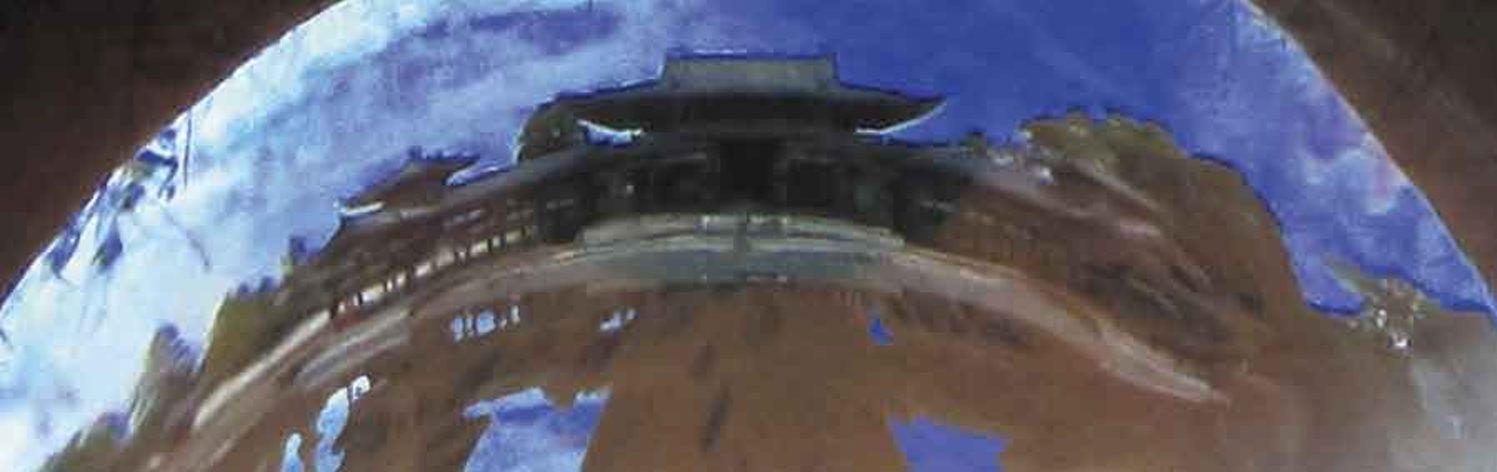
"Hitomikei - Pure Land"
Byodoin Omotesando Art Exhibition Excellence Award 2014
Written by: Takeshi Iwasawa
How did the biggest feature, 'Eye View,' come about?
I've always liked cameras and used to handle them myself, so I wondered if I could create works that make the most of that. When digital cameras first appeared, they were expensive and had low resolution, but more and more affordable cameras with higher resolution became available, and the ability to capture the inside of the eye from about 1cm away had a major impact. Also, like fingerprints, the eyes are something that never changes, and they are one of the elements that distinguish me as a person. So, I thought it would be interesting to draw the eyes as a self-portrait. However, when you photograph your eyes, the scenery you are looking at inevitably gets captured, so I thought it might be interesting to try drawing those scenes as well. The scenery I saw overlapping with the patterns on my irises and appearing simultaneously was really interesting.
Also, when looking at a landscape, sensory sensations like noise, smells, or temperature accumulate in the mind, but these can only be output by oneself. In other words, after one's own death, such things will completely disappear from this world. I thought it might be good to depict such impermanence and the transience of Japanese style. The desire to create contemporary works coincided with the development of cameras to realize it, and the focus of 'Eye View' began.
It's a fresh idea, but how did people around you react at the time?
I would take hundreds of analog shots of my own eyes and create works based on the best shots I carefully selected. However, the background and dedication behind the production were often not fully conveyed, and there were moments that left me feeling frustrated. Although I received a certain level of recognition, such as winning awards, I feel that I was not as recognized by those around me as I had imagined.
At that time, social media was not as developed as it is now, and it was not an environment where we could widely share our works and the production process. Perhaps I myself wasn't good at effectively showcasing the appeal and intent of my work.
Are there any areas you want to expand in the future?
Since last year, I have been exhibiting still life works. In fact, since I collected butterflies as a student, I have a strong interest in nature, and I want to express shading techniques in a modern way. I plan to create this Okuko series in parallel with the Hitomikei series.
Where does this extraordinary energy for drawing come from?
I want to propose paintings that can be displayed like flowers and blend naturally into living spaces. Therefore, I regularly study overseas interior magazines and social media to study how art exists within spaces.
Decorating your room with flowers and plants, or visiting stylish cafes and variety shops are also important inputs. I believe the small beauty and moments that move the heart in everyday life are the source of my creations. Furthermore, there is a lot to learn about new techniques and expressions through books and videos.
Because I have a beloved dog, it's currently difficult to visit museums overseas, but instead, I use the internet to find things that stimulate my sensibility. I believe these daily accumulations are what fuel the energy for creation.
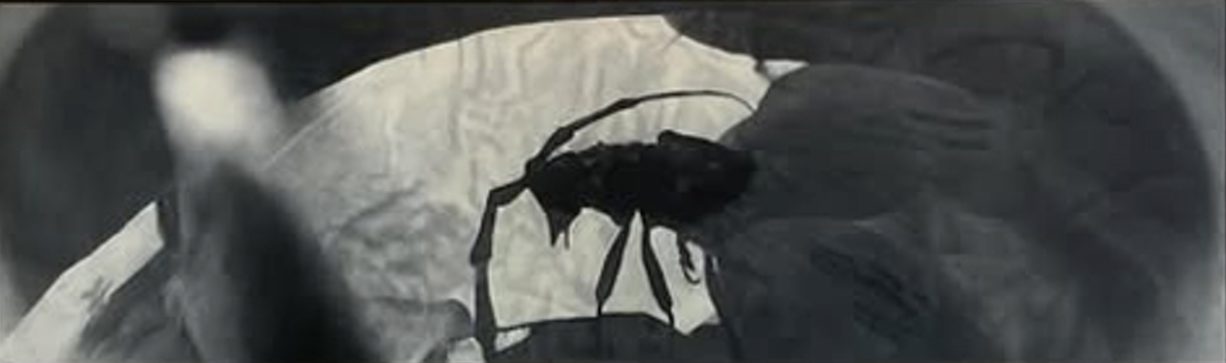
"Hitomikei - The Lonely Longhorn Beetle"
Written by: Takeshi Iwasawa
Please tell us about your future aspirations.
Once you've set foot on this path, you want to give it your all. Ideas come to mind, but then it's a battle against time and place constraints. Since most of these are things we haven't fully output yet, we want to shape as many as possible. My works are drawn based on cropped images taken on my computer, and as ideas pop up along the way, I end up wanting to draw this and that. I think I'll keep drawing until I can no longer physically draw as part of my life's work.
Additionally, a web solo exhibition is scheduled for May. Mainly, works from the Orokkō series will be exhibited. Also, every year a contemporary art exhibition is held by my hometown of Ibaraki City, and at this year's exhibition in June, I will be selected as a featured artist and present my works, so I am aiming to create new works by Hitokei. I am planning to create a work of eyes gazing at a vast sea about 5 meters wide.
From a young age, he has been deeply engaged with painting and has created a unique expression called "Eye View" with his unique sensibility. His spirit of inquiry, which transforms even the scenery reflected in his eyes and fleeting memories into his works, continues to evolve even now. Takeshi Iwasawa, who is also taking on new forms of expression starting with the 'Okuko' series, is raising expectations for what kind of artistic world he will showcase in the future.
Interview: 2025/03/10