Show more

Artist 安藤美由紀 Ando Miyuki

安藤美由紀

INTERVIEWInterview

Miyuki Ando

Please tell us how you started taking your first step as a painter.

After entering university, I majored in theater and learned about theater, and while also belonging to the theater club, I started working as an actor, which was my long-cherished dream. Thankfully, I was also evaluated for my dance, and I had the opportunity to be taught by famous instructors such as contemporary dance and butoh, and I have expanded my range of expression as a dancer. I am still active as an actor and dancer, and I started working as a painter a few years ago. When I worked as a general guide or warden at an art museum or museum, I had the opportunity to hear stories from curators and see works of art directly, and although it was originally just a hobby, I liked to draw, and I felt that my desire to paint gradually increased. After a while, I went to school to learn web design and programming, and I happened to have the opportunity to get compliments on my drawings from people I worked with in group work. He also taught me how to create illustrations on an iPad, and I started drawing digital illustrations in earnest.

In terms of expression, I think that dance, theater, and painting are the same, but I feel that painting is more about reflecting the inside of one's heart, while the former two require more awareness of how others see it, and I find the difference attractive.

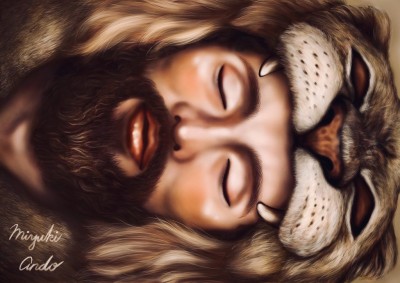
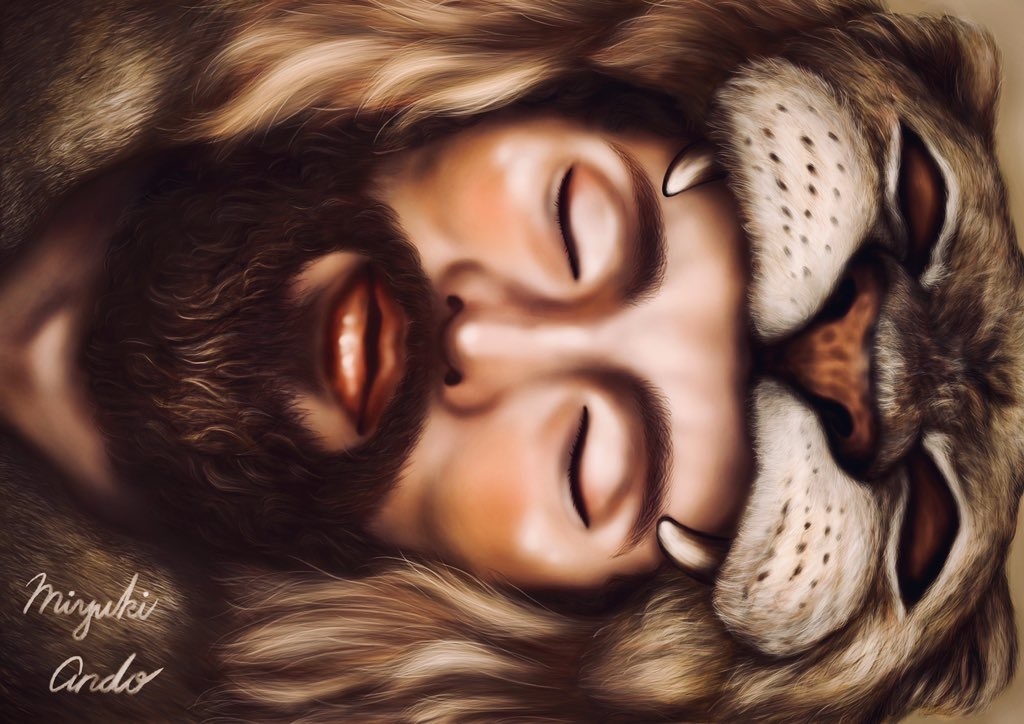
"Hercules fell asleep" Written by: Miyuki Ando

Please tell us the background of choosing "Greek Tragedy" as the theme of your production activities.

I first encountered "Greek theater" when I was in junior high school. The book I suddenly picked up was a book about Greek mythology. When I read the bizarre and absurd episodes of the gods depicted in it, I felt that they were more human than human, and that even God was so messed up, so I felt that it was natural that humans were not perfect. I think that "Greek theater" has been loved for thousands of years because it depicts the inner nature of universal human beings. This is true for the parent-child relationship, gender discrimination in society, and because it deals with fundamental human emotions and structural problems, I think there is something that will stick with those who are suffering. Whenever I reflect on what I really want to do, I always return to "Greek theater". That's how big it is for me.

And what is essential for staging "Greek theater" is the process of carefully reading and deciphering the original work. As I spent a long time facing the work and creating it as a stage, there was a moment when I suddenly felt that I wanted to keep this moment, and as a result of projecting it as a painting, I became the style I have now. I also use the finished work as the main visual for the stage.

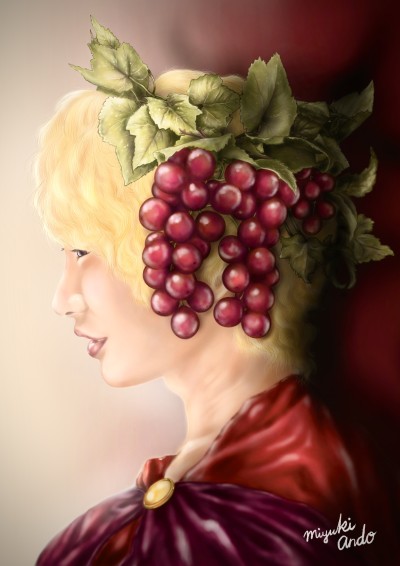
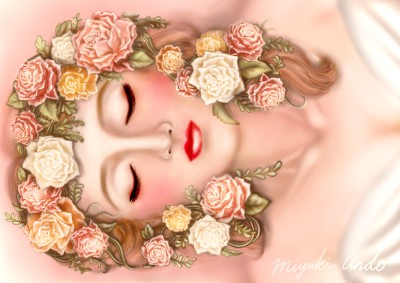
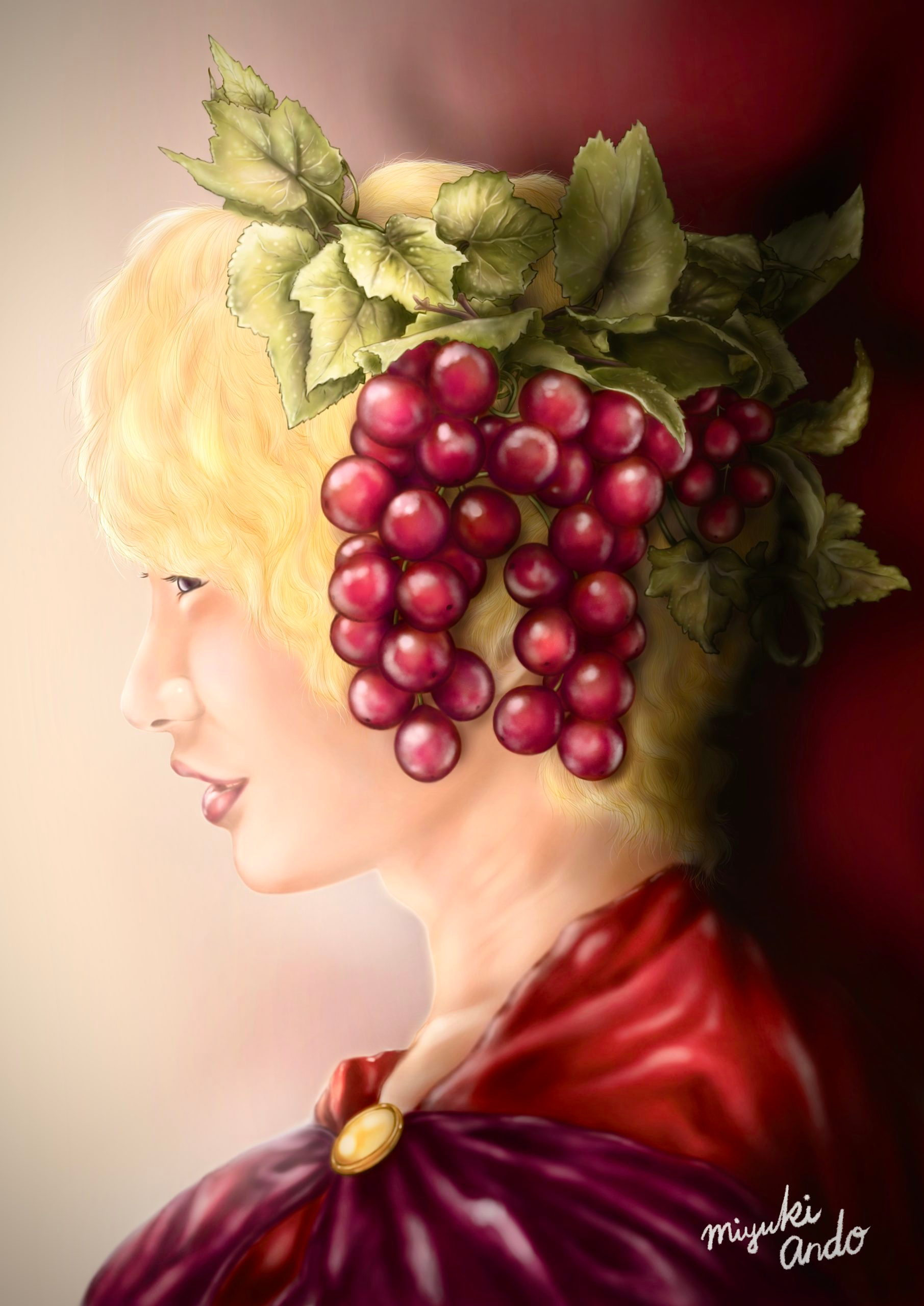
"Dionysus with beautiful hair" Written by: Miyuki Ando

Please tell us what you keep in mind when creating it.

Although it is a theme that is not familiar to me in mythology, I do not want to depict my work in an explanatory way. Ideally, when people see the work, they will remember the feeling of time stopping. I myself like moments when I suddenly assimilate into the world of my work, and I want to reflect that, which is also the reason for my creation. That's why I want to capture and express the impressions I feel so that those who see them can also convey them. In fact, my 98-year-old grandmother passed away a few years ago, and the most important thing I felt in the process of holding the funeral was the "beauty" of my grandmother's death. It seemed that there was certainly a beauty in my grandmother's life, which could be said to be the beauty of the end, who had overcome many hardships at a young age. I think the impression of that time is strong, deeply resonant, and has a clear impact on the work.

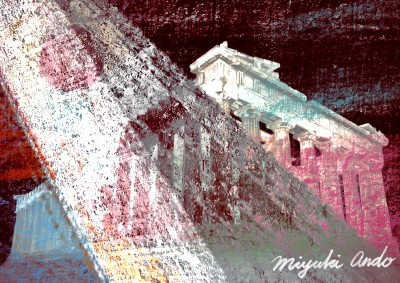
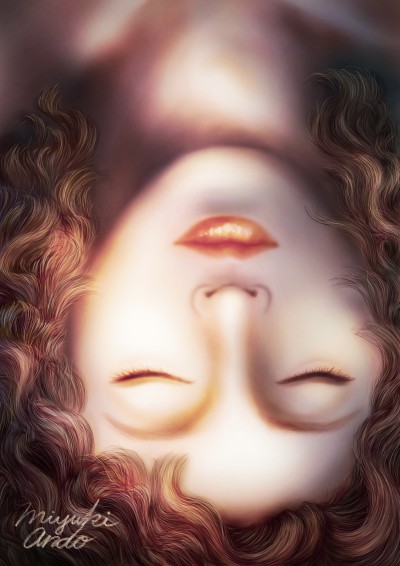
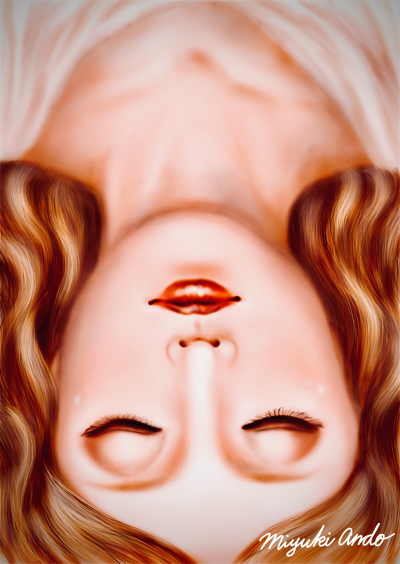
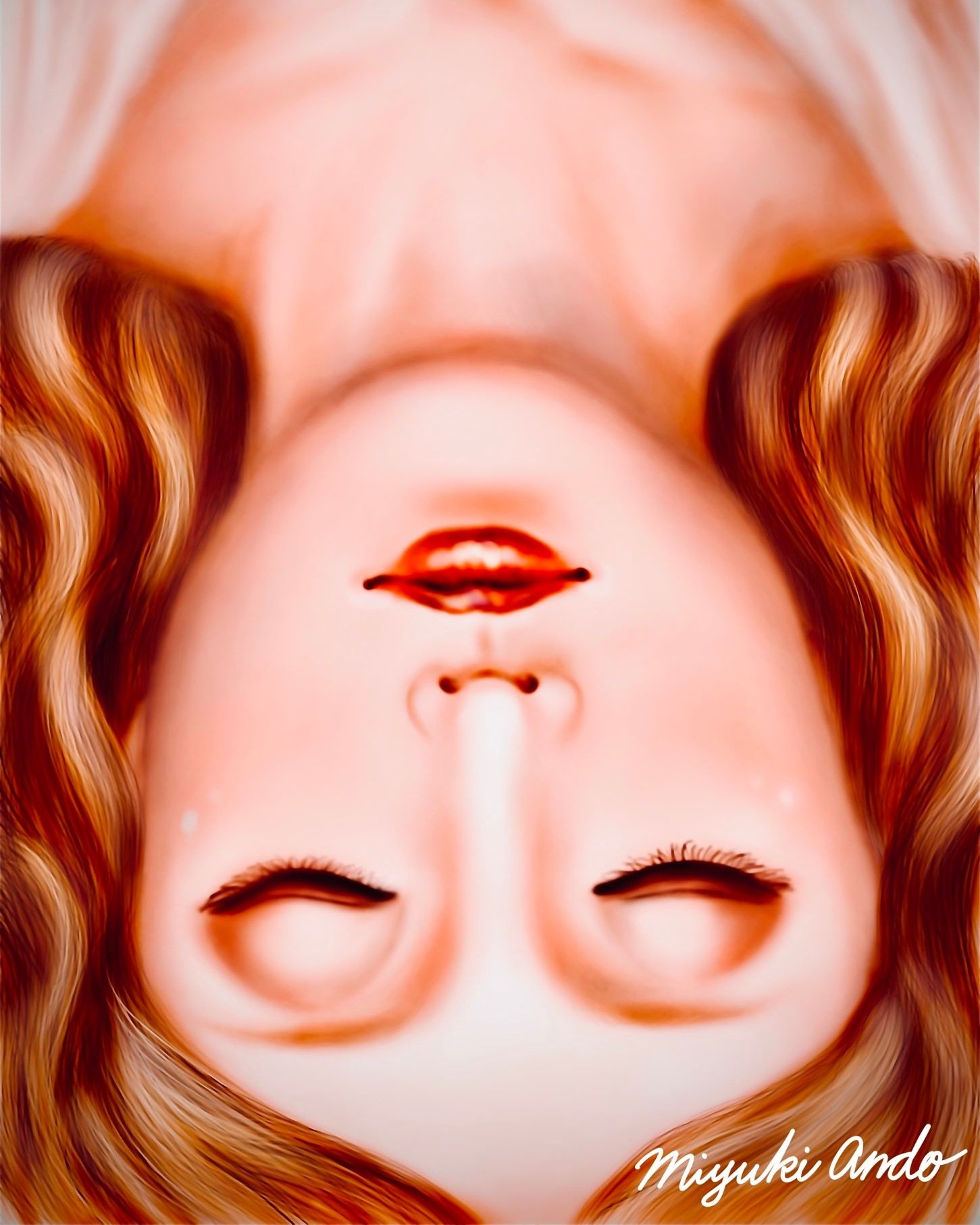
"Hypnos" Written by: Miyuki Ando

Please tell us about your future prospects.

In fact, recently, there has been a change in what I want to draw. There are times when you feel like you're depleting yourself as you continue to output. But I think it's a sign that what I want to draw is changing, so I try to listen carefully to my heart. It is an image that fills your heart by facing what you are feeling right now, what moves your heart, and what is about to be born until you are satisfied. I think that if the heart is satisfied in this way, the work I want to paint will naturally be born, just like water overflowing from a cup. I am looking forward to seeing what kind of things I want to draw and what kind of works I will create in the future.

Mr. Ando's words made me strongly feel that expression is not a technique, but a way of life itself. Although he is in the different worlds of stage and painting, his attitude of always trying to be sincere "within himself" gives rise to the depth of his works. What kind of world will this perspective depict in the future as it scoops up the universal emotions of human beings through the distant story of mythology? Expectations are high for future changes in expression.