InterviewAuthor Interview

mixed media
Kaori Onishi
Fascinated by the beautiful colors of Monet and Van Gogh, whom she encountered at museums as a child, she continued to create mainly watercolors and pastels in pursuit of beautiful colors, light, and shadow. After diverse experiences such as working at a video production company and teaching in the welfare field, she began to take up painting seriously after marriage and recuperation. We delve into her desire to incorporate Japanese culture into her works as a new goal.
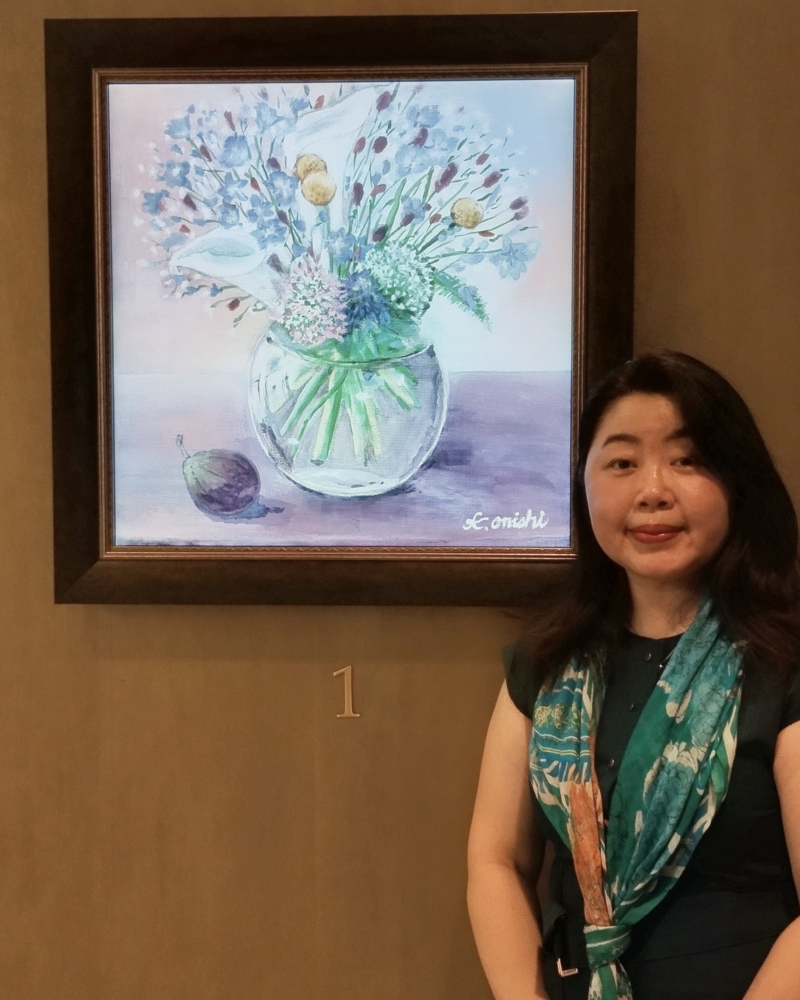
「Round flower」 Technique: Mixed Media Author: Kaori Onishi
Please briefly introduce yourself.

I was born in Nagoya City and raised in Chiba City. As a child, I was influenced by the beautiful colors and light and shadow in the works of Impressionists like Monet and Van Gogh, as well as Joaquín Trenz Llado in Spain, and inspired by paintings in art museums. I aim to create works that make you pause when you feel the sense of color and light, and I create works with watercolors and pastels.

I studied design, video, photography, and animation at an art vocational school (3-year program). After encountering and being influenced by Czechoslovak puppet animation, which has many cute characters, I worked at a TV commercial production company, producing animations and English conversation teaching illustrations for educational TV programs. After that experience, I became a freelancer and was involved in various animation program productions, participating in film productions by renowned illustrators. I also participated in screenings at the Japan Animation Association JAA.

After that, I worked as a part-time instructor at Chiba Prefectural Technical College for Persons with Disabilities (now Chiba Prefectural Techno School for Persons with Disabilities), where I had valuable experience teaching deaf students and people with disabilities how to operate computers using sign language, oral movements, and writing markers on whiteboards.

After getting married, I left my job, and after those around me were raising children and falling ill from illness, I recuperated for a long time and settled down, then I began creating paintings in analog. While I was posting my works on Instagram and other platforms, I was approached by special exhibition organizers, and I mainly present my works at open calls, special exhibitions, and group shows.
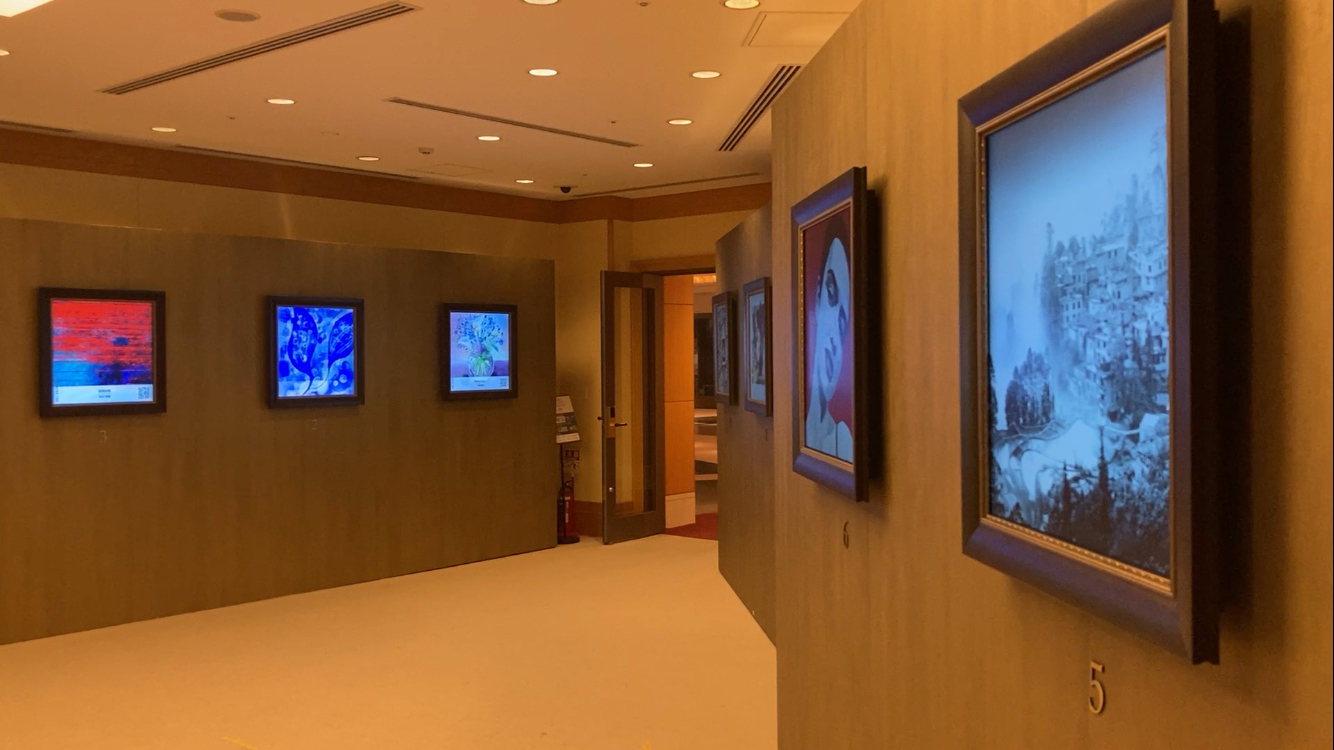
HACKK TAG GALLERY 展示風景
Are there any exhibitions or events that left a strong impression on you?

As a child, my family often visited nearby art museums with my parents, who loved painting. Among them, the Kawamura Memorial Museum in Sakura City was a spot I visited whenever I had time, where I could see works ranging from Rembrandt to Impressionists, Mark Rothko, and Joseph Cornell. The museum is located in a garden, and the sight of two swans swimming together in the pond in front of the museum was beautiful and striking.

Recently, the exhibition using digital frames at the Imperial Hotel Osaka, hosted by HACKK TAG, is also an unforgettable experience. Thanks to the connection of receiving the HACKK TAG Award, I was able to participate in the gallery opening preview in Osaka. The frames are genuine, but inside they are digital screens, and the paintings that move slightly in parts unique to digital are particularly impressive. The color reproduction is very beautiful, and the venue was luxurious and beautiful.

What inspired you to start your career as a painter?

On my father's side, there were many painters, producing Japanese-style paintings, Nanga paintings, and maki-e in Kyoto and Nagoya. However, I was raised hearing many stories about losing various works in air raids during the war.
I've also heard stories of my grandmother hiding in an air-raid shelter with her precious Japanese paintings, holding them until the sirens stopped. Having grown up in such an environment, I have had a deep attachment and attachment to Japanese things since childhood.

I was strongly influenced by the desire to paint in such an environment, but people around me told me that being a painter is tough in a recession. Because I grew up with that, it was hard for me to make up my mind. Even so, I think I kept holding onto the desire to paint somewhere deep down. Now that I've passed the middle of my life, I face my work with the desire to do what I want to do.

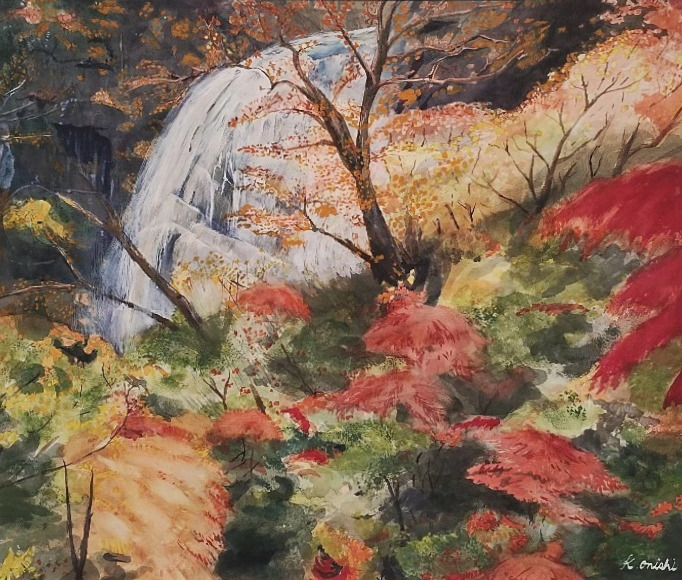
"Jin Qiu" Technique: Watercolor painting Author: Kaori Onishi
Do you have favorite tools or something like an essential "partner" for your craft?

My favorite tools are cameras like smartphones and DSLRs. It's not that high performance is best; even when I studied video, I liked films by Jean Cocteau and monochrome photos of Man Ray, and I used to go to movie theaters and photo exhibitions. I remember being drawn to the contrast between light and shadow and the fleeting expressions of subjects, and I would lose track of time gazing at them.

That feeling still lingers within me, and I try to capture scenes that catch my eye while walking through the city, capturing light and shadow with my camera. I feel that in these ordinary moments, the beauty of a painting is hidden, and the photos I take later connect to the colors and composition of my work. I feel that the camera is an important tool for me to prepare before painting.

What kind of feelings do you put into your work?

I create paintings that can be displayed in your room as interior decor. I create with the hope that the painting will become a personal oasis for those who see it. I layer colors with the hope that when you catch a glimpse in your busy daily life, you can pause and take a deep breath in your paintings.

Could you share your thoughts on creating your future works?

Currently, I feel that Japanese things, culture, and spirit are being lost. I hope that someday, I can preserve memories of Japanese paintings and maki-e that were passed down in my father's family in my own works, changing their forms. Having grown up hearing stories from my family that many works were lost due to war, I feel more than anyone the importance of preserving tangible things. To inherit such things, I want to incorporate Japanese elements into my works and present them in some form.

Her admiration for Impressionist paintings encountered as a child and the sensitivity she developed in filmmaking to capture light and shadow. Both support her current soft color expressions. While hearing from those around her the harshness of living as a painter, she continues to hold onto her passion for painting, and now that she has reached the latter half of her life, she faces those feelings honestly. With the family history of many lost works in the war in her heart and the wish to preserve the spirit of harmony in her art, expectations grow for her future as she continues to create paintings that quietly resonate with viewers.

Interview: 2026/08/07